
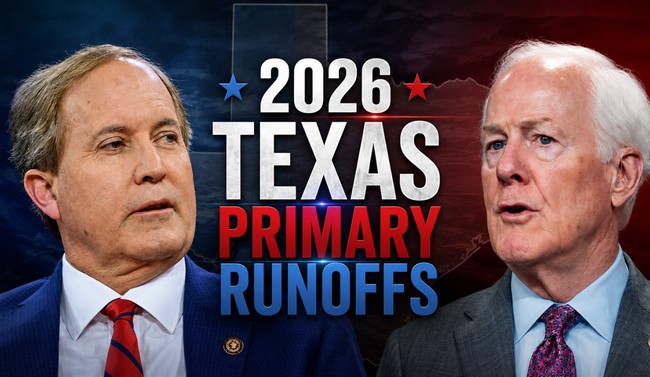
Texas is holding runoff elections, and the spotlight is on the high-stakes U.S. Senate matchup between four-term Republican John Cornyn and Texas Attorney General Ken Paxton, along with several other statewide and congressional contests that could shape control of key offices this year.
Runoff day in Texas brings attention to a Senate fight that began when neither Cornyn nor Paxton cleared the threshold in March, leaving Republican voters to choose between the incumbent and a divisive challenger. Cornyn earned 42 percent while Paxton captured 40.5 percent in the primary, with Rep. Wesley Hunt finishing third at 13.5 percent. That split forced a head-to-head that has drawn heavy spending, national interest, and a Trump endorsement for Paxton.
Money and endorsements have defined much of the runoff narrative, with national players pouring resources into the state and both campaigns firing up their bases. For Republicans, this is more than a primary fight; it’s a test of party unity and strategic direction heading into the midterms. Winning here matters for Senate math and for delivering on conservative priorities at the federal level.
Outside the Senate race, several other Republican contests are crucial to watch. The Attorney General’s runoff pits Rep. Chip Roy against state Senator Mayes Middleton, a matchup that highlights competing visions for the state’s legal and political posture. At the Railroad Commission, incumbent James Wright faces investor Bo French in a contest that matters for energy policy and regulatory direction in Texas.
Democrats also have runoffs to settle, including their Attorney General contest between Nathan Johnson and Joe Jaworski, and a lieutenant governor nomination between Vikki Goodwin and Marcos Velez. Those races may reshuffle the state party but are unlikely to change the broader trajectory of Texas politics unless turnout patterns shift dramatically. Still, national observers will monitor whether Democrat mobilization in these contests influences down-ballot outcomes.
Congressional runoffs add another layer of consequence, particularly in districts redrawn this cycle. In TX-18, incumbent Al Green faces a challenge with redistricting reshaping his electorate and raising the possibility of an upset. TX-35 also draws attention, though some of the rhetoric around candidates has been extreme; coverage has amplified controversial phrases that reflect deep polarization within parts of the electorate.
Polls in Texas close at 7:00 PM Central, and this timeline compresses the campaigning and posturing into a single evening of returns and analysis. Reporting and live tallies will track turnout and county-level splits that ultimately decide these runoffs, with the results shaping narratives heading into November. For Republicans, successful showings tonight would be a needed boost as the party aims to hold and expand its influence nationally.
The Cornyn–Paxton matchup has been personal and pointed, and the stakes are both ideological and practical for conservative governance. Cornyn brings veteran Senate experience and institutional relationships that matter in Washington. Paxton, backed by a high-profile presidential endorsement, has positioned himself as an outsider willing to shake up the status quo within the GOP.
Campaign tone in these runoffs has varied from cautious appeals to aggressive messaging, depending on the race and the candidates’ strategies. Grassroots turnout and effective get-out-the-vote operations often decide runoffs, and both parties recognize that disciplined fieldwork can overturn polling expectations. Texas’ size makes organizing expensive and complex, so ground game execution tonight is a critical variable.
Beyond the marquee statewide contests, local offices and regulatory posts will shift hands based on these runoffs, from energy oversight to state-level law enforcement priorities. Those outcomes will influence policy decisions that affect Texans’ daily lives, including how the state approaches business regulation and public safety. Republicans view retaining these posts as essential to advancing conservative policy at the state level.
Expect the evening to produce clear winners in some races and tight margins in others, with geography and turnout patterns explaining much of the variance. Urban, suburban, and rural splits will be analyzed to understand where each party is gaining or losing ground. For Republican strategists, tonight is about securing wins and learning where to sharpen messaging for November.
Editor’s Note: The 2026 Midterms will determine the fate of President Trump’s America First agenda. Republicans must maintain control of both chambers of Congress.

Add comment