
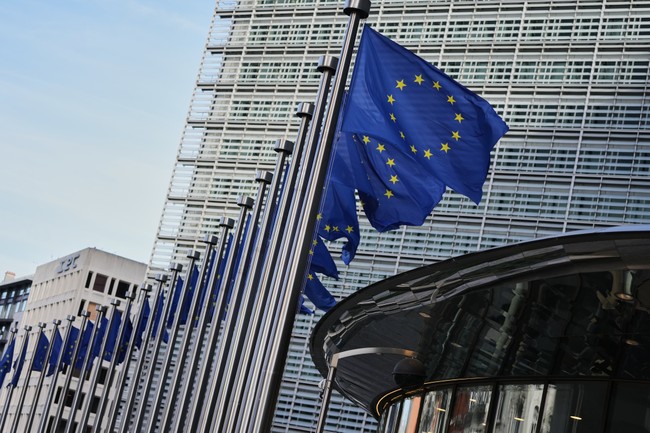
The United States has slapped sanctions on five foreign operatives accused of working with Big Tech to suppress American speech, prompting a sharp rebuke from the European Commission that claims those measures threaten European regulatory sovereignty and shared democratic values.
EU Melts Down After Rubio Sanctions Foreign Agents Who Colluded With Big Tech to Censor Americans
<pThe move to bar five overseas figures from the United States was announced as a response to coordinated efforts to pressure tech platforms into silencing lawful American voices. The sanctions target individuals tied to European NGOs and a former European Commissioner accused of using European laws and taxpayer-funded institutions to influence U.S. content moderation decisions.
Secretary of State Marco Rubio framed the sanctions as necessary to protect free speech and warned of “potentially serious adverse foreign policy consequences” stemming from what he called the “global censorship-industrial complex.” Those named are now barred from entering the U.S., and anyone already in the country can be expelled immediately by the State Department.
European officials reacted angrily, arguing the U.S. is overstepping by penalizing people who operate under European rules and within a different legal framework. The European Commission’s statement emphasized the bloc’s right to regulate its market and insisted digital rules are meant to create a “safe, fair, and level playing field” for companies operating there.
The European Commission strongly condemns the U.S. decision to impose travel restrictions on five European individuals, including former European Commissioner Thierry Breton.
Freedom of expression is a fundamental right in Europe and a shared core value with the United States across the democratic world.
The EU is an open, rules-based single market, with the sovereign right to regulate economic activity in line with our democratic values and international commitments.
Our digital rules ensure a safe, fair, and level playing field for all companies, applied fairly and without discrimination.
We have requested clarifications from the U.S. authorities and remain engaged.
If needed, we will respond swiftly and decisively to defend our regulatory autonomy against unjustified measures.
The EU statement reads like a lecture on principle, but critics point out the reality is messier: European governments have increasingly used regulation and enforcement to shape what people can say online. From national laws targeting “hate speech” to enforcement actions against platforms, Europe’s approach has often translated into content pressure on American tech firms.
Reporting has tied the sanctioned parties to campaigns that pressed platforms to act before high-profile events, compiled deplatforming lists, and labeled certain U.S. media outlets as disinformation. Those activities, according to the U.S. announcement, included threats to use enforcement or legal action as leverage to influence moderation decisions at major tech companies.
That pattern is why voices in Washington — including elected officials and administration figures — moved to push back. The argument is straightforward: if foreign actors are manipulating platforms to silence Americans, the United States must respond to defend the First Amendment and protect its citizens from foreign pressure.
European leaders and some transatlantic commentators see the sanctions as an affront to regulatory autonomy and a dangerous precedent for extraterritorial punishment. They warn that targeting officials or NGO leaders for applying European laws risks escalating diplomatic tensions and interfering with legitimate governance.
But the American case rests on a different premise: when activity abroad has direct effects on U.S.-based companies and on the speech rights of Americans, Washington has the authority and obligation to act. From this perspective, sanctions are not about policing Europe’s laws; they are about blocking foreign efforts to steer U.S. platforms into censoring lawful domestic discourse.
It is a clash over jurisdiction and values dressed up as a debate about freedom of expression. One side invokes sovereignty and the rules it writes; the other insists that when foreign pressure intrudes on American civil liberties, sovereignty ends and defense begins. The fallout will test how far each side is willing to push before diplomacy gives way to tit-for-tat measures.
The controversy underscores a broader tension between different models of digital governance: one that empowers regulators to set cross-border norms, and one that centers free expression and minimal external influence on domestic speech. For now, the sanctions have made that clash unavoidable and set a new baseline for how the U.S. responds to coordinated foreign efforts to shape content on American platforms.


Add comment