
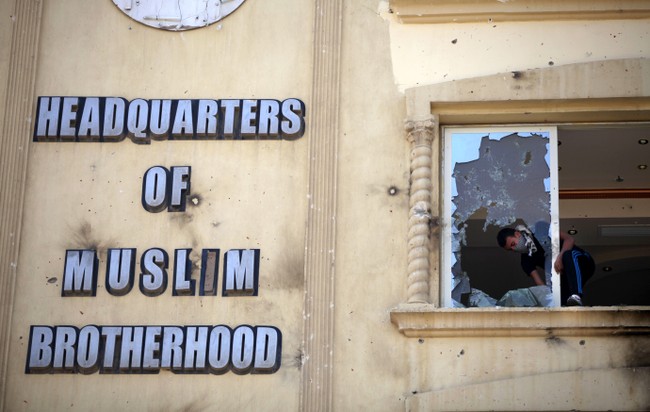
This piece explains how the State and Treasury departments, led by Secretary of State Marco Rubio and Secretary of the Treasury Scott Bessent, moved to designate specific Muslim Brotherhood chapters as terrorist organizations and impose financial sanctions, the legal and operational consequences of those steps, and the administration’s stated rationale behind the actions.
The administration has jointly targeted branches of the Muslim Brotherhood in Lebanon, Jordan, and Egypt with new designations intended to curb their influence and cut off financial flows. These actions pair a Foreign Terrorist Organization label with Specially Designated Global Terrorist status in some cases, signaling a coordinated diplomatic and financial pressure campaign. Officials describe this as part of a broader national security push to limit groups the administration believes support terrorism. The designations are meant to deny access to U.S. financial systems and to prevent U.S. persons from engaging with listed entities.
The Department of State is designating the Lebanese Muslim Brotherhood as a Foreign Terrorist Organization and a Specially Designated Global Terrorist (SDGT), and the group’s leader Muhammad Fawzi Taqqosh as an SDGT. Concurrently, the Department of the Treasury is designating the Egyptian Muslim Brotherhood and Jordanian Muslim Brotherhood as SDGTs for providing material support to Hamas.
Rubio and Bessent framed the move as decisive and preventive, describing the designations as tools to “eliminate the capabilities and operations of Muslim Brotherhood chapters that threaten U.S. citizens and our national security.” Those words make clear the political posture: this is a hard-line approach to organizations seen as linked to regional instability and terrorism. In practice, the designations trigger blocking orders that freeze property and restrict transactions tied to the named organizations and individuals. The message from leadership is that contacts and financial conduits will be disrupted under the full weight of U.S. authority.
Treasury guidance spells out that “all property and interests in property of the designated or blocked persons described above that are in the United States or in the possession or control of U.S. persons are blocked and must be reported to the [Office of Foreign Assets Control (OFAC)].” This is a legal mechanism commonly used to deny state and non-state actors the ability to move funds, access banks, or use U.S.-linked financial infrastructure. Entities owned 50 percent or more by blocked persons are also swept up, which creates a wide net to prevent circumvention.
Bessent emphasized the financial squeeze directly, stating, “The Muslim Brotherhood has a longstanding record of perpetrating acts of terror, and we are working aggressively to cut them off from the financial system.” That quote lays out the Treasury’s line of effort: sanctions are the primary weapon. The administration intends to deploy “the full scope of its authorities to disrupt, dismantle, and defeat terrorist networks wherever they operate in order to keep Americans safe,” a phrase repeated in public statements to underscore consistency between policy goals and enforcement.
Today, we are designating the Lebanese, Egyptian, and Jordanian chapters of the Muslim Brotherhood as terrorist groups. Under President Trump’s leadership, the United States will eliminate the capabilities and operations of Muslim Brotherhood chapters that threaten U.S. citizens and our national security.
The practical consequences extend beyond frozen bank accounts. U.S. persons are generally prohibited from conducting business with sanctioned parties, and violations can carry civil or criminal penalties. That creates compliance obligations for banks, businesses, and nonprofit groups that must screen partners and transactions against the updated lists. Even indirect exposure through joint ventures or subsidiaries can trigger blocking if ownership thresholds are met.
Officials also point to recent executive action as the policy foundation for these moves, noting that the president issued an order designating certain Muslim Brotherhood chapters and that agencies are now executing that directive. The interplay between an executive order and subsequent department-level designations is standard practice: the White House sets policy and agencies follow with legal and administrative steps. The result is a layered approach combining diplomatic declarations, legal designations, and financial penalties.
The Treasury Department is taking action pursuant to President Trump’s leadership by designating Muslim Brotherhood Branches as Terrorist Organizations. The Muslim Brotherhood has a longstanding record of perpetrating acts of terror, and we are working aggressively to cut them off from the financial system. This Administration will deploy the full scope of its authorities to disrupt, dismantle, and defeat terrorist networks wherever they operate in order to keep Americans safe.
As the government enforces these measures, affected organizations and their networks will face increased isolation from Western financial markets and partners. That isolation is intended to degrade operational capabilities and limit the group’s ability to fund activities or influence politics abroad. For policymakers and enforcement agencies, the emphasis is on using sanctions as a lever to reduce threats without new kinetic commitments.
Legal consequences for noncompliance can be severe, and the administration has made clear it expects domestic and international financial institutions to comply with blocking and reporting rules. The moves mark a visible shift toward tougher measures against Islamist networks perceived to be linked to violence, and they reflect a broader political stance that prioritizes hard-line counterterrorism tools. The coming months will test how effectively these sanctions disrupt the targeted chapters and whether enforcement closes gaps that might allow funds or influence to flow despite the designations.


Add comment