
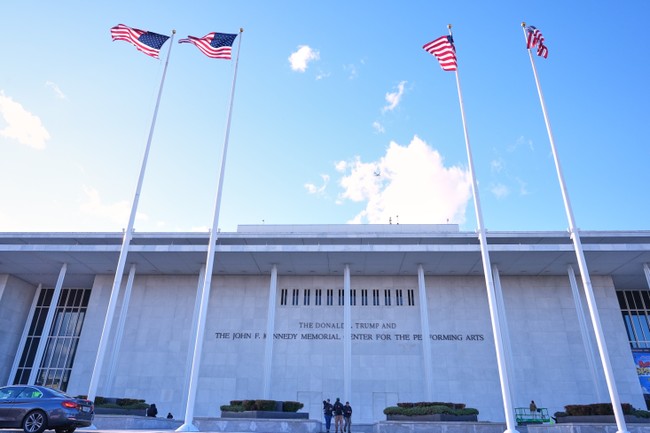
The renaming of the Kennedy Center to honor President Trump has shaken up Washington’s arts scene, triggered performer cancellations, and prompted Ric Grenell to suggest media interference is to blame; this article lays out what happened, who walked away, Grenell’s response, and why conservatives see this as a fight over who controls national institutions.
The Kennedy Center’s rebrand to include President Trump’s name landed like a thunderbolt across the nation’s capital, and change arrived fast — new signage appeared within days. The move followed months of management and modernization efforts led by Trump and Ric Grenell, who stepped in as interim president to revive the facility. That shake-up didn’t sit well with everyone in the arts community, and the fallout was immediate.
Performers began cancelling engagements almost as soon as the new name went public. Veteran jazz musician Chuck Redd, who had hosted the center’s Jazz Jams Christmas Eve concert since 2006, pulled out upon seeing the change. “When I saw the name change on the Kennedy Center website and then hours later on the building, I chose to cancel our concert,” Redd told The Associated Press.
Grenell did not let that stand without pushback and publicly warned that last-minute withdrawals carry consequences, even hinting at stiff penalties for breaches of contract. The interim leadership framed the cancellations as more than personal decisions — they portrayed them as political gestures that harm a nonprofit arts institution and its patrons. That framing has inflamed an already charged debate about culture and control.
“Your decision to withdraw at the last moment — explicitly in response to the Center’s recent renaming, which honors President Trump’s extraordinary efforts to save this national treasure — is classic intolerance and very costly to a non-profit Arts institution,” Grenell wrote.
“Regrettably, your action surrenders to the sad bullying tactics employed by certain elements on the left, who have sought to intimidate artists into boycotting performances at our national cultural center,” he added.
Other acts followed suit. A New York City jazz outfit called The Cookers canceled their New Year’s Eve show, releasing a statement about jazz’s roots in struggle and freedom of expression. Country singer Kristy Lee walked away from a January date, citing integrity, and Doug Varone and Dancers scrapped an April engagement, saying they could no longer “step inside this once great institution.” Those choices, whether principled or performative, left fans in the lurch.
Conservative voices see a pattern: critics argue that a portion of the arts world treats cultural institutions as ideological property and will abandon them when a conservative figure gains formal recognition. From this perspective, the cancellations aren’t genuine crises of conscience but public displays meant to coerce institutions back into a comfortable cultural alignment. The folks who suffer most, conservatives say, are the audiences who lose planned performances over politics.
Grenell has gone further and suggested outside actors are interfering with artists’ decisions. He pointed at major media outlets as potentially nudging performers toward cancellations, claiming those outlets push narratives that pressure artists into boycotts. If true, that would be a serious charge — one that fits into a broader conservative argument about media influence in cultural matters.
This is the moment Republicans argue we should defend pluralism in public institutions: if conservatives can place a name on a national center and then face coordinated retreat by performers, the concern is that cultural ownership has quietly shifted into ideological territory. That worry isn’t just theoretical; it’s practical and immediate for patrons who expected shows to go on. Advocates for the renaming insist the center now belongs to all citizens, not to a closed cultural caste.
Critics of the performers counter that artists are entitled to stand by their values, but the counterargument insists values should not be used to deprive the public of events that were sold and scheduled. The tension here is raw: responsibility to audiences versus refusal to appear at a venue that now bears a polarizing name. Republicans use this as an example of how the left enforces cultural conformity while claiming to champion freedom of expression.
Whether these cancellations stem from sincere convictions, contractual disputes, or media nudging, the practical result is the same: fewer performances for ticket-holders and more headlines about culture war tantrums. The Kennedy Center controversy now reads as a test case for how national institutions will be governed and who gets to decide what counts as acceptable participation in public life. The stakes are not just symbolic — they affect programming, funding, and who feels welcome on America’s stages.
The broader lesson conservatives draw is that renaming public cultural institutions does not erase their purpose, and that those who would boycott must reckon with the consequences of putting politics ahead of patrons. The debate will keep unfolding as schedules are adjusted and legal claims are considered, but the central clash is clear: who controls our cultural institutions and whether the public or a narrow ideological circle decides who performs for the nation.

Add comment