
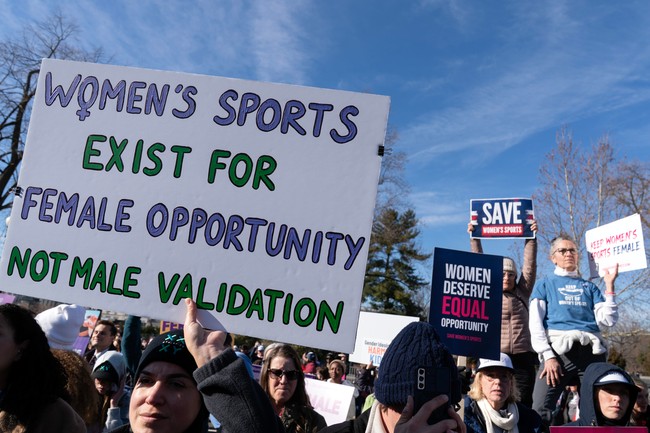
I’ll explain how Jefferson County’s school policies ran afoul of Title IX, outline the scale of the problem, repeat the government’s exact findings, describe the practical harms to girls, and note the role of the U.S. Department of Education’s Office for Civil Rights in correcting the situation.
The Jefferson County case is a clear example of policy decisions that traded fairness and safety for ideological signaling. Local school leaders allowed biological males to use female-only spaces and to compete on girls’ sports teams, a practice that created immediate and measurable problems for female students. Parents, coaches, and athletes were left to cope with the consequences while administrators defended a decision rooted in a political agenda rather than common-sense protections. The result was a federal review and an OCR finding that the district violated federal civil rights law.
Federal investigators examined rosters and facility policies, and their conclusions were direct and damning. “The U.S. Department of Education’s Office for Civil Rights (OCR) concluded that a Colorado school district violated federal civil rights law by allowing male students to access female bathrooms, locker rooms and overnight accommodations and to compete in girls sports.” That language lays out both the factual basis and the legal frame the OCR applied. The agency found the district’s policies denied girls basic protections that Title IX guarantees.
OCR’s findings included detailed roster information showing the scope of the issue. “The announcement said OCR received athletic rosters from Jefferson County, and the rosters indicate ‘male students may occupy up to 61 roster positions on girls’ sports teams in the district.'” That number matters because it shows this was not an isolated accommodation but a systemic policy affecting many teams. When policy permits dozens of boys to join girls’ teams, the competitive balance and the girls’ experiences are fundamentally altered.
Beyond competition, the intrusion into private spaces is a pressing safety and dignity concern. Allowing boys into girls’ bathrooms, locker rooms, and overnight accommodations strips away privacy and forces teenage girls into uncomfortable and potentially unsafe situations. These are not abstract worries; they involve real moments where students change, shower, and sleep on travel trips. For many parents and students, those basic expectations of privacy and respect were taken away without meaningful consultation.
The physical differences between male and female athletes make the competitive issue unavoidable. Males typically hold measurable advantages in speed, strength, and endurance, which translates into real competitive edges on the field and track. Those differences are not political talking points—they are biological realities that affect outcomes and opportunities in sports where fairness hinges on comparable physical capabilities. When policy ignores that reality, it undercuts girls’ ability to compete on an even playing field.
Some defenders of the district insisted that inclusion must trump every other consideration, but that argument collapses when it erases the rights of one class of students to benefit another. The law exists to balance competing rights, and Title IX specifically protects female students from discrimination in education programs and activities. By allowing male students into female-only spaces and athletic rosters in bulk, the district crossed the line from individual accommodation to institutional preference.
The OCR stressed the legal consequences of such policies, noting the denial of “safety, dignity and equal access” to female students. Assistant Secretary for Civil Rights Kimberly Richey said, “Today’s findings reveal sweeping Title IX violations by Jefferson County Public Schools — denying fairness and equality to female students by allowing males into their private facilities, overnight accommodations, and athletics.” That statement underscores the federal government’s role in enforcing rights that local boards might ignore.
Moving forward, districts must craft policies that respect both individual identities and the statutory protections that guarantee equal opportunity. Schools can and should provide reasonable, limited accommodations without dismantling sex-separated programs that exist to protect privacy and fairness. Responsible policy-making would focus on targeted solutions that avoid sweeping changes that harm the girls the law intends to protect.
Parents deserve transparency and accountability when schools address sensitive matters like privacy and competition. Communities should expect school boards to consult stakeholders, consider scientific and legal realities, and prioritize the safety and opportunities of all students. Where those standards are ignored, federal enforcement agencies will, and should, step in to restore balance and uphold the law.



Add comment