
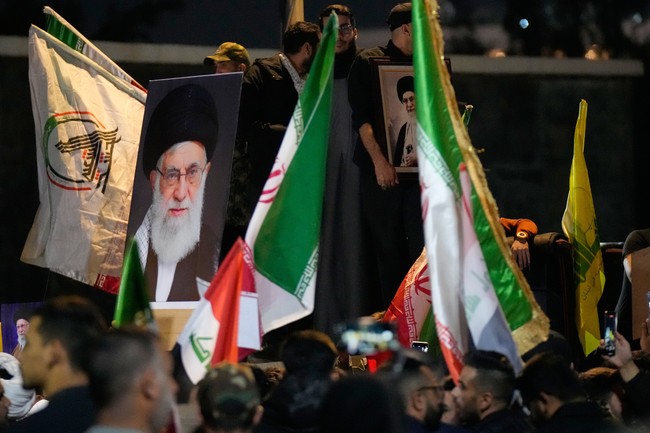
The U.S. Embassy in Baghdad has ordered American citizens to leave Iraq immediately after missile strikes and other attacks attributed to Iran-aligned militias, including a projectile that hit a helipad inside the Green Zone; this article summarizes the alerts, travel constraints, and the immediate security concerns facing anyone still in the country.
Iran-backed militia missile strikes hit Green Zone; embassy tells Americans to leave now
The United States Embassy warned Americans in Iraq to depart “immediately” following a series of attacks attributed to Iran-affiliated militias, one of which reportedly struck a helipad at the embassy inside Baghdad’s fortified Green Zone. Officials say these assaults are part of a broader pattern of “indiscriminate attacks” that have targeted areas around diplomatic sites and airports. At the time of the report, there were no confirmed U.S. casualties, but the situation remains volatile and unpredictable for nonessential personnel.
Embassy guidance cited repeated incidents near Erbil International Airport and other diplomatic facilities as part of the risk picture, noting that rockets, drones, and mortars have threatened Iraqi airspace. The embassy explicitly advised Americans not to attempt to reach embassy or consulate locations while these threats persist. That advisory underscores how rapidly the threat environment can change and how limited on-the-ground movement may be for civilians and staff alike.
The US Embassy in Baghdad has warned Americans inside to leave Iraq “immediately.”
A cites “indiscriminate attacks” carried out and threatened by Iran-aligned terror militias – including a missile attack that hit a helipad at the US embassy Saturday inside the fortified “Green Zone.”
“Iran-aligned terrorist militias have attacked the International Zone in central Baghdad on multiple occasions,” the embassy wrote in a statement posted on X. “Repeated attacks have also occurred in the vicinity of Erbil International Airport and the Consulate General. Do not attempt to come to the Embassy in Baghdad or the Consulate General in Erbil due to the ongoing risk of rockets, drones, and mortars in Iraqi airspace.”
Commercial flights out of Iraq are not available right now, which leaves many Americans stranded and scrambling for alternatives. The State Department notes that land routes through neighboring countries like Jordan, Kuwait, Saudi Arabia, and Turkey are possible, but these options carry their own dangers. Traveling by road through border regions exposed to militia activity or criminal opportunists is hazardous and far from a simple evacuation plan.
There is an ongoing State Department “do not travel” warning for the country, which borders Iran.
It says terror militias pose a “major threat to public safety” in the country, where the US has maintained bases since the Iraq War that began in 2003.
US citizens should “leave immediately,” although commercial flights don’t currently exist. The embassy advises land routes through Jordan, Kuwait, Saudi Arabia, and Turkey.
Practically speaking, many people who need to depart do not have safe, immediate options. Road convoys expose travelers to checkpoints, ambushes, and potentially hostile areas controlled by militias. For those with limited mobility, family obligations, or delayed documentation, the logistical and legal hurdles make land travel a fraught choice.
There is also the question of who should still be in Iraq beyond essential diplomatic and military staff. If civilian contractors, NGOs, and family members remain behind, the embassy’s blunt warning suggests reassessing their risk tolerance and contingency plans. For many, the prudent course is to seek shelter, register with the embassy, and prepare for orderly movement when a secure window opens.
Some have suggested military airlift as an emergency option, with transport aircraft such as C-17s able to evacuate people quickly if conditions allow and if host-nation permissions are coordinated. That kind of operation would prioritize immediate safety over comfort, limiting baggage and relying on rapid ground-to-air transit under protection. Still, deploying military airlift depends on clearance and the security situation around landing zones.
Authorities and citizens alike should expect more developments as tensions escalate. Anyone in Iraq right now needs to follow official channels for updates and heed embassy instructions, because delay can turn a dangerous situation into a catastrophic one. The environment remains fluid, and decisions made in the next hours could determine outcomes for many who remain in-country.
For Americans abroad, the guidance is stark and without sugarcoating: do not assume commercial options exist, do not approach embassy or consulate sites during active threats, and prepare for land or military-assisted departures if authorities can arrange them. Remaining aware, connected to official channels, and ready to move is the best practical defense in a scenario dominated by uncertainty and sudden violence.

Add comment