
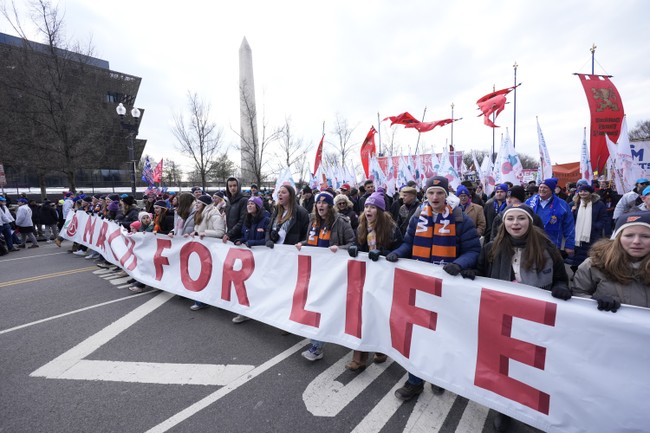
The North Dakota Supreme Court’s 3-2 decision reinstated a near-total abortion ban, returning the state to strict limits with narrow exceptions and criminal penalties for medical providers; the ruling reflects ongoing legal and political fights over abortion policy since the Dobbs decision and signals stronger protections for the unborn under state law. This article outlines the court’s ruling, the law’s exceptions and penalties, reactions from medical professionals and legislators, the role of the state’s attorney general in defending the statute, and how local pro-life infrastructure figures into the aftermath, with embedded media preserved where they originally appeared.
In a close 3-2 decision, the North Dakota Supreme Court found the state’s near-total abortion ban to be consistent with the state constitution, reinstating the law after a lower court had struck it down. The statute was originally triggered after the U.S. Supreme Court’s Dobbs decision overturned Roe v. Wade and was later reenacted by the legislature in 2023 with narrowly defined exceptions. That reenactment allows exceptions to protect the pregnant woman’s life or health and permits abortions within the first six weeks of pregnancy in cases of rape or incest. The attorney general appealed the lower court ruling, and Friday’s decision returned the law to effect across the state.
The North Dakota Supreme Court reinstated a near-total abortion ban on Friday, reversing a judge’s earlier decision and making abortion once again illegal in the state.
In North Dakota, it will now be a felony for doctors to perform abortions, except to protect a pregnant woman’s life or health, or in the case of rape or incest in the first six weeks of pregnancy. Patients are protected from prosecution, but doctors who violate the ban could face up to five years in prison and a $10,000 fine.
Twelve other states in the U.S. have similar or more restrictive bans on abortion.
Under the reinstated statute, any medical practitioner who performs an abortion outside those limited exceptions can be charged with a felony, facing up to five years behind bars and a $10,000 fine. Patients themselves are shielded from criminal prosecution, while accountability falls squarely on providers. That structure is intended to protect both women and unborn children by deterring nonmedical abortions while preserving narrow clinical discretion in life-or-health emergencies.
Ana Tobiasz, a doctor of maternal-fetal medicine in Bismarck, N.D., and a plaintiff in the case, said most medical providers in the state were fearful of repercussions even when the abortion ban had been halted in 2024. She expects to see more effects on care under this ban, which she says makes it hard to interpret when medical exceptions are, and aren’t, permitted.
“It is extremely confusing,” she said. “What I foresee is people going back to being fearful of, ‘Is this actually going to meet the exception?’”
In Friday’s close ruling, three justices agreed the abortion ban was unconstitutionally vague when it came to medical exceptions. But state law requires four of five justices to agree in order for a law to be found unconstitutional.
Doctors who testified and plaintiffs in the litigation raised concerns about clinical clarity and how physicians will interpret the exceptions in practice. Those concerns highlight the tension between protecting life and ensuring medical teams have confidence to act in emergencies. The court’s narrow split indicates judicial caution about overturning duly enacted statutes, especially where the Legislature has set precise terms for exceptions and penalties.
State Sen. Janne Myrdal, who sponsored the 2023 bill that became the reinstated law, expressed strong approval of the court’s decision, saying she was thrilled and grateful that justices recognized the statute’s constitutionality for both the mother and the unborn. The attorney general’s office framed the ruling as a successful defense of laws enacted by the people’s Legislature, emphasizing the office’s duty to uphold state law. Those aligned with pro-life organizations also celebrated the ruling as a reinforcement of their on-the-ground efforts.
[T]hrilled and grateful that two justices that are highly respected saw the truth of the matter, that this is fully constitutional for the mother and for the unborn child and thereafter for that sake.
Advocates on the ground have built a durable pro-life network across North Dakota, including pregnancy resource centers, maternity homes, and counseling services in major population centers and rural communities. That infrastructure aims to provide alternatives, support and practical resources so women facing unplanned pregnancies can choose life with assistance readily available. Providers who once offered elective abortions relocated after Dobbs, underscoring how legal clarity affects whether services remain in-state or move across borders.
The ruling will reshape clinical practice and legal risk calculations for medical professionals and reinforce the state’s pro-life policy trajectory. Observers should expect continued legal and legislative activity as stakeholders on both sides clarify, test, and defend how the law applies in real-world medical situations.
Public reaction has been intense and polarized, with advocates for life celebrating and opponents voicing deep concern; rhetoric on both sides remains heated. The political and legal battle over abortion at the state level continues to be a defining issue for voters and officials alike in North Dakota and across the country.


Add comment