
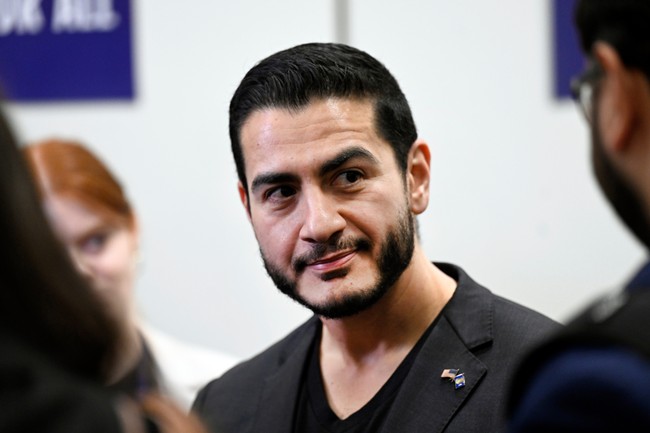
The Michigan Senate race has turned into a showdown over character and associations, with Abdul El-Sayed trying to distance himself from controversial streamer Hasan Piker while opponents and commentators call out the disconnect between his words and his alliances.
Abdul El-Sayed issued a statement after another inflammatory episode from Hasan Piker, insisting he stands against rhetoric that endangers communities. Voters and pundits weren’t impressed, pointing out that El-Sayed has repeatedly ducked direct condemnation and has shown a willingness to campaign alongside Piker despite the streamer’s record of divisive remarks.
While he says he “stands against any rhetoric that puts the community at risk,” he doesn’t specifically condemn Piker, nor does he disavow him or say he won’t be campaigning with him in the future. While he attacks “politicians and pundits for making it about a Twitch streamer” (he doesn’t even name which streamer), he’s the one who made Piker an issue by campaigning with him. People aren’t making up the association.
That tautology — claim moral distance while cozying up to the offender — doesn’t pass the smell test for many voters. Republicans, independents, and even some Democrats expect a clear line: if a political ally repeatedly traffics in antisemitic or hateful rhetoric, you call it out plainly and sever ties, not issue vague platitudes.
Conservative commentators noted the inconsistency loudly, and former White House officials didn’t hold back sarcasm. The optics are particularly bad because the allegations tie into a broader pattern of El-Sayed aligning with figures who repeatedly stoke controversy instead of calming it, which raises questions about judgment at a time when Michigan could swing a Senate seat.
https://x.com/AriFleischer/status/2091965888354246756
Camp aides have been accused of inflammatory rhetoric of their own, widening the story beyond a single streamer. Critics highlighted an episode in which a campaign staffer reportedly tried to link a Republican ad featuring a truck and an American flag to sinister symbolism, a move that only intensified attention on El-Sayed’s inner circle and messaging discipline.
Advocacy groups and mainstream organizations also reacted, interpreting El-Sayed’s statement as insufficient given the stakes. The American Israel Public Affairs Committee registered concern publicly, signaling that key constituencies are watching whether El-Sayed will accept responsibility or double down on evasions.
Journalists pressed the candidate on the matter, asking for a direct answer on whether he disavows Piker’s conduct and rhetoric. Observers say El-Sayed’s reluctance to speak plainly leaves a vacuum that opponents fill with ads and soundbites designed to make voters ask what he truly stands for.
Republican campaign teams have seized on the uncertainty, running ads and releasing clips that contrast decisive stances with El-Sayed’s hedging. The NRSC and other GOP groups have circulated videos that call his response a “sham,” arguing Michigan deserves a senator who names problems and confronts them instead of offering worn slogans.
Meanwhile, parts of the left, especially those tied to the Democratic Socialists of America, blasted anyone pointing out the inconsistency as part of an establishment smear campaign. They accused Senate leaders and political consultants of trying to force a narrative on El-Sayed rather than acknowledging grassroots complexities, framing criticism as betrayal of broader progressive aims.
Supporters pleaded with El-Sayed not to “cave to every attack,” insisting he should stand firm and not abandon allies based on media pressure or institutional demands. That sentiment shows the split in modern Democratic politics: between those who prioritize coalition unity at all costs and those who think certain associations cross a line that must be addressed for broad electability.
Other voices on the left and center warned that ignoring the problem won’t make it go away, predicting tangible political consequences if El-Sayed keeps equivocating. Political actors on all sides are now testing whether Michigan voters value loyalty to controversial personalities over the steadiness of judgment and accountability.
If El-Sayed wants to shore up his standing, the path is straightforward: either clearly repudiate harmful rhetoric and distance himself from repeat offenders or accept that those ties will define his candidacy. Until he does one or the other, Republicans and independent voters will keep using the inconsistency as a focal point in a tight and consequential race.


Add comment