
The Democrats are facing fallout after repeatedly aligning with controversial streamer Hasan Piker, and a recent comment about “American Jews” has forced party leaders into awkward public damage control. This piece walks through the original remark, the reaction from Democrat officials including Hakeem Jeffries, the backlash from the left, and Piker’s own defense as the situation escalates. The disagreement exposes tension within the party about political allies and messaging on antisemitism. Below I lay out the sequence of events and why it matters to voters and party leaders heading into the midterms.
The controversy began when Hasan Piker posted a photo of Michigan Democrat Jeremy Moss and added a line that quickly spread: “If Jews in America keep putting this idea out there that they are singularly invested in Israel, eventually someone is going to come around and take action, not against the state of Israel, mind you, but against American Jews.” That sentence landed as a direct charge linking American Jews’ supposed public support for Israel with future targeted violence. Many on the right and in the center viewed it as plainly antisemitic and dangerous rhetoric, while some on the left scrambled to manage the optics.
Democrats had already adopted Piker as a high-profile, youth-facing ally, and that history made this moment predictable. Party operatives hoped his reach would mobilize younger voters but often overlooked the risk that his hot takes would generate headlines of a different kind. When a figure with a big platform routinely says provocative things, the party inherits accountability for those comments whether leaders like it or not.
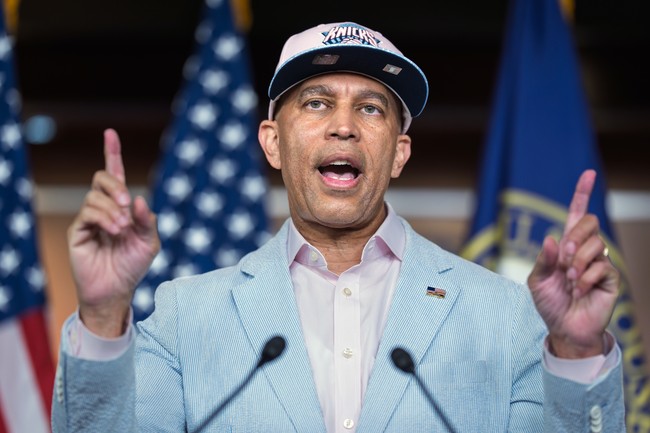
New York Democrat Hakeem Jeffries stepped in with a statement condemning the notion that American Jews invite violence, calling it “dangerous and antisemitic” and pledging to fight antisemitism “with the fierce urgency of now.” His language aimed to be forceful, but critics said Jeffries avoided naming Piker directly and came off timid. The reluctance to call out the individual who made the remark signaled to some voters that party leadership still fears alienating influential online personalities even when they cross clear lines.
The response from the left was swift and furious, with critics arguing that Jeffries’ post either didn’t go far enough or amounted to a betrayal. Social media amplified those complaints, and left-leaning commentators accused party leaders of applying a double standard when dealing with controversial allies. This internal conflict played out publicly, exposing a rift between progressive influencers and establishment figures who worry about broader electoral consequences.
Piker himself then pushed back, framing the blowback as a “coordinated republican smear campaign” that had flipped his original point about the distinction between Zionism and Judaism. He wrote, “my argument against the dangerous false conflation between zionism and judaism which in turn increases antisemitism is now turned on it’s head. zionism is not judaism. antizionism is not antisemitism.” That defense reasserts the position he says he was making, but many observers pointed out that his initial phrasing left little room for that nuance and directly referenced an American candidate in a way that tied the comment to U.S. Jews.
The core issue here is responsibility. Public figures with large followings have real influence on discourse, and words that equate a religious group’s public political leanings with inviting violence are harmful. Democrats are now forced to reconcile their reliance on digital influencers with the need to maintain clear boundaries against hate speech. Voters watching this unfold will judge how seriously the party takes protecting minority communities from dangerous rhetoric.
This episode also underscores a broader cultural challenge: the gap between performance politics on streaming platforms and the realities of campaigning for a broad, diverse coalition. A remark meant for an online audience can cascade into mainstream headlines and force candidates to answer for associations they assumed would help them. The choice to court attention-grabbing personalities carries predictable trade-offs when those personalities cross ethical lines.
https://x.com/RepJeffries/status/2091986276476125616?ref_src=twsrc%5Etfw
Party leaders who want to hold together a united front need to set consistent standards and not shrink from naming the source of harmful statements. Silence or fuzzy condemnations only fuel internecine conflict and hand Republicans a clear talking point about hypocrisy. If Democrats intend to appeal to voters who care about safety and respect for religious communities, they will need to demonstrate both clarity and courage in their responses.
The dispute also matters for the midterm message. With control of Congress at stake and intense focus on cultural disputes, episodes like this allow opponents to paint Democrats as either tolerating radical rhetoric or being inconsistent in defending minority communities. That narrative can be decisive in close races, making the management of public associations and statements a real political risk.
Ultimately, the Piker-Jeffries exchange reveals the consequences of blending influencer culture with electoral politics. Parties that pick allies for reach over judgment will periodically face crises where a single line or post forces leadership into damage control. How Democrats handle this will shape voter perceptions well beyond the initial controversy and could have measurable effects in competitive districts this cycle.


Add comment