
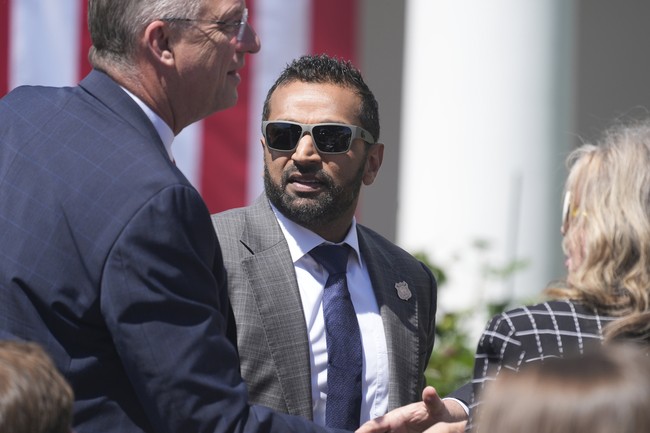
The press is pushing a narrative that FBI Director Kash Patel has a drinking problem, but the evidence is thin and often recycled. This piece looks at how anonymous sourcing, old disclosures, and recycled incidents are being spun into a scandal, and why that approach falls short under scrutiny.
The Atlantic’s initial report set the tone: loud headlines built on anonymous claims with no one willing to go on the record. Even outlets that tried to independently confirm the story admitted they could not verify the sourcing. When multiple Bureau officials spoke publicly, they denied the allegations, yet the story kept moving forward as if denials and lack of documentation were irrelevant.
Once Patel filed his lawsuit, suddenly other outlets felt safe to report on allegations that had been floating for days. That shift says more about how media cycles protect each other than it does about any new facts. Coverage tilted from concrete reporting to posture and fantasy about press freedom being under threat when someone uses the courts to demand accountability.
The writer at the center of this has publicly claimed an influx of confirmations since the story ran, but still no one has attached their name to these claims. That is a problem in journalism: if dozens supposedly corroborate a narrative, one of them should be willing to stand behind it. Instead we get secondhand gossip dressed up as sourcing and repeated until repetition becomes legitimacy in some newsrooms.
The supposedly mounting testimonials should have produced at least one verifiable incident: arrest records, dated complaints, photos, or contemporaneous logs. None of that has surfaced. All the talk about Patel “partying to excess” while off-duty remains unbacked by tangible evidence, which makes the spectacle less a scandal and more a rumor mill being amplified by outlets eager for drama.
Then The Intercept touted “new” evidence, but it turns out the only heating item was a couple of incidents from over two decades ago—all of which Patel had already disclosed himself. The idea that digging up a college-era misstep amounts to breaking news reveals the hollowness of the campaign. Rehashing ancient disclosures as fresh proof is a rhetorical stunt, not investigative triumph.
Both public intoxication and a separate urination incident are old entries in a 2005 disclosure Patel filed with the Florida bar, which makes their sudden resurrection seem less like discovery and more like selective memory. If these events are the pinnacle of the dossier against a sitting FBI director, then the case being made is remarkably weak. It looks like political theater dressed up as accountability.
Patel has been through email hacks, politically motivated probes, and confirmation scrutiny without similar trumpet blasts producing truly damaging material. Even the most aggressive critics have had to settle for documents that Patel himself produced years ago, which undercuts claims of an explosive new record. The press is essentially trying to convert historical context into present crisis without showing any new misconduct.
On top of that, certain outlets and pundits have used anonymous chatter and a tone of inevitability to argue Patel must go, invoking the idea that the administration wants him out because of “negative stories.” That logic inverts responsibility: the media manufactures the smell of scandal and then points to the stink as cause for removal. It’s circular and convenient for those who dislike Patel’s role.
Embedded social posts and commentary add atmosphere but not evidentiary value; they amplify suspicion without substantiation. The sensational framing fuels a political appetite to unseat him, while the underlying claims remain unsupported by contemporaneous records or named witnesses. When the medium becomes the message, substance gets lost altogether.
We should expect higher standards from outlets that claim to be doing serious reporting. Anonymous tips deserve follow-up that either produces corroboration or is labeled what it is: unverified. Running headlines and narratives on the basis of unverifiable claims damages both the subject and public trust. In this case, the stretch from college disclosures to calls for removal is a stretch, not a solid bridge.
The push to turn scant, old, and already disclosed material into a career-ending scandal says more about the motivations of certain media actors than it does about Patel’s fitness for office. If a pattern of misconduct were genuinely documented, it would stand up to scrutiny and be presented with named witnesses and records. Until then, what we have is noise amplified into narrative, and that should not be mistaken for conclusive proof.
NEW: A top White House official tells me that Kash Patel is likely the next Cabinet-level official to go.
“It’s only a matter of time,” the official, who was granted anonymity to discuss the sensitive matter, told me.
There are several reasons, the official said, but top among them is the number of negative stories centered on Patel is “not a good look for a Cabinet secretary,” and Trump is fed up with the level of distraction.
More in @playbookdc


Add comment