
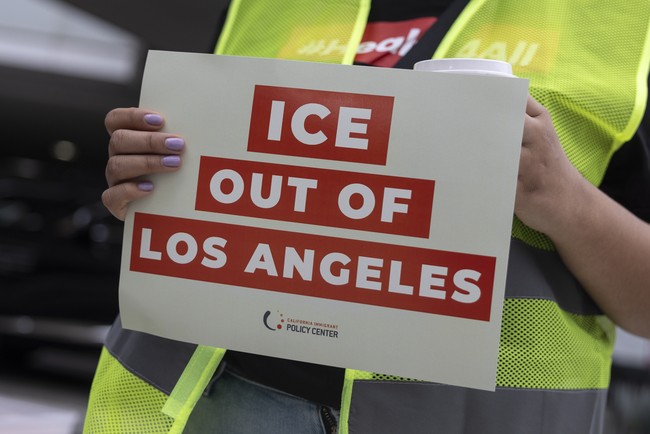
The scene outside a federal building in downtown Los Angeles shows a recurring pattern: anti-ICE protesters using risky tactics that escalate into dangerous confrontations, and one woman learned the hard way that standing in front of an SUV driven by federal agents is a bad idea. This report walks through what happened, the wider context of escalating anti-ICE actions in Los Angeles, and how these stunts undermine rule-of-law efforts while offering little practical resistance to federal operations. The incident is emblematic of a broader trend of public theatrics that create hazards for protesters and law enforcement alike. Details include eyewitness behavior, social-media reactions, and the aftermath of the failed attempt to stop a departing vehicle.
Los Angeles has seen a string of aggressive anti-ICE actions in 2026, including attacks on agents and property damage at federal sites. Those episodes have pushed local authorities to respond with stronger measures, and at times even the National Guard was needed to restore order. The pattern is not new and reflects a strain of confrontational protest tactics that prioritize spectacle over strategy.
On the day in question, a group of demonstrators gathered outside the same federal building downtown where prior clashes occurred. The crowd tried to block an SUV leaving the garage, throwing objects and attempting to impede the vehicle’s exit. These actions often create unpredictable hazards: a moving vehicle in a crowded protest zone is a recipe for injury.
One woman chose to stand directly in front of the SUV as it began to pull out, then backpedaled as the driver moved forward. She could not maintain pace with the moving vehicle and ended up clinging to the hood in a dangerous, brief attempt to slow the car. That risky grab did not stop the vehicle and only ended with her falling sideways onto the pavement.
She escaped without visible serious injury, but what could have been a tragic outcome highlights the foolishness of attempting to physically obstruct federal transportation. Blocking vehicles is neither a lawful nor effective way to change immigration policy or halt official duties; it creates needless peril for protesters, agents, and bystanders. Time and again these stunts gain attention but deliver no substantive policy results.
Protest organizers often treat these episodes as moral theater, but the practical consequences are messy: disrupted traffic, potential criminal charges, and the real risk of serious bodily harm. Federal agents are tasked with carrying out lawful duties, and obstructing those activities invites tense confrontations that can escalate quickly. The result is drama rather than constructive debate.
Social-media responses to the incident were blunt and unforgiving, with commenters mocking the protester’s miscalculation and noting the obvious danger of playing in traffic. Those online reactions capture a broader public sentiment that favors upholding the rule of law and condemns needless lawlessness. The viral nature of such clips often amplifies ridicule rather than sympathy for the demonstrators’ cause.
Several commenters on social media said that the protester got what she deserved.
“My mother taught me not to play in the street,” one wrote.
“I understand hood ornaments are making a comeback,” another added.
“Hope the SUV is ok,” a third chimed in.
Scenes like this feed into a narrative that activists are more interested in spectacle than solutions, and that narrative damages their credibility with swing voters and the broader public. A protest that risks lives is not persuasive; it makes opponents of the movement look reasonable and responsible by comparison. For anyone seeking real policy change, tactics that provoke legal consequences and endanger people are counterproductive.
Local law enforcement repeatedly faces the same dilemmas when dealing with confrontational protests: protect the public and property, enforce laws, and try to avoid escalating violence. On the ground, officers must make split-second decisions amid chaotic settings, and intentionally obstructive tactics by demonstrators complicate those judgments. Courts and courts of public opinion will often look unfavorably on actions that recklessly endanger lives.
Protesters who take such risks should think through the legal and physical consequences before stepping into a roadway or grabbing a moving vehicle. Civil disobedience has a place in democratic society when it is principled and nonviolent, but deliberately placing oneself in the path of traffic crosses a line from civil protest to reckless endangerment. That distinction matters to voters deciding who appears principled and who appears irresponsible.
Ultimately, this incident is another reminder that good intentions do not excuse dangerous behavior. Those committed to changing policy should favor tactics that build support and withstand public scrutiny, not stunts that invite injury and ridicule. The rule of law remains a central value for most Americans, and actions that undermine it are unlikely to win broad backing.
Add comment