
Los Angeles faces another slow-burning crisis after a warehouse fire in Boyle Heights sent toxic smoke across neighborhoods and exposed slow or inadequate responses from city and state leadership, raising questions about past fixes, budget priorities, and who was actually managing the emergency.
A warehouse fire in Boyle Heights erupted midweek and kept burning for days, fed by roof solar panels and dense, slow-burning materials inside the building. Fire crews struggled as toxic smoke drifted across neighborhoods and complicated containment efforts, creating an ongoing health hazard for residents. The blaze has highlighted vulnerabilities in industrial fire prevention and response in a densely populated urban area.
The building involved had a prior solar-panel fire in August 2024, which should have been a red flag and prompted inspections and preventative work. Officials have said the structure contains massive refrigerated storage and dense foam insulation that continues to off-gas, which makes the blaze unusually stubborn. That history raises real concerns about whether follow-up measures were taken after the earlier incident.
Officials say a fire that broke out at a Lineage cold food storage facility on South Los Palos Street in Boyle Heights appeared to be contained to the roof and solar panel system.
A shelter-in-place order was in effect for the area south of the 101 Freeway to Washington Boulevard and east of Soto Street to Indiana Street. The order was lifted around 8:45 p.m.
About 70 people were evacuated on two streets, the Los Angeles Police Department said.
An ammonia line was compromised due to the blaze, but the leak was later contained, according to the Los Angeles Fire Department.
The LAPD issued a city-wide tactical alert, increasing the number of available officers.
In August 2024, firefighters responded to a solar panel fire on the roof of the same building.
Budget decisions at the state and city level have come under fire, with critics pointing to cuts that may have weakened prevention and mitigation programs. When leaders trim resources for inspections, staffing, and equipment, the city’s ability to avert repeat disasters declines. The situation in Boyle Heights looks like a direct consequence of those choices.
It took four days for a state-level emergency declaration to be issued, prompting frustration from residents and elected officials alike. In the meantime, people reported thick smoke, bad air quality, and irritation across wide parts of Los Angeles County. The delay in escalating the response intensified calls for accountability from local leaders.
WATCH:
Residents living near Elysian Park and other parts of the region monitored air quality as the smoke spread, and concern mounted about long-term health impacts. The persistent burning of spoiled food and insulation created a biohazard as well as a hazardous-materials problem, according to firefighters on the scene. Authorities warned people with lung conditions and smoke sensitivity to limit outdoor activity while response crews struggled to extinguish the remaining hot spots.
https://x.com/ABC7/status/2068514139425677367
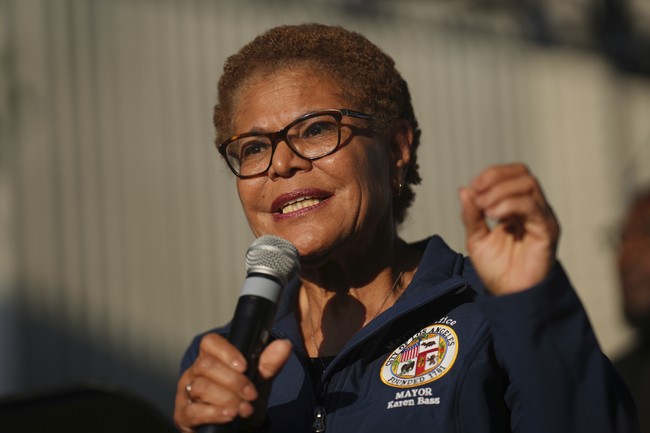
Local leaders drew sharp criticism for their visibility and involvement during the crisis, and social media amplified those complaints. Questions circulated about whether the mayor was in town and whether the mayor’s office was providing on-the-ground leadership or relying on social posts handled by staff. Political opponents suggested that campaign politics and travel took priority over steady, hands-on crisis management.
Governor Newsom faced similar scrutiny after attending events away from the immediate disaster area, earning accusations that he prioritized appearances and political fights over swift action. Critics argued that the governor’s delayed declaration and focus elsewhere signaled misplaced priorities at a moment when decisive leadership was needed. That perception fed broader complaints about state-level responsiveness to California emergencies.
L.A. city officials said Saturday they expected to declare a state of emergency as firefighters continue to battle a stubborn warehouse fire in Boyle Heights that has sent plumes of irritating smoke across the region.
Los Angeles Fire Department Chief Jamie Moore described the blaze that broke out Wednesday as a “very unique fire, a very unique challenge for the Los Angeles Fire Department, for the city of Los Angeles, but also for the County of Los Angeles.”
The 500,000-square-foot commercial building at 1400 S. Los Palos St. houses 85 million pounds of frozen food “like a giant cooler,” he said. The corrugated steel walls are filled with very dense foam that is burning slowly and off-gassing despite ongoing water drops from helicopters.
Moore cautioned people with lung issues or smoke sensitivity to avoid outdoor activities, but said crews have mitigated the hazardous-materials portion of the blaze and are now focused on the biohazard portion posed by spoiled food.
A shelter-in-place order for residents was lifted on Friday, but many across the region on social media reported thick smoke smells, haze and poor air quality in the San Gabriel Valley, Northeast Los Angeles, Glendale, Burbank, downtown Los Angeles and many other areas.
Some said the smoke was as bad, if not worse, than during the Eaton fire that burned in Altadena in January 2025.
Political voices weighed in, turning the emergency into another partisan battleground about competence and priorities. Accusations flew about environmental justice and whether officials from certain districts did enough to protect vulnerable communities. The rhetoric underscored how emergencies quickly become tests of leadership credibility in California’s charged political environment.
Local candidates and activists seized on the incident to question the incumbent mayor’s record on public safety, prevention, and crisis command. Those critiques extended into the mayoral race, where opponents highlighted perceived absences and past controversies as evidence of mismanagement. Voters watching the response will likely remember who showed up and who did not.
As smoke clears and investigators determine cause and responsibility, residents deserve transparency about inspections, maintenance, and whether prior warnings were heeded. This fire underlines the need for durable prevention programs and clear chains of command when disaster strikes. The human cost in air quality and fear makes clear that policy choices have immediate, real-world consequences.
This is beyond contempt and is actually evil wearing incompetence like its a badge of honor! Those two are just evil agents in politics right in the ranks of Killery, Obozo, Lyin’ Biden, Cackling Lunatic Cameltoe Harris, Crying Chucky, Shifty Schiff and all the rest of the Traitors!
Will there ever be any Justice that puts these Criminals where they belong?
I pray “God’s Judgment” is coming swiftly for these most despicable of so called public servants!
SMART W0RK I was kind of worried about the entire thing. I’ve never worked from home, But Yeah, (D11,205) I did just join and all is good. so I will post back how it goes!____ clicked on the name in my profile