
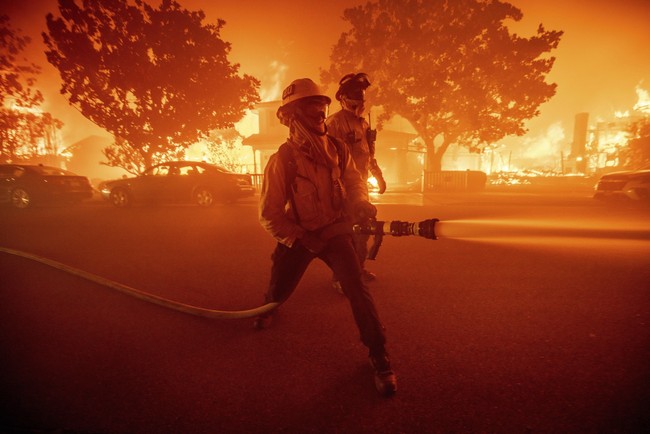
The Los Angeles Fire Department’s internal messages and firefighter accounts challenge the official story about the Palisades Fire’s origin, alleging crews were told to stand down while the ground still smoldered and that command staff initially denied a link between an earlier blaze and the deadly January 7 fire. Multiple on-the-ground firefighters, text threads obtained by a major newspaper, and federal investigators point to a reignition from an earlier Lachman Fire, raising questions about command decisions, accountability, and how information was handled in the days before the catastrophe that killed 12 people.
Firefighters who were mopping up the January 1, 2025, Lachman Fire in Pacific Palisades say they found smoldering terrain and “red hot coals” but were ordered by a battalion chief on January 2 to roll up hoses and leave the scene. Those accounts describe visible hot spots and tree stumps still burning underground, conditions that typically call for extended hand-crews and thorough wetting to prevent holdover fires. The claims from rank-and-file crews clash with later official statements that the fire had been extinguished.
Federal investigators concluded the Lachman Fire continued to smolder in underground root systems until January 7, when strong winds caused a rapid reignition that became the Palisades Fire. That larger blaze destroyed homes, displaced residents, and resulted in 12 fatalities, evidence of how a small, unresolved burn can escalate under the right conditions. The idea that a localized mop-up could be left incomplete and then flare into disaster is a core element of the emerging controversy.
Text messages and firefighter testimony also indicate LAFD personnel recognized the danger early on but were constrained by orders from supervisors. One firefighter told community advocate Spencer Pratt that he showed a chief a hotspot and was told, “it was good enough,” even as he fought to extinguish red hot coals with water draining from a hose. The exact quote given by that firefighter reads: “I had a chief walk by me that day and I showed him a hotspot. He said it was good enough” and “I was using water that was draining out of the hose to put red hot coals out. I couldn’t believe we walked away from that burn scar the way it was.”
Other texts obtained by the Los Angeles Times back up this account, with one firefighter saying crews were warned leaving the burn scar unprotected was a “bad idea” because smoldering terrain was clearly visible. “And the rest is history,” the firefighter later wrote. Another text indicates that crew members were upset to leave but felt compelled to follow orders, underscoring tension between field assessments and command decisions.
Meanwhile, LAFD leadership initially denied any knowledge of holdover fires. Former Interim Chief Ronnie Villanueva, who returned from retirement to lead the department after fire-related shakeups, reportedly said neither he nor the arson squad knew what a holdover fire was until federal investigators explained it. He is quoted as saying, “As far as we were concerned, the fire was extinguished,” and “Unbeknownst to us, it was still in the rooting system.”
Villanueva and Assistant Chief Joe Everett have both maintained crews patrolled and cold-trailed the Lachman Fire site extensively, with claims that resources were on patrol for more than 36 hours. But the official after-action paperwork indicates patrol status for an additional 12 hours only, creating a discrepancy between public statements and internal documentation. Requests for dispatch records to support assertions of January 3 activities were reportedly not answered, leaving gaps in the timeline.
Everett’s comments at a January 16 community meeting emphasized trust in firefighters and the department’s efforts, saying, “I can tell you those people on that fire ground were highly qualified and well-trusted. They also did what they called a cold trailing operation well into the next day. We kept a patrol well over 36 hours. We kept the hose line on the hill, we call it we kept it plumbed just to go back and continue to patrol. That fire was dead out.” Those remarks now sit uneasily beside first-hand accounts and the federal finding that the fire smoldered underground until reignition.
Embedded messages and video from public meetings captured leadership grappling with the fallout and expressing personal regret. One recorded admission stood out: “It’s extremely, extremely hard for me to look you in the eye knowing that, quite honestly, I feel like I failed you in some respect.” That kind of candor from department leadership highlights the human side of institutional failure but does not erase the need for accountability and a clear explanation of who made which decisions and why.
Communities hit by the Palisades Fire deserve transparent answers about whether command choices on January 2 contributed to the disaster on January 7, and whether standard procedures for mop-up and holdover detection were followed. The tension between what front-line firefighters reported and what was publicly stated by command raises serious questions for investigators and for local officials responsible for public safety.

Add comment