
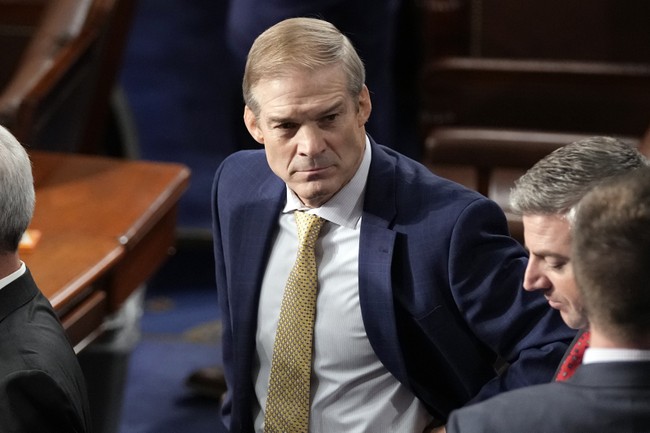
Jack Smith faced the House Judiciary Committee where GOP Chair Jim Jordan tore into the former special counsel for what Republicans call politicized prosecutions and overreach. Jordan accused Smith of weaponizing the Department of Justice and violating norms, while Smith largely listened without explosive rebuttals. The hearing featured heated exchanges, video material from House Republicans, and ongoing testimony that promises more conflict. This article covers the hearing’s tone, the core accusations, and how Republicans framed Smith’s actions as part of a broader pattern of partisan lawfare.
Jack Smith in the Hot Seat at House Judiciary Committee As Jim Jordan Lights Him Up but Good
Former Special Counsel Jack Smith arrived at the hearing under a cloud of Republican accusations that his Arctic Frost probe and other actions amounted to political targeting. Republicans charged that investigations ramped up right after Donald Trump announced his 2024 bid and that Smith’s team crossed ethical lines in pursuit of felony charges. The committee’s message was blunt: this was not justice, it was prosecution as politics. Members on the GOP side made clear they see a pattern stretching across several high-profile legal actions.
Jim Jordan led the questioning with a fast-paced, aggressive style that set the hearing’s tone from the start. He highlighted what he called excessive DOJ tactics and tied Smith to a wider set of officials the GOP believes engaged in weaponization. Jordan repeatedly emphasized that the American people saw through these efforts, framing the events as an assault on democratic norms. His approach was as much performance as policy, aimed at dramatizing perceived abuses.
“We should never forget what took place, what they did to the guy ‘We the People’ elected president twice,” Jordan said, referring to Trump. “The good news is, the American people saw through it.”
Smith’s demeanor struck many observers as unusually restrained; he sat and listened for long stretches while Republicans offered sharp, pointed criticism. That passive posture only amplified Jordan’s energy and rhetorical flourishes during the session. Lawmakers played video and recited timelines showing how quickly various inquiries followed political developments. The GOP narrative centered on a single theme: institutions meant to be neutral were mobilized for partisan ends.
Jordan named names and painted a picture of a left-leaning cast of characters he says worked in concert to bring legal pressure on political opponents. He moved from general accusation to specific incidents, insisting there were clear instances of improper conduct. The cumulative effect aimed to convince the public that what took place was not isolated but systemic. Republicans made the case that accountability for prosecutors and officials is essential to restore trust.
For so long, the left has controlled so much in this country.
[The] Left control big media, the Left control Big Tech, the Left control academia, Hollywood. Certainly the Democrat Party, and I think, all too much, the federal bureaucracy.
But the Left doesn’t control We the People. And in spite of the Left, and the weaponization efforts of [former FBI Director “St. Jim”] Jim Comey, [“I love all criminals” Manhattan District Attorney] Alvin Bragg, [disgraced Fulton County Georgia District Attorney] Fani Willis, and Jack Smith, We the People saw through it all — and we elected President Trump twice.
Republicans used visuals and a prepared video to spell out their claims about timing and tactics, arguing the investigations often coincided with political events. The committee showcased examples they contend prove investigations were driven more by politics than by neutral pursuit of the law. Members cited raids, surveillance and other aggressive steps as evidence of overreach. That material was designed to be consumed by viewers as proof of a larger pattern.
Watch:
Representative Jordan reiterated the central accusations with rhetorical force, repeatedly returning to the theme that justice was warped into a political tool. He insisted that accountability is not about revenge but about restoring institutional integrity. The hearing was staged as a reckoning, with Republicans vowing to follow the facts as they see them and hold officials to account. The political stakes feel high, and the session underscored how legally focused conflicts have become central to modern campaigning.
Committee members pressed Smith on specifics and sought admissions about investigative choices, though the witness often provided limited, tightly framed answers. Republicans interpreted those answers as confirmation that boundaries were pushed and norms were ignored. Democrats attempted to defend the integrity of the investigations and kept trying to shift the focus to legal standards and precedent. The partisan split on display suggested any findings will be contested long after the cameras leave.
House Republicans later released a video compilation intended to summarize their case, tracing the timeline and highlighting what they call intrusive actions by Smith’s office. The materials reiterated that the investigation’s opening closely followed Trump’s announcement and emphasized highly publicized enforcement steps. GOP leaders framed the compilation as a way to clarify complex legal maneuvers for the public. The committee’s effort was meant to leave no doubt about the narrative Republicans want to own heading into the coming months.
Testimony continued as the hearing unfolded, and committee members signaled more questions and investigations to come. Republicans promised follow-up actions to probe alleged abuses and said they will keep the spotlight on what they describe as corrosive lawfare. For supporters on the right, the hearing reinforced long-held distrust of the federal justice apparatus. The broader fight over prosecutorial discretion and political influence is far from over, and this session made that clear.


Add comment