
The House cleared a procedural hurdle Thursday to advance a $1.2 trillion federal spending package that includes funding for the Department of Homeland Security and Immigration and Customs Enforcement, setting up two final votes to avoid a government shutdown as the January 30 deadline approaches.
Republican leadership pushed the measure through despite internal dissent, arguing the bill protects key homeland security functions while keeping overall discretionary spending in check. Party leaders framed the move as a practical step to keep federal operations running and prevent harm to national security readiness. The package bundles funding for major departments and aims to split consideration into two votes so Congress can meet the deadline.
Included in the package are appropriations for Defense, Education, Labor, and Health and Human Services, with DHS funding covering agencies such as TSA, CBP, Coast Guard, and ICE. GOP leaders emphasize that maintaining these core functions is essential for public safety and border security. The House is racing to pass these measures before members depart and a winter storm complicates logistics.
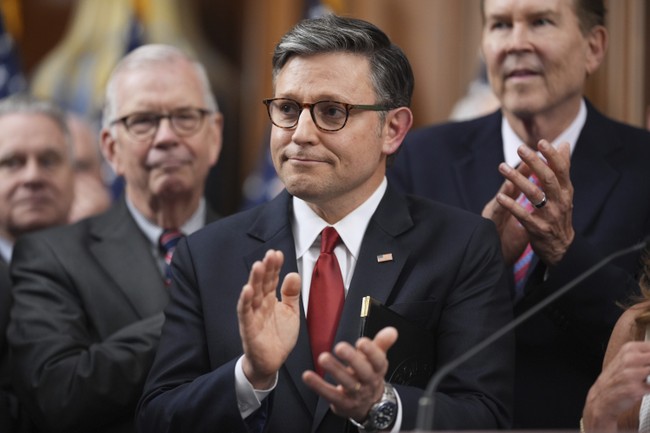
Internal friction centered on a Midwestern demand to study year-round sales of E15 ethanol fuel, a priority for several Republican lawmakers who want to support rural producers and drivers. Speaker Mike Johnson worked through the night to assemble enough Republican votes after hard-liners threatened to oppose the measure without that concession. The compromise approach was intended to balance regional priorities with the broader urgency of funding the government.
Johnson’s first challenge has come from unlikely quarters. Midwestern Republicans, typically mild-mannered allies of the GOP leadership, are up in arms that the massive spending package doesn’t include language to make E15 — an ethanol-based biofuel — available for year-round purchase.
The ringleaders in this intra-Republican fight include GOP Reps. Zach Nunn and Ashley Hinson of Iowa, and Reps. Michelle Fischbach (R-Minn.) and (R-Neb.).
Oil-rich states like Oklahoma, Texas and Louisiana would be natural opponents of this move. Johnson and House Majority Leader Steve Scalise are from Louisiana. House Appropriations Committee Chair Tom Cole is from Oklahoma. Senate Republican leaders are also opposed to the E15 policy change.
The DHS and ICE portions remain politically charged, drawing criticism from Democrats who say the bill does not sufficiently rein in enforcement and from some conservatives who worry about too many concessions. The measure preserves ICE’s current funding roughly as-is but trims certain enforcement and removal allocations and adds requirements for body cameras and additional training for agents. Those provisions reflect an attempt to respond to controversy while keeping operational capacity intact.
Republicans defend the package as pragmatic, insisting that averting a shutdown is paramount and that the bill funds essential homeland security tasks. They argue the modest policy changes and oversight requirements are reasonable given public scrutiny of immigration enforcement. In the GOP view, keeping the government open and funding the Department of Defense and other critical agencies must be the priority.
Most House Democrats signaled opposition based on concerns about ICE policy and enforcement priorities, indicating a partisan vote will be likely when the full spending resolutions come up. That partisan split makes the Republican conference’s internal unity crucial for passage. Leadership believes a guided path through the House will give the Senate a clear position to negotiate from.
The procedural victory was the “rule vote,” which sets up two separate final votes: one to fund Defense, Education, Labor and Health and Human Services, and another to fund the Department of Homeland Security, including ICE. If those two bills clear the House, the plan is to join them later into a single package for the Senate to consider. The approach aims to break the work into manageable chunks while meeting the looming deadline.
Critics in oil-producing states worry that expanding E15 access year-round could undercut their industries and shift market dynamics. That tension highlights the regional tradeoffs Republicans must navigate between supporting rural, ethanol-producing districts and defending fossil-fuel interests. Leadership had to weigh those competing priorities while keeping the larger funding objective in sight.
With votes expected before lawmakers depart and weather on the way, time is tight and party discipline will determine the bill’s immediate fate. Republican leaders are pushing the narrative that funding the military, border protection, and essential domestic services outweighs intra-party disagreements. The coming votes will test that argument and show whether the conference can translate compromise into final passage.
Observers are watching how the Senate responds and whether negotiators can hold together the package through the bicameral process. For Republicans, the test is not just avoiding a shutdown but doing so while advancing pragmatic policy steps and protecting core security functions. The outcome will shape debates about enforcement, energy policy, and priorities for federal spending in the months ahead.


Add comment