

The Department of Justice announced an arrest tied to a disruption at Cities Church in St. Paul, and the organizer at the center of the story pushed back in a TV interview while officials promise more action; the episode has prompted debate over protest tactics, press coverage, and potential legal consequences as the church and federal authorities weigh next steps.
Attorney General Pam Bondi publicly identified Nekima Levy Armstrong as a key organizer in the protest that interrupted services at Cities Church, and federal agents took action on Wednesday. The arrest marks a rare point where DOJ and state officials have stepped in over a demonstration at a place of worship, underscoring how seriously authorities view the incident and its potential legal exposure.
We will share more updates as they become available.
Listen loud and clear: WE DO NOT TOLERATE ATTACKS ON PLACES OF WORSHIP.
The DOJ also announced another arrest connected to the same action, and officials have suggested further legal moves could follow as the investigation continues. That signals this is not being treated as an isolated scuffle but as an organized effort with possible criminal implications beyond a single charge.
The reaction from conservative commentators was immediate and sharp, dismissing the protesters’ framing and predicting political fallout for activists who believed their tactics would be consequence-free. Critics argue the demonstrators misjudged public tolerance for disruptions inside worship services, and now face both legal scrutiny and reputational damage.
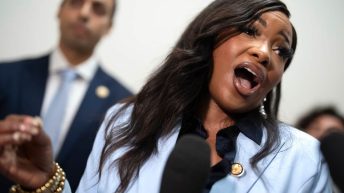
Armstrong disputed the characterization of the event during an appearance on Erin Burnett OutFront, claiming demonstrators “sat down and participated in the service” rather than rushing the sanctuary. Her portrayal contrasts with numerous social media clips that show protesters interrupting the flow of the service and prompting alarm among attendees.
Many viewers and participants say the available footage contradicts her account, showing a louder, more confrontational scene than the calm participation she described. The discrepancy between the on-camera claim and the videos circulating online has only intensified debate over who defines what happened in real time at the church.
There is an earlier recorded statement that appears to undermine the line about passive participation: Armstrong told a national TV host the action was intended to disrupt routine operations at targeted locations. That admission ties the event to a broader tactic the organizers called “Operation Pull Up,” which they described as seeking out key sites and unsettling normal activity.
“This is Operation Pull Up, more of a clandestine operation. We show up somewhere that is a key location. They don’t expect us to come there, and then we disrupt business as usual,” she said, according to Lemon’s broadcast. Those words are being held up by prosecutors and commentators as evidence of intent to interrupt and to garner attention through forceful tactics.
Observers note that the media outlet where Armstrong made her first comments did not press her on the discrepancy between that description and her later claim of participating in the service. That gap in questioning has fueled complaints about uneven coverage and the tendency of some outlets to treat protest leaders sympathetically.
The Cities Church has indicated it will explore legal remedies, and leaders have publicly condemned the disruption while affirming their religious mission. Church officials say they will consider civil and other actions to hold organizers accountable and to protect their congregation from future interruptions.
Legal analysts say charges related to disrupting religious services, trespass, or other offenses could be on the table depending on what investigators prove about planning and intent. As the DOJ continues to review evidence and speak with witnesses, additional charges or arrests remain a real possibility in this unfolding case.
Beyond the courtroom, the episode is prompting a broader conversation about protest norms, the rights of worshippers, and the line between civil disobedience and unlawful conduct. The standoff highlights how tactics that may win attention on social platforms can also trigger swift institutional responses when they cross perceived boundaries around sacred spaces.
As federal and state authorities pursue this matter, the focus will be on evidence, witness testimony, and the public record, including the statements protesters have made on camera. The coming weeks are likely to determine whether this incident becomes a narrow enforcement action or a test case about the limits of disruptive protest at religious institutions.
Add comment