

This piece examines the rise of democratic socialism in Washington, D.C., the candidacy of Janeese Lewis George, the constraints of the Home Rule Act, and the fiscal realities facing the District as it approaches the 250th anniversary of the Declaration of Independence.
In a few weeks Washington, D.C., will host national celebrations for America’s 250th anniversary, a moment meant to honor individual liberty and limited government. At the same time, the capital looks poised to elect a democratic socialist as mayor, a dramatic ideological shift for a place that symbolizes the American republic. That contrast makes the upcoming election more than local politics; it’s a test of whether D.C. will double down on expanding government power at a time when fiscal responsibility is sorely needed. Voters are deciding between philosophical allegiance to the founders and a promise that the government can provide everything for everyone.
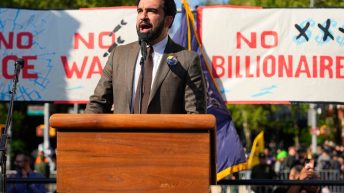
Janeese Lewis George is the first self-identified democratic socialist on the D.C. Council since the late 1990s and, according to reports, she opened a commanding lead in the Democratic primary for mayor. She runs on what she calls a “people-first platform,” promising to “improve the lives of the people in D.C. …by strategically and effectively utilizing all that the government can offer and do.” Those words are exact and central to her pitch, but they leave unanswered the practical questions of cost and consequence. In politics, intentions are important, but so are budgets and incentives.
Her platform lists sweeping promises: “childcare for all,” “affordable utilities for all,” “arts and culture for all,” “reliable transportation for all,” “good jobs for all,” and “homes for all.” Those slogans appeal emotionally, yet they imply a massive expansion of municipal obligations without a clear funding plan. Historically, when governments promise everything, taxpayers eventually pay more or services decline. The most obvious likely answer is higher taxes on wealthier residents and businesses, which can slow economic growth and drive people and jobs away.
The District’s status under the Home Rule Act of 1973 changes the calculus here. Unlike a typical city, D.C. remains under congressional oversight, with Congress reviewing Council legislation and retaining authority over the budget. That federal check complicates any effort to push a purely municipal democratic socialist agenda, and it forces would-be mayors to negotiate in a broader political arena. It also means that some of the most radical proposals cannot be enacted without cooperation from lawmakers outside the District.
Mayor Muriel Bowser has tried to steer the budget toward sustainability, proposing cuts to rein in spending and pointing out the need for clear-headed fiscal policy. After dealing with a $1.1 billion shortfall, she emphasized practical steps to balance the books. The numbers matter: in 2017 D.C.’s budget was $13.4 billion for roughly 694,000 residents, while by 2026 the budget swelled to $21.8 billion for about 698,000 residents. That growth far outpaced population change and raises questions about long-term affordability and priorities.
Broken down, most spending flows to human support services, followed by public education, while less goes to infrastructure and public safety. Those allocations reflect policy choices that a democratic socialist mayor would likely magnify. Redirecting resources toward universal programs will intensify trade-offs and could mean further reductions for infrastructure and law enforcement at a time when physical maintenance and public safety are pressing needs. Voters should weigh those trade-offs carefully.
Bowser has advocated a more business-friendly approach, arguing that fostering economic growth is the long-term answer rather than punitive taxation. She declined to endorse Janeese Lewis George, favoring a more moderate alternative; nonetheless, the momentum behind democratic socialists this primary season has been strong in multiple cities. That trend reveals a national appetite for expansive government solutions, even as those solutions often overlook fiscal constraints and the incentives that drive private-sector investment.
The ideological clash here is stark: the principles in the Declaration of Independence emphasize individual rights not derived from government, while democratic socialism elevates government as the primary engine for securing outcomes. Supporters of limited government see that shift as a fundamental reversal, where authority moves away from individuals and toward centralized institutions. This debate about the role of government is precisely the one Americans were meant to have, and the capital’s choices will send a clear message about which direction a major American city prefers.
Electing a mayor who promises universal entitlement-style programs without transparent funding plans risks imposing higher costs on residents and businesses, and it could undermine the very prosperity needed to sustain public services. The unique oversight D.C. faces under federal law will check some excesses, but it will not eliminate the political pressure to expand spending. Voters and lawmakers alike need to consider whether expanding government control over more areas of life truly advances the freedoms the nation was founded to protect.


That’s great. A total Communist running DC into the ground with the only thing Jackasses know how to do, TAX EVERYTHING THAT EXISTS into oblivion.