
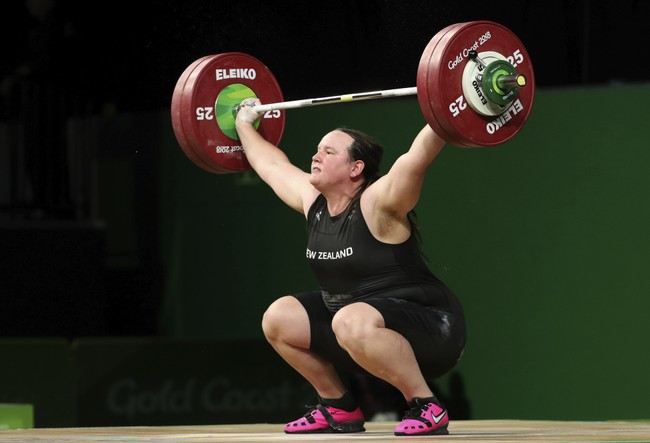
The International Olympic Committee has adopted a new policy barring transgender women and certain DSD athletes from competing in women’s events, a change driven by new leadership and scientific review and timed ahead of the 2026 Winter Games in Milan and future Olympics in the United States.
The forthcoming Winter Olympics in Milan will spotlight elite athletes who train their whole lives for a shot at gold, but concerns about fairness in women’s events have dominated recent debate. Republican-leaning voices and many athletes argued that men competing as women retain physiological advantages that undermine fair competition. The IOC’s recent policy shift responds to those concerns and sets firm eligibility rules for the decades to come.
IOC President Kirsty Coventry, herself an Olympic swimmer, made protecting the female category a clear priority after assuming leadership, reflecting a political and cultural demand for clarity. Her stance echoed members’ calls for fairness, and the IOC moved to centralize eligibility standards rather than leaving them to individual sports. That change means consistent rules will now apply across Olympic disciplines instead of patchwork standards set by separate federations.
Medical and scientific review played a key role in the decision, with the IOC citing evidence that transgender women who were born male can retain competitive advantages despite treatments to lower testosterone. Dr. Jane Thornton, the IOC’s medical and scientific director and a former Olympic rower, presented a methodical, research-driven case at the Lausanne meeting. The review emphasized objective measures of strength, endurance, and physiological capacity where prior male development can matter in elite sport.
The IOC also extended the policy to athletes with differences of sex development, or DSD, clarifying that rare genetic, hormonal, or anatomical conditions will be evaluated under the same fairness principles. Recent Olympic competition produced controversies when some athletes competed in women’s events after prior eligibility disputes, which fed calls for a clearer, sport-wide approach. Governing bodies like World Boxing have moved toward mandatory sex verification to ensure integrity in women’s contests.
The president’s declaration was explicit about prioritizing fairness:
We understand that there’ll be differences depending on the sport … but it was very clear from the members that we have to protect the female category, first and foremost to ensure fairness.
Timing matters. With Milan 2026 on the horizon and Los Angeles 2028 following, a binding IOC policy means event organizers and national federations will plan under a single rulebook. That reduces legal uncertainty and shields female athletes from last-minute eligibility reversals that can derail careers. For American events, the topic has national policy implications, and it aligns with recent executive action aimed at defining eligibility by sex rather than gender identity in U.S. competitions.
Critics of the change warned about exclusion and discrimination, arguing that some policies could leave transgender athletes without competitive outlets. Supporters counter that elite sport must protect categories based on fair play, biological realities, and measurable performance differences. The IOC framed the move as a balance between inclusion and competitive equity, but the emphasis is squarely on maintaining a level playing field for women who train and compete in female divisions.
The science presented at the IOC session was described as dispassionate and evidence-based, focused on measurable advantages rather than ideology. Delegates heard that even with testosterone suppression, many physiological factors tied to male puberty—such as bone structure, muscle mass, and cardiovascular capacity—can persist. That evidence swayed members and helped crystallize policy language designed to be defensible on both scientific and legal grounds.
For athletes, coaches, and fans, the policy brings certainty: eligibility criteria will be clear ahead of selection trials and qualification events. Female competitors welcomed a move that protects years of training and hard work from being nullified by contested eligibility standards. National federations will now adapt qualification processes to align with IOC guidance, potentially affecting selection for world championships and Olympic teams.
Political response was swift and partisan at times, reflecting broader cultural battles over gender and sport. Republican voices, athletes, and some policymakers praised the IOC for prioritizing fairness, viewing the decision as a common-sense correction after years of contentious disputes. The change signals a shift in international sport governance toward rules that emphasize sex-based categories at the elite level.
Moving forward, monitoring how individual sports apply the policy will be crucial, since different events emphasize different physical attributes and may require tailored eligibility assessments. The overall test for the IOC will be implementing standards that are scientifically grounded, legally durable, and perceived as fair by athletes and the public. For now, female athletes gearing up for Milan can expect their category to be defended by clearer, centralized guidelines.
After more than 40 days of screwing Americans, a few Dems have finally caved. The Schumer Shutdown was never about principle—just inflicting pain for political points.
Help us report the truth about the Schumer Shutdown. Use promo code POTUS47 to get 74% off your VIP membership.



Add comment