
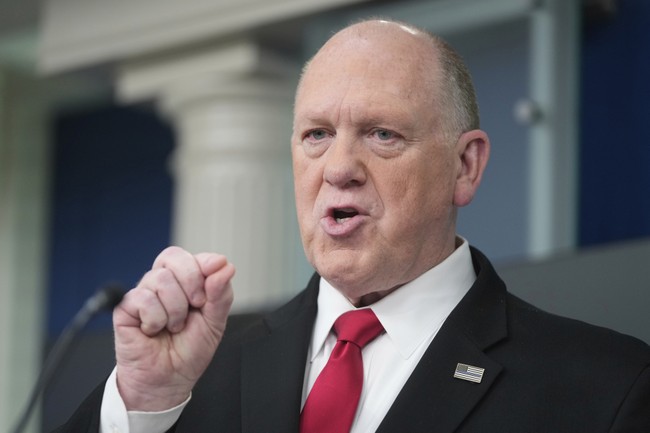
Tom Homan is pushing back hard against what he calls leftist agitators who are disrupting federal immigration enforcement, proposing a public plan to identify and shame those who interfere with ICE operations and arguing stronger measures, including the Insurrection Act, must remain on the table to restore order.
White House Border Czar Tom Homan told Laura Ingraham that demonstrators who cross the line by impeding ICE officers will face prosecution, and he wants a public record of those arrests. He argued a database of people arrested for interference, assault, or impeding officers should be used to expose offenders to their communities and employers.
Homan said plainly, “These people who want to say ‘follow ICE’ and ‘film ICE,’ you know what, you can protest, they have that right,” and warned that unlawful interference will have consequences. He added, “People that are arrested for interference and impeding, assault, we’re gonna make them famous,” making clear he intends to use publicity as a deterrent.
He described a campaign to put faces on TV and notify employers, neighborhoods, and schools so that those who illegally target ICE agents cannot hide behind anonymity. Homan suggested many of the activists call in sick to protest, leaving employers unaware of their activities, and he wants to change that dynamic by ensuring accountability.
These remarks came in response to Minnesota Governor Tim Walz encouraging protesters to film ICE agents, which Homan presented as reckless encouragement of tactics that obstruct law enforcement. From a Republican perspective, this is a dangerous escalation that puts federal officers at risk and undermines the rule of law.
Homan framed the issue as more than a local protest problem; he said it threatens public safety and the ability of officers to perform essential duties. He warned that without decisive action the confrontations could grow more violent and that the federal government must be prepared to act to prevent further bloodshed.
On the broader enforcement front, Homan raised the Insurrection Act as a legitimate tool if state officials fail to control professional agitators attacking ICE personnel. He labeled it “certainly an option” and a “viable option,” arguing it must remain available so the federal government can protect agents and enforce the law where state leaders have ceded control.
The president has echoed similar resolve, suggesting stronger measures would be used to restore order if necessary, and Homan said he planned to meet with the president to discuss next steps. From this vantage, making offenders publicly known and keeping federal response options visible are part of a coherent strategy to deter lawlessness.
Critics will call public shaming excessive, but Homan insists transparency about who is obstructing law enforcement serves the public interest and helps employers and communities hold individuals responsible. He emphasized the difference between lawful protest and criminal obstruction, saying the latter must be treated as a prosecutable offense.
Homan also warned of political motives behind some demonstrations, suggesting outrage can be weaponized by activists and opportunistic politicians to fundraise and stoke division. He accused opponents of prioritizing spectacle over safety, and argued that exposing those who commit crimes during protests strips away the cover of righteous activism.
Republicans viewing this issue through a public-order lens see Homan’s approach as defensive and necessary: protect federal officers, deter assaults and interference, and make sure communities learn who is responsible when protests turn into criminal conduct. That hard line is presented as the clearest way to stop cycles of escalation and to keep ICE personnel safe while they enforce immigration laws.
Homan said he hopes the situation can be calmed without extreme measures but warned that continued attacks on ICE could force tougher federal responses. He predicted more violence if nothing changes, urging immediate steps to prevent further bloodshed and to hold instigators accountable.
Public reaction will be mixed, but for those who prioritize enforcement and order, Homan’s proposal offers a direct way to deter future interference and to make sure unlawful actors face social and legal consequences. The debate now centers on balancing civil liberties with the need to protect federal officers and preserve lawful enforcement operations.
Homan left little doubt he expects the administration to take aggressive steps if state leaders fail to stop organized assaults on ICE, and he made clear the federal government must be prepared to act. His stance signals a readiness to use all available tools, including public accountability measures and, if required, federal intervention to restore order.

Add comment