
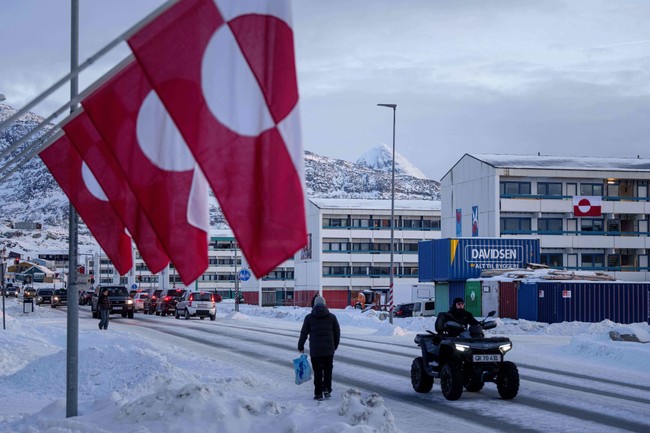
I’ll explain how Greenland’s native population is pushing back against Danish rule, detail allegations of medical and cultural abuses, note the geopolitical stakes around Greenland’s resources and location, examine repair and independence arguments, and highlight why the United States should engage with Greenlanders about their future.
The debate over Greenland is both human and strategic, blending local grievances with global power politics. For years the United States, Denmark, and NATO have scrambled around Greenland because of its Northern location and resource potential. That mix of strategic interest and real human costs has made the island a focal point for competing claims and wounded communities.
Greenland’s status as a Danish possession is firm in Copenhagen, and local political leaders often support maintaining the current arrangement. Yet native Greenlanders are increasingly vocal in rejecting that status quo because of historical policies and their lingering effects. These complaints go beyond abstract calls for sovereignty and ground themselves in concrete personal harms and institutional histories.
Native Greenlander Amarok Petersen was 27 years old when she learned the gut-wrenching truth about why she couldn’t have children — and that Denmark was to blame.
Suffering from severe uterine problems, a medical doctor discovered an IUD birth control device in her body that she didn’t know she had.
Danish doctors had implanted it when she was just 13 as part of a population control program for thousands of native Greenlandic girls and women.
“I will never have children,” Petersen told The Post, with tears of anger and sorrow welling in her eyes. “That choice was taken from me.”
Petersen’s story is not isolated in the record and helps explain why mistrust runs deep. She reports surgeries and irreversible procedures that she only learned about years later, and that sense of betrayal echoes through families and communities. The medical allegations are tied to broader social experiments and policies that reshaped Greenlandic lives in ways many residents never consented to.
Even in adulthood, medical decisions were made without Petersen’s consent. Plagued with problems after the IUD, she had repeated surgeries for unexplained pain. It wasn’t until years later that doctors informed her that her fallopian tubes had been removed in one of the operations in the early 2000s.
Her family also suffered under Denmark’s so-called “Little Danes experiment,” in which Greenlandic children were forcibly sent to Denmark for adoption or institutional care — often permanently separated from their families, she said.
The program, which ran from the 1950s through the 1970s, was part of Denmark’s broader effort to assimilate Greenlandic children, often without parental consent.
The legacy of those mid-century programs still shapes public life in Greenland today, from family structures to mental health outcomes. Researchers have pointed to alarmingly high suicide rates on the island as part of a broader picture of social harm and intergenerational trauma. Those human costs are routinely cited by Greenlanders who argue that Danish governance carried out policies that prioritized assimilation and control over the wellbeing of native communities.
Denmark has taken steps it describes as reparations, offering compensation packages to some survivors of past policies. The state proposal of roughly $46,000 each for affected individuals aims to acknowledge harm and provide restitution to living victims. For many Greenlanders that financial step is meaningful, but it does not erase the loss of autonomy, families, and futures described by survivors like Petersen.
The island has one of the highest suicide rates in the world, according to researchers, with an estimated 81 per 100,000 people annually killing themselves.
“They took our resources. They took our bodies. And then they told us to thank them,” she said of Danes. “How do you thank someone who stole your future?”
Those words underline a core grievance: that control over land and people was exercised without meaningful consent, and that the consequences are still felt today. Greenland has valuable minerals, potential energy resources, and a location that makes it a strategic prize in the Arctic. That combination attracts attention from the United States, Russia, China, and other actors who see value in the island beyond its population.
Independence is attractive to many Greenlanders but comes with real challenges, particularly defense and infrastructure needs in an increasingly contested Arctic. Small populations and limited budgets mean that any sovereign Greenland would need powerful partners to secure its territory and to develop its resources responsibly. This reality shapes both Danish reluctance to loosen control and the practical constraints of a fully independent Greenland.
The United States has shown interest in Greenland over decades because of its location and resources, and that interest will not ease as the Arctic becomes more central to global strategy. But strategic conversations should include Greenlandic voices first and foremost, not treat the island as merely a piece on a geopolitical board. Listening to those who live there needs to be part of any policy calculus about the island’s future.
For Greenlanders who suffered under past Danish policies, the issue is not simply a question of sovereignty but of dignity and belonging. Those human questions intersect with the geopolitical calculus in ways foreign capitals often miss. Any constructive path forward will require addressing historic wrongs, engaging native leaders directly, and recognizing that Greenlanders deserve to set the terms for their own future.


Add comment