
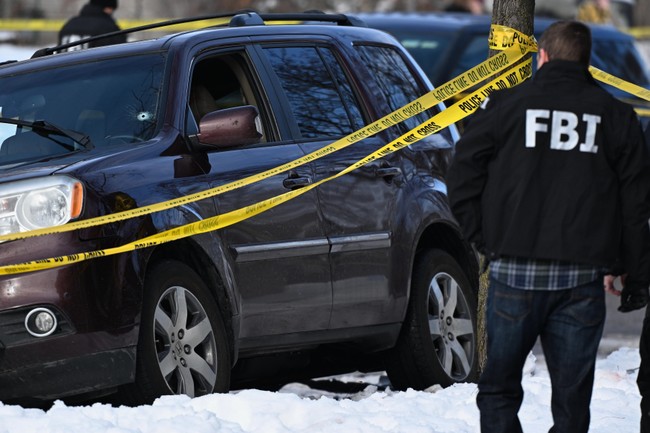
The story examines media reaction to the shooting of Renee Good by an ICE agent, how social platforms and outlets amplified claims, the surprisingly measured response from Good’s former father-in-law during a CNN interview, and the broader debate over accountability and political narratives shaping public perception.
The last few days have been dominated by hot takes and viral claims about the incident in which an ICE agent shot Renee Good after she struck him with her car. Social feeds filled with anger and labels like “murder” circulated long before investigators finished sorting the facts. That rush to judgment fueled a public frenzy and put the agent under extraordinary pressure and threats, forcing him out of public view for his own safety.
Video evidence and subsequent reporting contradicted many of the early social media assertions that ignored the physical facts of the encounter. There were reports the agent suffered internal bleeding after being struck, a detail that reinforced the reality that some form of impact occurred. Those medical details mattered because they anchored the conversation in concrete injury rather than purely emotional response.
The liberal media pushed a narrative framing designed to inflame rather than illuminate, and that drove much of the overheated debate. Reporters and commentators often repeated secondhand claims without clear sourcing, which deepened the split between what online mobs demanded and what evidence actually supported. That disconnect set the stage for an interview that did not go the way many outlets expected.
When CNN brought on Timmy Macklin, the father of Good’s late ex-husband and grandfather to her six-year-old son, the network seemed to anticipate a spectacle of grief turned political. Instead, Macklin offered a response that cut against the grain of what audiences had been fed. He refused to place blame on any single party and emphasized a private, personal perspective rather than a public indictment.
On air, Erin Burnett probed into the investigation and the choices made by those involved, seemingly prepared for a sharp critique aimed at authorities. Macklin surprised viewers by saying he did not blame ICE, Rebecca, or Renee, and by framing the tragedy in spiritual terms. His words redirected the scene away from partisan finger-pointing toward a more restrained and reflective position.
In the interview he said he “loved everybody,” and suggested that the situation involved “bad choices” rather than conspiracies or criminal intent aimed at law enforcement. His calm, measured tone stood in stark contrast to the viral outrage that had been building online. For many watching, his stance underscored how personal loss can coexist with a refusal to turn grief into political ammunition.
“I don’t blame ICE. I don’t blame Rebecca. I don’t blame Renee. I just wish…you know, if we’re walking in the Spirit of God, I don’t think she would have been there. That’s…that’s the way I look at it.”
The quote landed because it was unexpected and sincere, and because it kept the focus on family and faith rather than politics. Observers on both sides of the aisle noted the contrast between his words and the louder claims on social media. That contrast highlights how easily public discussion slips from fact to fury when a case taps into larger cultural divides.
There are hard facts in this case that matter: a vehicle struck an agent, footage suggests contact and dragging occurred, and medical reports later mentioned internal bleeding. Those elements form a baseline that should guide investigations and reporting instead of being submerged by sensational headlines. Accurate reporting matters because the consequences are real for people directly involved and for public trust in institutions.
Some will still use the episode to argue broader points about immigration policy, enforcement priorities, or media bias, and those arguments will echo through political circles. From a conservative viewpoint, it is reasonable to critique the media landscape that amplifies unverified claims and to defend law enforcement personnel who face risks on the job. At the same time, sober attention to evidence and responsible journalism would serve everyone better.
Family members like Macklin who confront tragedy without turning it into spectacle are rare in today’s climate, and his measured approach should give reporters pause before repeating unvetted claims. The case remains under investigation, and conclusions should follow evidence rather than headlines. Until then, public conversation would benefit from restraint, clarity, and a focus on verifiable facts over viral outrage.
Add comment