
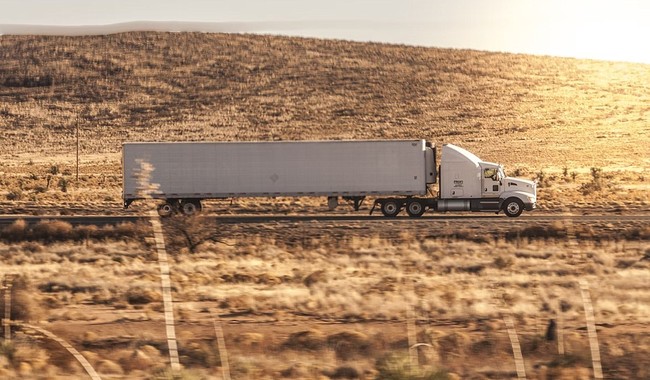
The Trump administration is threatening to cut $75 million in federal highway funds to Pennsylvania over its practice of issuing commercial driver’s licenses to non-citizens without proof of lawful presence, raising questions about public safety, federal leverage over states, and how licensing rules are enforced nationwide.
Federal highway money has long been used to influence state behavior, from speed limits to safety laws, and that leverage is now trained on Pennsylvania. Transportation Secretary Sean Duffy says the state issued non-domiciled CDLs that extended beyond a driver’s authorized stay and failed to require proof of lawful presence. That allegation has sparked a federal warning: stop issuing these CDLs or face a major funding cut.
The concern is practical as much as political. Commercial licenses let holders operate large trucks that travel across state lines, and a license issued in one state effectively enables driving privileges nationwide. If states begin issuing CDLs without verifying lawful presence or sufficient language proficiency, it creates potential risks on interstates and local roads where heavy vehicles pose greater danger in accidents.
There’s a specific incident that sharpened the issue: an Uzbek national with an international warrant for terrorism was found stopped in Kansas with a Pennsylvania commercial license. That discovery prompted Duffy to send a letter to Pennsylvania’s governor outlining the federal view that current procedures are insufficient and potentially dangerous. The administration framed withholding funds as a targeted response to a measurable lapse in licensing safeguards.
The post continues:
Transportation @SecDuffy has threatened to withhold $75 million in federal funding from Pennsylvania if the state refuses to stop handing out trucking licenses to illegal immigrant drivers, The Daily Wire has learned.
It comes after an Uzbek illegal immigrant who had an international warrant for terrorist activity was pulled over in Kansas and discovered to have a Pennsylvania commercial driver’s license.
Duffy highlighted his concerns in a letter sent to Democratic Pennsylvania Governor Josh Shapiro on Wednesday, claiming that Pennsylvania issued “non-domiciled CDLs [commercial driver’s licenses] with an expiration date that extended well beyond the driver’s authorized stay in the United States and failed “to require any proof of lawful presence before issuing a CDL [commercial driver’s license].”
Using federal funding as leverage is controversial, but it’s not new. Conservatives have long argued that the federal purse strings should enforce national standards that protect public safety, especially when state actions have nationwide effects. Opponents argue this is federal overreach into state authority, but when a state’s policies create cross-border risks, the federal role becomes harder to dismiss.
Beyond the policy debate, there’s a straightforward safety argument: CDL holders operate massive vehicles and need high standards for training, testing, and verification. Issuing those credentials without checking lawful status or adequate language skills raises the odds of tragic mistakes on highways. That practical risk is what Secretary Duffy emphasized in his letter, tying public safety directly to federal funding decisions.
Pennsylvania officials have defended their practices as efforts to provide mobility and economic opportunity, but critics say those goals can’t trump basic safety requirements. The state’s approach, according to federal claims, allowed licenses to remain valid past a noncitizen’s authorized stay and didn’t insist on proof of lawful presence. If true, that gap undermines trust in licensing systems that protect all road users.
There’s also a legal and logistical angle: CDLs are treated differently from standard driver’s licenses because they involve commercial operation and federal regulation. The Federal Motor Carrier Safety Administration sets national rules for commercial driving, so a mismatch between state issuance practices and federal expectations creates both regulatory friction and practical hazards. That’s what makes this more than a state policy squabble.
For people who drive near heavy trucks every day, the issue is not abstract. A poorly qualified truck driver can turn a routine commute into a life-or-death moment, and citizens expect states to vet commercial operators. The threat to withhold $75 million is meant to force a reassessment of how Pennsylvania balances access and accountability in CDL issuance.
This dispute will likely play out in courts, political statements, and bureaucratic negotiations, but its core is simple: who gets to decide the standards for operating enormous vehicles on public roads, and how will the nation ensure those standards protect everyone? The answer will shape not only one state’s policy but the broader rules that govern commercial driving across the country.

Add comment