
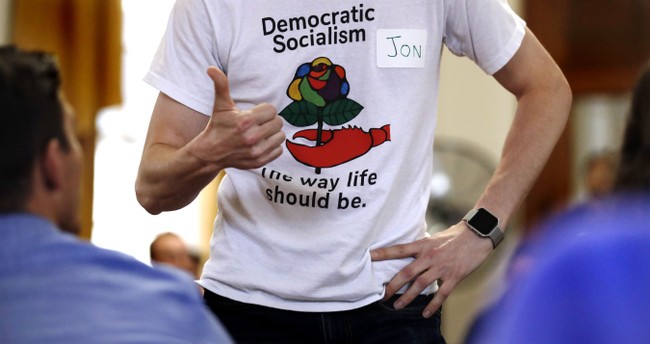
This article examines Melat Kiros’s primary run in Colorado’s 1st Congressional District, her democratic socialist platform, and the broader implications of the Green New Deal and similar proposals for the American economy and liberty.
Democratic socialism is energizing some Democratic primaries, and that momentum has reached Denver, where Melat Kiros is running in the Democratic primary for Colorado’s 1st Congressional District. Kiros positions herself as a challenger to the incumbent, who has held the seat for decades. The race frames a larger debate about whether democratic socialism is practical beyond coastal urban enclaves.
Kiross’s campaign declares an explicit break with what she calls “establishment” Democrats. As she put it, “Establishment Democrats are beholden to the same billionaires who keep our prices high, burn our planet, and profit from a genocide.” That kind of rhetoric appeals to voters frustrated with elites, but it also signals a willingness to pursue sweeping structural changes.
Her platform reads like a blueprint for an expanded government footprint in daily life, listing a wide array of policy promises. In her own words she supports, “the development of publicly-owned, mixed-income social housing that is insulated from market speculation;” “Medicare for All;” “free, high-quality public education” (including public colleges and trade schools); “universal childcare and eldercare;” “robust federal investment in public transit: expanding light rail and bus rapid transit, making fares affordable, and modernizing our transit systems as part of our broader climate infrastructure;” “publicly owned utilities;” “raising the federal minimum wage to a living wage;” “guaranteeing paid family, medical, and sick leave for every worker;” “abolish ICE;” “a federal Trans Bill of Rights;” “gun violence prevention;” “a moratorium on new AI data centers;” “fully funding renewable energy development and transitioning to a zero-emissions energy grid;” and “investing in a Green New Deal that creates a just transition and millions of good union jobs in clean energy, climate resilience, and the modernization of our infrastructure.”
Those proposals amount to an ambitious agenda that would reshape markets, property rights, and regulatory authority across multiple sectors. Public ownership of housing and utilities, along with sweeping federal programs for services and wages, would transfer enormous power from private actors to government institutions. Citizens who value entrepreneurial freedom and local control should be paying attention to this direction.
The Green New Deal, which Kiros embraces, has never been only about the environment. As Saikat Chakrabarti once said, “Do you guys think of it as a climate thing? Because we really think of it as a how-do-you-change-the-entire-economy thing.” That candid admission captures the ambition behind the policy: a full-scale economic redesign rather than narrowly targeted climate measures.
Transforming a market economy into a command-and-control system carries predictable economic risks. Central planning or heavy-handed regulation tends to stifle innovation, slow growth, and limit consumer choice. When government replaces the invisible hand of voluntary exchange with bureaucratic mandates, the incentives that drive prosperity weaken and productivity suffers.
Supporters argue that government-led programs can fix price volatility, inequality, and infrastructure deficits, and some of those challenges are real. But history shows that broad collectivist policies often produce unintended consequences, reduced investment, and diminished incentives for skills, risk-taking, and entrepreneurship.
As Denver voters consider whether to embrace Kiros’s brand of democratic socialism, they should weigh the trade-offs between ambitious social programs and the economic freedoms that have underpinned American prosperity. The contrast is stark: a system oriented around individual initiative and markets or one oriented around centralized planning and redistribution.
Republicans and conservatives contend that the free-market system, with targeted improvements where needed, remains the best path to lift living standards and preserve personal liberty. They argue that protecting property rights, encouraging private investment, and limiting regulatory overreach deliver more durable prosperity than sweeping, economy-wide redesigns.
This primary contest will matter beyond Denver because it tests whether democratic socialism can broaden its appeal into heartland districts. Voters should examine both the promises and the practical consequences of big-government plans before deciding whether such sweeping change is the direction they want for their communities and the nation.

Add comment