
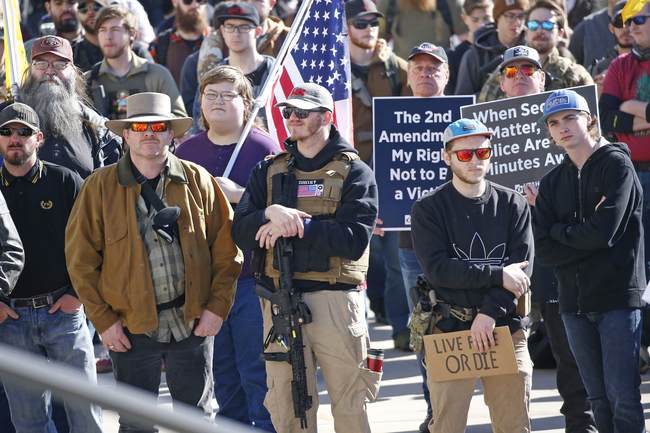
The Supreme Court has agreed to hear major challenges to so-called assault weapon bans, setting up a case that could reshape federal and state firearms rules and influence the broader fight over the Second Amendment.
Assault weapon bans have always been a mess of arbitrary definitions and political theater, targeting certain rifles because of looks or popularity rather than function. Lawmakers often single out models like the AR-15 while overlooking nearly identical firearms that differ only in cosmetic features or cartridge choice. That inconsistency has fueled frustration among gun owners, defense advocates, and legal scholars who see little policy sense in the distinctions.
The Court’s decision to take up these consolidated cases marks a big moment for this dispute. Multiple challenges from counties and states have been folded together, which increases the odds the justices will issue a nationwide ruling rather than a narrow, state-by-state fix. Given the current Court’s recent Second Amendment decisions, there is cautious optimism among conservatives that an outcome restoring clear rights is possible.
For years, we’ve wanted the Supreme Court to agree to hear a case on bans of so-called assault weapons. They’ve continually kicked the can down the road, and that’s been a significant problem for the gun rights community.
However, everything is about to change.
In the Court’s list of cases, two in particular came up that deal with assault weapon bans.
Viramontes v. Cook County and Grant v. Higgins, the latter of which is tied with National Association for Gun Rights v. Lamont, both (all?) revolve around the concept of an assault weapon ban. And, as of today, the Supreme Court has merged the two cases into one and granted certiorari on them.
In short, they’re going to hear about assault weapons, and unless something very strange happens during this case, it’s likely to cause them to be overturned nationwide.
That quoted passage captures why many conservatives see this as a turning point. If the Court strikes down assault weapon bans on constitutional grounds, the decision would not only undo existing bans but also discourage future attempts that rely on arbitrary cosmetic criteria. It could also set a precedent against broad, weapon-specific prohibitions that ignore longstanding firearms traditions and ordinary defensive uses.
There are other angles to watch. Some jurisdictions have relied on tenuous theories to ban certain handguns or accessories by arguing potential illegal modifications or hypothetical misuse. Those lines of reasoning have been used to justify restrictions that go beyond rifles, so a firm ruling could limit that expansion. Legal clarity from the Court would push legislatures to write laws grounded in real public-safety evidence instead of political symbolism.
Recent Supreme Court decisions demonstrate a willingness to enforce constitutional protections against overbroad gun restrictions, and that record matters heading into the new argument. For example, earlier opinions have pushed back on sweeping regulatory schemes that fail to respect core rights. Conservatives argue the same logic applies squarely to assault weapon bans, which often sweep up otherwise lawful firearms and lawful owners with little due process.
Even a narrowly tailored opinion focused on the specific statutes at issue would deliver significant relief for gun owners and civil-liberties advocates. Narrow rulings can be powerful when they reject the central premise of a law, forcing governments to retreat or to rebuild rules that respect constitutional baselines. But a broader ruling would be preferable for those who want a clear national standard that prevents inconsistent patchwork laws across states and counties.
The stakes go beyond legal technicalities. For many Americans, owning common semi-automatic rifles and other firearms is part of family tradition, home defense, and rural life. When policy targets specific makes and models, it chips away at those customs without addressing core causes of violent crime. Conservatives argue the proper response is to focus resources on criminals and enforcement, not on banning popular tools used responsibly by millions.
Whatever the Court decides, advocates on both sides will be paying close attention to the reasoning it uses and to any language that signals future limits or protections. This case will be a defining moment in the ongoing debate over gun policy and constitutional rights, and its outcome will shape both legislation and litigation for years to come.
Editor’s Note: President Trump and Republicans across the country are doing everything they can to protect our Second Amendment rights and right to self-defense.
Add comment