
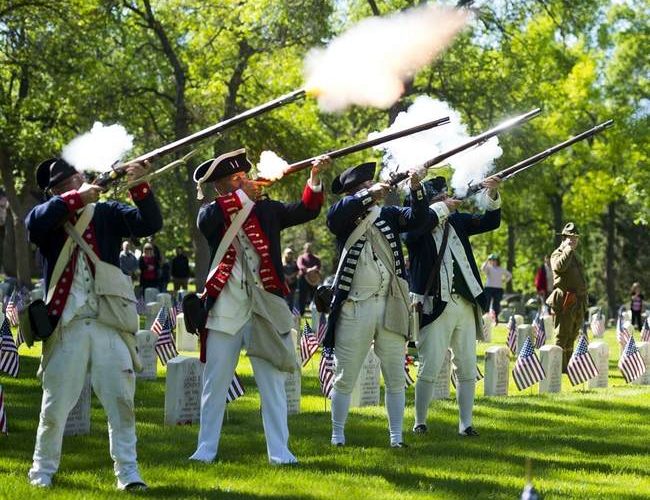
The Daughters of the American Revolution recently voted to permit people who identify as women to join, sparking sharp debate inside and outside the group about membership standards, procedures at their continental meeting, and the future identity of the organization.
This is why we can’t have nice things. The Daughters of the American Revolution is a longstanding women’s service organization formed to honor those who served in the American Revolution and to promote historic preservation, education, and patriotism. For more than a century it admitted women over 18 who could prove direct lineal descent from someone who served or aided the Revolution. There is a parallel men’s group, the Sons of the American Revolution, with a similar genealogical requirement.
The new vote by DAR members to allow people who consider themselves female to join shifts that tidy genealogical standard. The timing drew extra attention because it coincided with a Supreme Court decision affecting who can participate in women’s sports, and members report the debate at the DAR’s 135th Continental Congress was acrimonious. The contested vote failed to pass the proposed restriction to women “born female,” according to the count reported from the convention.
Last week the Daughters of the American Revolution marked America’s 250th anniversary not by honoring the nation’s Founders, but by miring itself in an unnecessary woke battle that threatens the organization’s very future.
Delegates at the DAR’s 135th Continental Congress in Washington, DC, this past weekend defeated a member-driven attempt to limit membership to those “born female” — that is, to actual daughters.
The vote means the group’s leaders will get their way: They can now open membership to anyone who considers themselves to be female.
The members’ resolution failed by a vote of 1,481 to 984 after a bitter procedural fight that many attendees say was engineered to produce exactly that outcome.
Reportedly, the tally ended 1,481 to 984 against the member-driven measure, and many delegates described the proceedings as chaotic and engineered. Opponents of the restriction say the leadership pushed hard and a long, single-by-single ballot process produced exhaustion among voters. Multiple delegates complained of limited breaks, canceled events, and a narrow focus on this one issue at the expense of the convention’s stated service work.
It’s difficult to imagine a more straightforward membership standard than one rooted in genealogy and biological reality.
Yet all that has now been thrown into question over what members estimate is a grand total of between two and five transgender members — out of 190,000 — who call themselves “Transdaughters.”
Those who oppose the change point to the very small numbers involved—estimates inside the organization put the count at between two and five individuals among a membership near 190,000. Critics argue that such a tiny group should not reshape rules that were originally designed around ancestry and shared female lineage. Supporters counter that the organization, as a private association, can set its own membership criteria and that those rules must evolve to reflect changing social understandings.
The voting process itself only deepened the divide.
The congress’ initial vote was scotched before it was counted, when opponents of the measure claimed to have seen evidence of cheating.
That launched a lengthy and convoluted second vote that required thousands of women to cast ballots one at a time — in a process that stretched for roughly 12 hours.
Delegates, many of them elderly, were effectively confined to the convention hall with only two bathroom breaks and no food service if they wanted their votes to count.
Consumed by this single issue, convention organizers canceled luncheon events, disrupted award ceremonies and pulled the plug on service projects honoring troops and veterans.
The procedural complaints added fuel to the fire, with opponents alleging an initial vote was nullified over alleged irregularities and a second, grueling ballot sequence followed. Delegates who were present described a day that stretched to roughly 12 hours, with limited breaks and little opportunity for the other planned activities. Attendees say the disruption overshadowed ceremonies meant to honor veterans and celebrate the organization’s service projects.
For many long-time members, the controversy feels like a crossroads: either accept a broadened membership definition or push to reclaim the group’s traditional purpose. Some voices inside the DAR are already talking about leaving and forming a separate association that maintains the original, lineage-based standard. Others argue for internal reforms and leadership change through the same democratic processes the group used to pass this policy.
Whatever happens next, the debate exposes a larger fault line between institutional tradition and a push for inclusion that has reached private civic groups. The outcome will shape how the DAR defines itself going forward and whether it remains focused on genealogy and history or adjusts its mission to accommodate identity-based membership claims.
Editor’s Note: The Democrat Party has never been less popular as voters reject its globalist agenda.

Add comment