
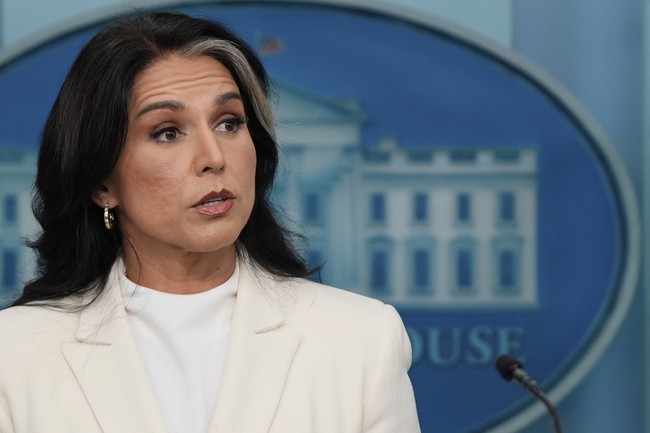
Tulsi Gabbard, now Director of National Intelligence, has drawn fierce scrutiny as she investigates irregularities tied to the 2020 election; this piece walks through the media reaction, the whistleblower claim, the inspector general’s finding, and the broader implications for election integrity and national security.
The press response to Gabbard’s presence at the Fulton County operation reads like a coordinated attempt to paint a legitimate intelligence interest as improper. Reports leaned on anonymous sourcing and insinuation, while official channels later showed the complaint moved through established procedures. The appearance of a highly classified whistleblower complaint created headlines, but closer reading raises questions about the strength of the allegations.
U.S. intelligence official has alleged wrongdoing by Director of National Intelligence Tulsi Gabbard in a whistleblower complaint that is so highly classified it has sparked months of wrangling over how to share it with Congress, according to U.S. officials and others familiar with the matter.
The filing of the complaint has prompted a continuing, behind-the-scenes struggle about how to assess and handle it, with the whistleblower’s lawyer accusing Gabbard of stonewalling the complaint. Gabbard’s office rejects that characterization, contending it is navigating a unique set of circumstances and working to resolve the issue.
Reading beyond the headlines shows the inspector general engaged the standard process and Gabbard answered written questions. The inspector general at the time deemed the specific allegations not credible, and the whistleblower complaint was forwarded to the Congressional Intelligence Committees for review. Those details undercut the impression of a smoking-gun scandal that some outlets tried to sell.
Gabbard answered written questions about the allegations from the inspector general’s office, a senior official at the spy agency said. That prompted the acting inspector general at the time, Tamara Johnson, to determine the allegations specifically about Gabbard weren’t credible [my italics—streiff], the official said. Johnson remains employed at the agency, which didn’t make her available for an interview.
Even so, the timing of the coverage and the choice of language turned attention away from the core issue many Americans care about: whether 2020 saw serious irregularities that demand a full accounting. When an official follows procedures and provides documentation, that fact should matter more than anonymous chatter. The public deserves clarity on the investigation itself, not a narrative designed to discredit the investigator.
Some commentators pushed the “why was she there?” angle hard, suggesting Gabbard overstepped by appearing at a scene where agents were executing a search. That framing assumes intelligence oversight has a narrow, passive role, ignoring circumstances where on-the-ground context can be critical to assessing national security risks. For those of us prioritizing election integrity, presence and oversight are not scandals; they can be responsible action.
There are “only two explanations” for why Gabbard was in Fulton County on Wednesday, Senate Intelligence Committee Vice Chairman Mark R. Warner (D-Virginia) said at the hearing.
One is that she believes there’s a “legitimate foreign intelligence nexus,” he said, in which case Gabbard “violated her legal obligation to keep the intelligence committees fully and currently informed,” or she is attempting to insert the intelligence community into what Warner called “a domestic political stunt designed to legitimize conspiracy theories that undermine our democracy.’’
The New York Times coverage added another layer, asserting unusual interactions and implying improper coordination without solid, verifiable detail. Even their reporting includes uncertainties about motives and outcomes, yet it fed a narrative of impropriety. When the narrative becomes the headline, the facts risk being buried under innuendo.
By any measure, the F.B.I.’s search of an election center in Fulton County, Ga., last week was extraordinary. Agents seized truckloads of 2020 ballots, as President Trump harnessed the levers of government to not only buttress his false claims of widespread voter fraud, but also to try to build a criminal case against those he believes wronged him.
What happened the next day was in some ways even more unusual, The New York Times has learned.
Behind closed doors, Tulsi Gabbard, the director of national intelligence, met with some of the same F.B.I. agents, members of the bureau’s field office in Atlanta, which is conducting the election inquiry, three people with knowledge of the meeting said. They could not say why Ms. Gabbard, who also appeared on site at the search, was there, but her continued presence has raised eyebrows given that her role overseeing the nation’s intelligence agencies does not include on-site involvement in criminal investigative work.
What occurred during the meeting was even further outside the bounds of normal law enforcement procedure. Ms. Gabbard used her cellphone to call Mr. Trump, who did not initially pick up but called back shortly after, the people said.
The coordinated push to discredit an effort to examine election anomalies looks familiar to anyone who watched partisan leaks and smears in past years. When bureaucratic forces and media outlets move in lockstep to shape perception, it chills scrutiny into matters that go to the heart of democratic legitimacy. That pattern suggests the stakes are higher than a single personnel controversy.
If evidence exists showing serious problems in jurisdictions where large numbers of ballots appeared after polls closed, the imperative is to follow the facts wherever they lead. Obfuscation and media-driven character attacks will not resolve questions about ballots, procedures, or potential foreign interference. The nation needs clear, accountable inquiry, and officials doing their jobs deserve a fair hearing rather than preemptive vilification.

Add comment