
The article examines a recent incident at Torrey Pines High School where a student was suspended for posting a pro-ICE flyer, explores the role of national teachers unions in funding anti-ICE activism, and explains why this episode is raising First Amendment and school governance concerns.
At Torrey Pines High in San Diego a student posted a flyer supporting Immigration and Customs Enforcement and was suspended for it. The reaction has ignited debate over whether schools are treating some student viewpoints differently while allowing opposing activism to proceed without penalty. Parents and community members are asking why a student expressing support for a federal law enforcement agency would face discipline when other protests are tolerated or encouraged.
A student at Torrey Pines High School in San Diego was suspended after posting a pro-Immigration and Customs Enforcement flyer reading, “We [heart] ICE – Real Americans,” following an anti-ICE walkout on campus, according to the Foundation for Individual Rights and Expression (FIRE).
Observers point to larger patterns in K–12 activism, where organized campaigns and training materials have made their way into schools. Critics argue that groups with political agendas are showing up on campus with toolkits and funding, shaping what counts as acceptable student speech. When schools accept money or guidance tied to those materials, neutrality gets muddled and parents lose trust in the system’s fairness.
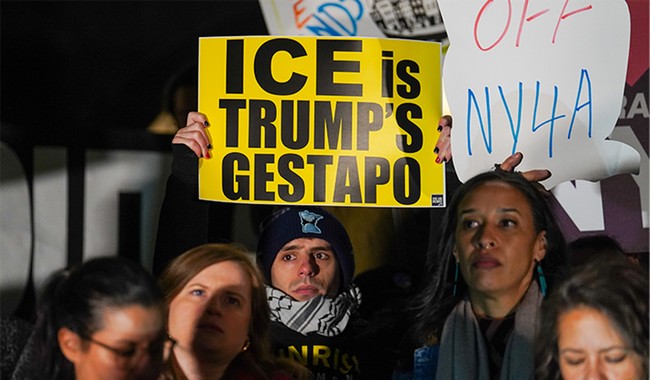
Student-led anti-ICE walkouts have continued to rise nationwide. In 2026 alone, more than 300 such walkouts and protests have taken place. Various organizations have led training programs within K–12 schools, and the National Education Association has provided $1.7 million in funding to a May Day 2026 training toolkit that includes anti-U.S. Immigration and Customs Enforcement messaging, according to an investigation by Defending Education.
Free speech advocates insist public schools must apply the First Amendment evenly. FIRE’s senior attorney emphasized that schools can’t favor one viewpoint over another when student expression is non-disruptive. That legal principle is the backbone of the argument that the suspended student’s rights were violated.
“Schools cannot favor one viewpoint over another. When students express themselves non-disruptively, the First Amendment guarantees their right to freedom of speech, regardless of what opinion they share,” Conor Fitzpatrick, senior attorney at FIRE, told The Center Square.
The funding trail raises additional concerns. Reports indicate organizations like Midwest Academy and allied groups have received substantial sums to support trainings that promote demonstrations and tactics such as walk-ins. Critics worry these activities are effectively training grounds for political messaging inside schools rather than neutral civic education.
Midwest Academy has received $1,735,000 since 2015. The NEA funding has supported trainings and organizing efforts that promote demonstrations calling for policies like taxing the wealthy, opposing ICE and expanding democracy, according to materials outlined in the toolkit.
At the school level, the toolkit encourages participants to stage “walk-ins,” where students and supporters gather on campus to protest or “celebrate” issues related to school conditions and public policy.
There are no indications the student presented a threat, incited violence, or attempted to block others from speaking. That is an important distinction, because disciplinary action typically requires either disruption or a credible threat. Absent those factors, punishment for a simple flyer looks like viewpoint discrimination.
This case underlines why local school governance matters. Electing sensible school board members who respect viewpoint neutrality and parental oversight can curb politicized programming in schools. The debate is practical: who decides what ideas are allowed on campus and whether outside groups can shape school culture?
Until more parents and voters engage with school boards and local education policy, incidents like the Torrey Pines suspension will continue to highlight a disconnect between official neutrality and on-the-ground practice. Right now the push is for clearer rules that protect every student’s right to express non-disruptive views, regardless of whether administrators agree with them.
The student involved in this episode remains unnamed, appropriately so to protect privacy while the dispute plays out. Still, the core issue persists: public schools funded by taxpayers must treat political speech evenhandedly, and when they fail to do that it creates mistrust and fuels calls for reform from concerned families across the political spectrum.


Add comment