
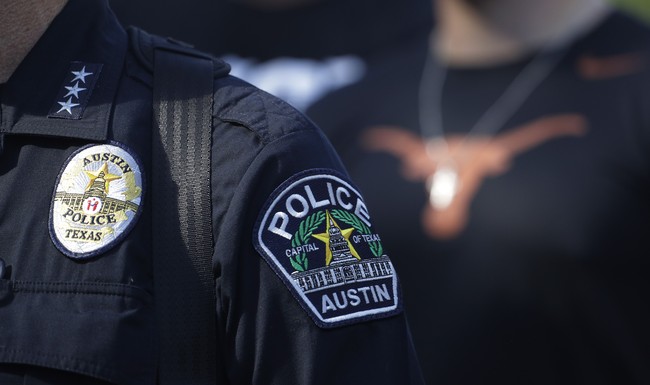
The Austin Police Department released bodycam footage showing officers shooting a gunman during a March 1 attack that left multiple people dead and many wounded, and the Travis County district attorney has announced no charges will be filed against the officers involved.
Authorities Release Harrowing Bodycam Footage of Austin Attack, Leftie DA Declines to Prosecute Officers
The city was shaken when a killer opened fire at a crowded venue, and the newly released bodycam video gives a raw, chaotic view of how events unfolded. Officers are seen racing through smoke and panic, trying to stop the attacker and protect civilians in an obviously life-or-death situation. The footage is graphic and disorienting, and it’s clear the responders faced a rapidly evolving mass casualty incident.
Details about the shooter’s background have fueled debate over motive and classification of the act. Reports noted that the attacker wore a shirt referencing religion, had a Quran in his vehicle, and was identified as a Senegalese immigrant, which prompted some to raise concerns about ideological motives. Authorities have not formally labeled the incident as terrorism, but the symbols and timing raised alarm among investigators and the public alike.
The first bodycam clip captures the immediate scramble to find the assailant amid screams and people diving for cover. A voice can be heard shouting, “Down! Everybody down!” as officers sweep through the scene; the audio and video together convey just how chaotic and dangerous the moment was. That clip is jarring because it shows how quickly first responders had to make split-second, life-or-death decisions with limited visibility.
The second clip provides a clearer view of officers exchanging gunfire and then the shooter collapsing on the ground after being struck. You can hear commands layered on top of gunshots: “Stop moving! Stop moving!” followed by “Stop bleep moving!” as officers try to secure the scene and ensure no further threat remains. Nearby, a long gun lies on the pavement, evidence of the immediate threat the officers faced and the need to neutralize it fast.
With chaotic video circulating, many feared prosecutors might nevertheless bring actions against the officers who fired their weapons. In 2021 the Travis County district attorney adopted a policy requiring officers involved in shootings to be subject to grand jury review, and that history made people skeptical about whether the officers would be treated as suspects. Those concerns set up a tense public moment as officials reviewed the incident.
The district attorney’s office concluded its review through the Civil Rights Unit after working with the police investigative unit, and it determined that the officers’ use of force was justified. The DA’s public statement included strong language defending the decision and rejecting claims that his office intended to charge the officers. “These officers are heroes, and it should go without saying that my office is not seeking any charges and would not seek charges. The accounts to the contrary are false … and are being peddled for obvious political purposes.”
The Travis County District Attorney’s Office’s Civil Rights Unit conducted a thorough review of the incident, including video evidence, scene investigation, and collaboration with the APD’s Special Investigations Unit. The review concluded that the officers were responding to an active mass casualty situation and that the shooter was using unlawful deadly force. Based on the findings, the review is closed, and no action will be taken against the officers.
That finding is decisive in the eyes of many who watched the footage and felt the officers had no realistic option but to confront the shooter immediately. The bodycam material shows responders pushing into a violent scene to stop further bloodshed, and the review’s outcome closed the criminal case for the shooters’ actions. Still, the larger questions about motive, background, and how such attacks are categorized remain active in public discussion.
For community members and officials alike, the event reopened debates on public safety, immigration, and the role of law enforcement when facing armed, ideologically suggestive perpetrators. The incident’s timing, combined with visual cues tied to religion and foreign symbols, kept national attention focused on both the local response and any possible international or ideological threads. Investigators and policymakers will likely keep examining those angles as they work to prevent future attacks and to improve rapid response strategies.
Families of victims and survivors continue to recover and process what happened that night, and the footage has become a focal point for understanding the timeline and decisions made during the incident. Local leaders must balance honoring those affected with pursuing all relevant investigative paths while ensuring first responders get fair, timely review. The video and the DA’s decision will shape how this tragedy is discussed in Austin and beyond for some time to come.

Add comment