
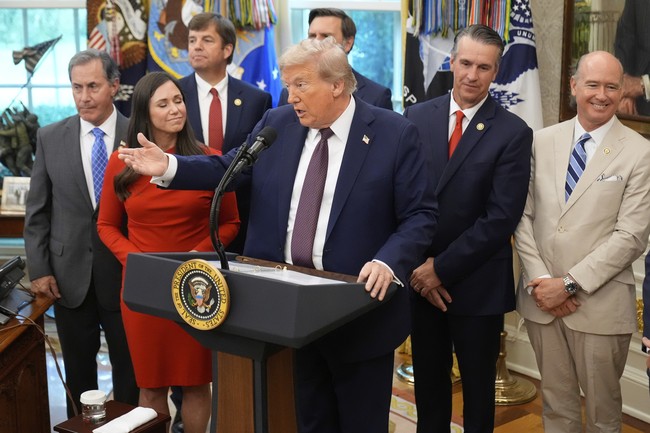
Governor Kay Ivey has called Alabama’s legislature into a special session on May 4, 2026, to prepare contingency plans for congressional and state senate primary elections if the U.S. Supreme Court lifts court-ordered limits on new maps; Attorney General Steve Marshall has asked SCOTUS to expedite review following the Court’s decision in Louisiana v. Callais, and state leaders say they want to be ready to protect Alabama’s representation and push back on federal court overreach.
Alabama’s situation is unique because a 2023 ruling required a second Black congressional district and effectively blocked new congressional maps until 2030. Even after the Callais decision shook up redistricting debates nationwide, Alabama remained tied to its existing court-ordered constraints, so state officials moved cautiously. Attorney General Steve Marshall filed emergency motions asking the Supreme Court to act quickly and to vacate injunctions and lower court judgments that prevent Alabama from using maps drawn by its legislature.
Governor Ivey responded by issuing a proclamation calling the Legislature into a special session beginning at 4:00 p.m. on Monday, May 4, 2026. The proclamation limits the session to primary elections and related provisions, explicitly excluding other business unless a two-thirds vote allows it. The move is framed as a defensive measure: lawmakers want a plan ready if the courts permit previously drawn maps to be used again this election cycle.
Ivey’s official language in the proclamation stresses that an “extraordinary occasion exists” requiring the Legislature to convene, and it spells out the limited scope to address special primary elections for congressional and state senate seats whose boundaries may be altered by court action. The proclamation notes that any other legislation requires a higher threshold for consideration. By narrowing the agenda, the governor and legislative leaders hope to avoid distractions and act swiftly if the legal landscape changes.
The governor followed the proclamation with a statement acknowledging the state’s prior redistricting efforts after the 2020 census and the long court battle since. She emphasized reliance on the courts while pursuing all available remedies and expressed hope that the Supreme Court will rule favorably for Alabama. If the injunctions are lifted, Alabama would revert to the maps adopted by the Legislature in 2023 for Congress and 2021 for the state senate, which state leaders argue reflect Alabama voters’ preferences.
Republican leadership in the Legislature reacted quickly and publicly supported the call to session, framing it as giving Alabama a fighting chance to send seven Republicans to Congress. They stressed the contingency element: set a plan for primaries should the Supreme Court remand the case with instructions to apply Callais. Lawmakers pointed to the narrow margin that could decide control of the U.S. House and insisted they will act decisively to protect fair representation for Alabama voters.
Opponents including civil rights groups have urged the Supreme Court to deny Alabama’s push to change maps, arguing the state’s situation differs from Louisiana’s and warning of practical problems close to the 2026 elections. Those groups contend that the 2023 Allen v. Milligan precedent and justices’ comments in Callais complicate Alabama’s request. Legal filings from opponents say changing lines now would be unworkable and accuse state officials of moving the goalposts for partisan gain.
On April 30, Alabama officials asked the Supreme Court to quickly review pending cases involving its congressional maps. They cited a recent Supreme Court decision, Louisiana v. Callais, that decided that state had drawn maps that disadvantaged white voters.
Alabama Republicans have tried to redraw maps since 2021, but are currently enjoined from doing so until at least 2030.
In a response filed May 1, NAACP lawyers said Alabama’s situation is different than Louisiana’s.
They also pointed to justices’ comments in the Callais case that they were specifically not overruling their 2023 decision about Alabama’s voting maps in Allen v. Milligan.
NAACP lawyers also claimed that any efforts to change Alabama’s maps so close to 2026 elections would be unworkable.
Another group that opposes Alabama’s request, the National Redistricting Foundation, said officials were “once again trying to move the goalposts to suit its own partisan interests.”
The Justice Department signaled it will enforce the Court’s rulings, with officials telling senators they are on the job and committed to equal protection enforcement. That has raised the stakes in an already tense legal fight over who decides how districts are drawn. Alabama leaders say they welcome a clear, expedited resolution so the state can move forward one way or the other before ballots are set.
With deadlines looming and political control of Congress potentially hinging on a few seats, Alabama’s special session is a calculated step to preserve options. Lawmakers and the governor present the call as a contingency to ensure Alabama voters have fair representation, while opponents accuse them of partisan maneuvers. The coming weeks will hinge on how quickly the Supreme Court acts and whether federal orders remain in place or are lifted in time for the 2026 electoral calendar.
Add comment