
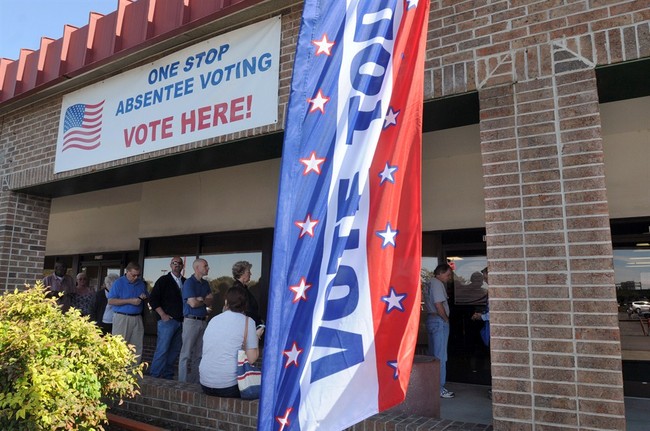
The story below examines allegations of a cash-for-votes scheme in Wilmington, North Carolina, where texts reportedly offered $100 per candidate in local council contests, the state Republican Party referred the matter to election authorities, and both partisan responses and official statements followed as investigators prepared to look into the claims.
Late last week a batch of text messages surfaced in New Hanover County that allegedly offered $100 per candidate in return for votes in upcoming city council races. The North Carolina Republican Party said it was “made aware” of the messages, which included a line reading “each candidate will pay you $100 for their vote” and instructions about payment “near your polling place” after votes were cast. The texts also referenced a prior exchange, starting off with “just following up on our conversation from the No Kings protest.”
The NCGOP says it sent the material to the North Carolina State Board of Elections so the board can investigate whether criminal activity took place. That referral aims to get professional investigators involved rather than letting rumor or partisan spin set the narrative. Officials repeatedly stress that offering money for votes is a serious crime, and the GOP framed the referral as a step toward accountability for any bad actors who try to buy elections.
NC Board of Elections Executive Director Sam Hayes emphasized the legal stakes, noting that offering money or property for votes is a Class I felony for the alleged offerer and for anyone who allegedly accepts such offers. “We are aware of the complaints about text messages in New Hanover County, but we cannot comment on specific investigations. We take all allegations of voter fraud very seriously,” he also said. That language signals the board will treat the matter as a potential criminal inquiry rather than a political talking point.
State officials outside the board moved to back up the investigation with offers of support. NC State Auditor Dave Boliek, whose office oversees the Board of Elections administratively, announced on X that his office stood ready to provide resources if asked. His post read in part that the auditor’s office “will provide any additional resources or assistance needed to thoroughly investigate this matter. We will hold any bad actors accountable and give voters confidence in our elections.”
I’ve had communications with State Board of Elections leadership on this concerning news out of New Hanover County. Our office will provide any additional resources or assistance needed to thoroughly investigate this matter. We will hold any bad actors accountable and give voters confidence in our elections.
On the other side, local Democrats pushed back and questioned the scope of the allegation while saying they oppose vote buying in principle. The county party claimed the texts may have been an isolated incident targeted at a known activist and described the NCGOP’s move to publicize the messages as premature. Still, their statement included an assertion that anyone attempting to purchase votes should face prosecution, a line intended to show allegiance to election integrity while disputing the broader framing.
“That said, let’s be clear about the facts here,” [Chairwoman Jill] Hopman said in a statement. “One well-known local MAGA activist received a text message from an anonymous untraceable number not affiliated with any candidate or party, with nothing to suggest it’s indicative of a widespread scheme. Unfortunately, instead of waiting for the NC Board of Elections to investigate this farce, the NCGOP is trying to turn this into a sensationalized circus.”
Republican leaders made a point of making reporting channels visible and encouraging witnesses to come forward to the proper authorities rather than airing accusations on social media. The NC GOP also promoted its own hotline for anyone with election concerns and urged people with firsthand information to use official complaint mechanisms.
Beyond the partisan back-and-forth, the core law is unambiguous: paying for votes is illegal and undermines the basic fairness of local contests. Election officials will have to sort whether these texts were a real scheme, a prank, a targeted attempt to entrap, or something else entirely. The referral to the statewide board and the auditor’s readiness to help suggest the matter will be handled through formal investigative channels rather than just partisan headlines.
Voters in Wilmington and across New Hanover County should expect investigators to examine message origins, potential links to campaigns, and any evidence of payments or coordination that would move the case from allegation to prosecution. If wrongdoing is uncovered, prosecutors will decide whether to file charges; if not, the inquiry should at least clear the record and restore confidence that elections are secure. The coming days will reveal how thorough the inquiry is and whether the allegations represent a genuine threat to the integrity of those local races.
Add comment