
This piece contrasts two public reactions to the same news event: a chaotic San Francisco protest driven by anti-Trump fervor and jubilant Venezuelan crowds in Florida who see the outcome as personal vindication, while highlighting who actually has skin in the game.
San Francisco has long been a left-leaning city, and its latest street spectacle fits a familiar pattern of outrage that often feels performative. The protesters carried both neatly printed signs and hastily made placards, with some still wearing COVID masks, a mix of the professional and the amateur. To many observers, the mood suggested more about tribal dislike of President Trump than any concrete stake in foreign affairs.
In contrast, a group of Venezuelan expats reacted very differently, and their response carries a different weight because it is rooted in lived experience. These are people who fled an authoritarian regime, lost family members, and endured kidnappings and repression, so their jubilation is not abstract. For them, the events unfolding in Caracas are personal and immediate, not ideological theater.
At one San Francisco demonstration, the spectacle included easily mocked elements: misspelled handmade signs, inconsistent messaging, and a crowd chanting positions that critics argue betray a lack of direct connection to the issue. Observers note that these protesters’ primary motivation appears to be opposition to a political figure rather than compassion for people suffering under foreign tyranny. That distinction matters when assessing credibility and moral authority in political demonstrations.
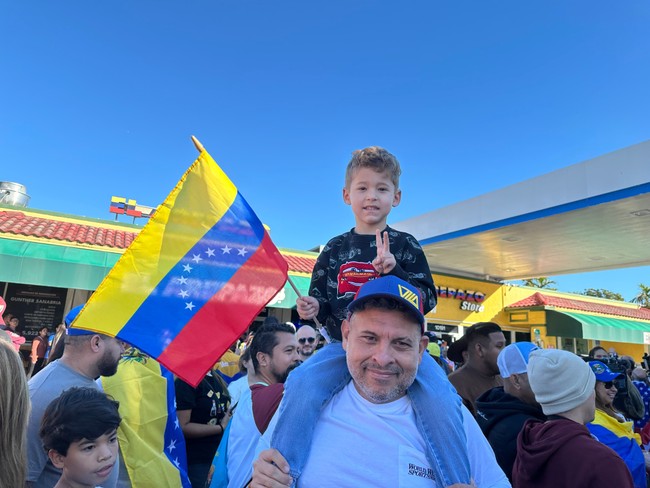
Meanwhile, Venezuelan Americans in Florida poured into the streets in the middle of the night, many still in pajamas, waving their national flag and celebrating what they perceived as a decisive turn. Their emotions ran high—dancing, singing, crying—because for them the outcome represents years of hope, frustration, and loss. They repeatedly expressed gratitude toward the United States and toward leaders they believe helped free their homeland from a repressive regime.
Those Venezuelans’ reactions included direct statements about freedom and relief, and one onlooker explained the depth of her suffering. She described personal tragedies and a longing for change that now seems possible, underscoring why her response is so visceral. When people who have been personally harmed by a regime respond to its downfall, their perspective should carry extra weight.
Reporters captured moments of raw emotion among Venezuelan expats who emphasized liberation over politics. “It’s not an act of war. It’s an act of freedom,” one Venezuelan said, and that line landed differently coming from someone who lived under Maduro’s rule. The quote reads as a testimony rather than a talking point, reinforcing the contrast with those in the Bay Area who appear motivated chiefly by partisan opposition.
Coverage from Miami showed spontaneous gatherings in neighborhoods with large Venezuelan communities, places sometimes nicknamed for their concentration of exiles. Local revelers cited long years of hardship and loss, recounting families harmed by kidnappings and state violence. Those stories give context to why the community responded with ecstatic celebrations instead of ideological posturing.
The human toll is hard to ignore when a survivor speaks about a stolen life and the hope of return. One Venezuelan told a reporter, “Thank you, Lord, thank you president of the United States. I’ve been waiting for years — he’s done so much damage. This has been horrible.” That line, delivered by someone who endured Maduro’s rule, reads as gratitude from a liberated people rather than as partisan cheerleading.
People carried Venezuela’s flag and sang together in the early morning hours. “It’s not an act of war. It’s an act of freedom,” one Venezuelan said.
Another witness described the trauma that drove them to emigrate, detailing family members who were killed or kidnapped and the enduring pain of separation. Their testimony explains why many Venezuelans in diaspora responded with tears and songs rather than sterile political slogans. It also clarifies who bears real consequences from events inside Venezuela.
They came out in the middle of the night when they heard the news, some still in pajamas as they joined the crowd of revelers waving Venezuelan flags and dancing, singing and crying.
“Thank you, Lord, thank you president of the United States. I’ve been waiting for years — he’s done so much damage. This has been horrible,” said Yajaira, a Venezuelan American from the city of Maracaibo.
With Venezuela potentially entering a new chapter, many expatriates voiced the desire to return and help rebuild their country. Repatriation of professionals, workers, and families would be essential if Venezuela is to recover and modernize. That prospect is a concrete stake in the outcome, unlike protest signals sent thousands of miles away by people who never lived under the regime they debate.
When judging the significance of two different public responses, it makes sense to consider who has a personal stake. The Venezuelans celebrating in Florida and elsewhere have a direct and painful history tied to Maduro’s rule, so their reactions are grounded in sacrifice and hope. The San Francisco demonstrators, by contrast, mostly express partisan anger toward a U.S. political figure, which is a different, less consequential form of engagement.
Editor’s Note: Help us continue to report the truth about corrupt dictators and thugs like Nicolas Maduro, and what befalls them in the end.

Add comment