
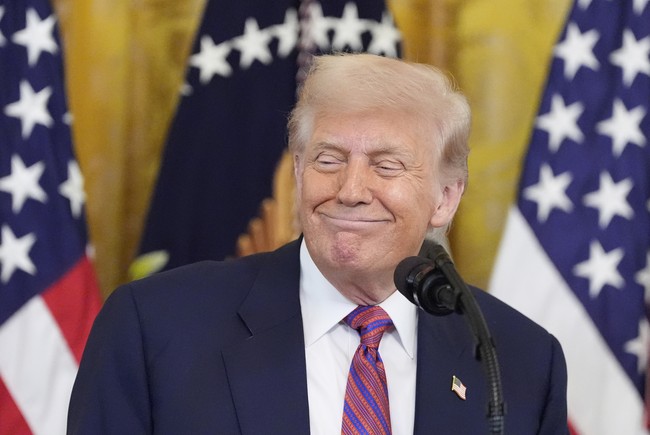
President Trump signed a short-term continuing resolution Wednesday evening that funds the federal government through January 2026, ending the shutdown tied to Senate maneuvers and returning funding to federal programs and employees.
The revised bill, officially titled the “Continuing Appropriations, Agriculture (Ag), Legislative Branch, Military Construction (Milcon) and Veterans Affairs (VA), and Extensions Act, 2026,” clears a path to reopen government operations and stabilize services that had been interrupted. The move ended weeks of uncertainty that affected federal workers, airports, SNAP recipients, and many others who felt the pinch during the halt in funding.
The House passed the measure earlier in the day in a final vote that reflected mostly party-line divisions, though a handful of Democrats crossed over to support the bill. One notable name, Rep. Jared Golden (ME-6), had previously voted for a version of the continuing resolution and remained aligned with efforts to restore funding quickly.
The debate that led to the vote was sharp and political, with lawmakers emphasizing both the need to keep the government running and their concerns about deficit spending. In the lower chamber, the tally was 222-209, a result that sent the package to the White House and set the stage for the president’s signature that night.
It’s official: After a handful of Senate Democrats finally did their part on Monday, the House of Representatives has voted to end the Schumer Shutdown and reopen the government on Wednesday night in a 222-209 vote, with six Democrats voting in favor along with the GOP majority, and two Republicans voting with Democrats against it:
The House on Wednesday passed a sweeping spending package to reopen the government, setting the stage to end a marathon shutdown — the longest in U.S. history — that churned economic turmoil around the country and sparked an internal battle among Democrats over the future of the party and how best to take on President Trump.
The vote in the lower chamber was 222-209, almost strictly along party lines. Only two Republicans opposed the measure, to protest deficit spending, while six Democrats hopped the aisle to support it, citing the importance of getting federal funding flowing again.
The White House marked the moment with an official post on X and released video of the signing ceremony, where the president framed the vote as a victory over what he called extortionist tactics. In his remarks at the signing, he criticized the delay and the pain it caused ordinary Americans and government employees who went without pay.
At the signing, the president addressed the disruption experienced by workers and families and pointed to critical services that had been interrupted by the shutdown. He singled out air traffic controllers, federal paychecks that were delayed, and SNAP recipients who faced difficulty accessing food assistance during the funding gap.
The administration emphasized that reopening the government would restore certainty to operations and alleviate the immediate pressures on local communities and essential services. For many agencies and contractors, the passage of the short-term resolution ends the pause on projects and reimbursements that stalled during the shutdown.
Leadership in both chambers now faces the task of negotiating longer-term spending bills before the January 2026 deadline, a process that will require lawmakers to navigate appropriations priorities and fiscal concerns. The continuing resolution gives negotiators breathing room but also compresses the schedule for meaningful, item-by-item bargaining on underlying appropriations.
Local governments and service providers that had scrambled to compensate for federal interruptions will begin recalibrating operations now that funding is restored. The restart is not instantaneous, but many agencies expect to resume normal payroll cycles and program disbursements within days of the law taking effect.
The White House released the full signing event on its X account for public viewing, allowing citizens to see the president’s remarks and the moment the bill became law. The videos and the official post were circulated widely across social platforms as lawmakers and officials reacted to the end of the shutdown.
Political fallout from the episode is likely to continue, with critics pointing to how the standoff unfolded and supporters arguing the eventual bipartisan votes show the pressure to resolve funding disputes. The short-term nature of the bill means debates over spending levels and priorities will return before January, keeping appropriations at the center of Washington’s calendar.
[Editor’s Note: This article was edited for clarity post-publication.]



Add comment