
Checklist: emphasize the failure of key European allies to support action against Iran; highlight President Trump’s public critique of France and Emmanuel Macron; preserve direct quotes about France’s refusal and Macron’s stance; detail consequences such as Israel cutting defense ties; maintain editorial perspective consistent with Republican viewpoint.
European allies have recently shown reluctance to support decisive measures against Iran, and that hesitation matters. The United States found itself blocked from using certain airspace and bases it had long relied on, a practical setback that revealed deeper fractures in alliances. That reluctance is not mere protocol; it affects mission success and the safety of partners facing a dangerous adversary.
One clear example was France’s decision to deny overflight or base access for planes carrying military supplies, a move President Trump called out publicly. The refusal sent a blunt diplomatic message: some allies are unwilling to back hard power when it counts. That kind of behavior forces a reevaluation of mutual responsibilities within NATO and among bilateral partners.
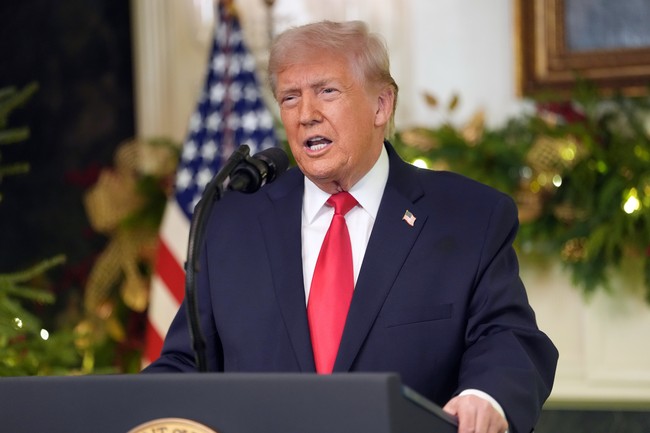
“The Country of France wouldn’t let planes headed to Israel, loaded up with military supplies, fly over French territory,” Trump said on Truth Social. “France has been VERY UNHELPFUL with respect to the ‘Butcher of Iran,’ who has been successfully eliminated!”
“The U.S.A. will remember!!!” he wrote.
At the White House, President Trump used a sharp line about Emmanuel Macron while explaining the broader point about allied unreliability, and the moment landed with many who follow international power dynamics. The jab was cheeky but it underscored frustration with partners who talk tough but act timid when strategy demands cohesion. Allies that hesitate when Iran is actively threatening regional stability are exposing their own vulnerabilities.
France’s public posture suggested diplomacy and consultation with Iran rather than immediate military measures, a stance framed by some French officials as realistic caution. Here is the quoted stance that drew criticism: “This has never been the option that we’ve chosen and we think it’s unrealistic (military means)… We must be able to reopen this strait because it’s strategic for energy, fertilizers, and international trade, but it can only be done in consultation with Iran.”
That line reads to many like appeasement dressed as pragmatism, effectively putting Western interests on pause while seeking Iran’s cooperation. For those who see Iran as an active sponsor of regional violence and a systemic threat, waiting to negotiate while critical sea lanes are threatened looks like surrender. Standing firm, critics argue, means using leverage, not asking for permission from the very regime committing the destabilizing acts.
“This has never been the option that we’ve chosen and we think it’s unrealistic (military means)… We must be able to reopen this strait because it’s strategic for energy, fertilizers, and international trade, but it can only be done in consultation with Iran.”
The fallout from France’s approach was immediate and tangible: Israel announced it would stop acquiring defense-related goods and services from France. That decision replaced French procurement with domestic Israeli production and purchases from allied countries. For a nation whose defense interests are existential, reliable suppliers matter, and France just lost business and standing.
Israel is stopping the acquisition of defense-related goods and services from France, the Israeli Defense Ministry said Tuesday.
“The Director General of the Israel Ministry of Defense. Maj. Gen. (Res.) Amir Baram has decided to reduce all defense procurement from France to zero, replacing it with domestic Israeli procurement or purchases from allied countries,” a Defense Ministry spokesperson said in a statement emailed to The Hill.
Cutting contracts over principle is a blunt reminder that soft power and diplomatic niceties don’t replace the hard realities of security. Defense procurement is not just commerce; it’s a signal of trust and strategic alignment. When one ally opts out or hedges its bets, others will adapt quickly to protect their own interests.
Macron called President Trump’s remark “inelegant,” but inelegance is not the same as strategic failure. Failing to secure secure access and to respond decisively to a belligerent Iran is what weakens influence. In the current environment, strength and clarity of purpose create the leverage that makes diplomacy effective.
For decades, many leaders offered rhetoric without results, and that record had consequences. Now, the approach from the White House emphasizes action to neutralize threats from Iran, and it expects partners to contribute if they claim to share the same stakes. Allies that repeatedly shy away from shared burdens should not be surprised when partnerships get reassessed in practical terms.
Editor’s Note: For decades, former presidents have been all talk and no action. Now, Donald Trump is eliminating the threat from Iran once and for all.
Conversations among allies will continue, but actions speak louder than statements when the Strait of Hormuz is at risk and regional allies are under attack. Countries that protect their own interests and stand their ground will shape the future balance of power. Those who retreat to consultation risk losing influence and trust in critical moments.

France has an economic alliance with Iran. France partnered with the Saipa-Citroen automotive product plant built from scratch in under two years, making Iran the eighth largest auto producer in the world. So where did Iran get the tunnel boring machines, machine tools and electronics production facilities?? Iran is also building a fiber optic network courtesy of Russia. Much of the missile technology came from China.