
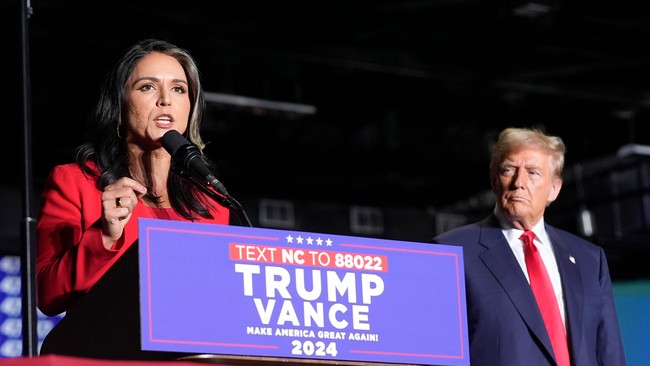
President Trump responded to Director of National Intelligence Tulsi Gabbard’s announced resignation, expressing personal support for her decision to step down and naming the agency’s principal deputy as acting director; this article covers his statement, the reasons Gabbard cited, the background on Aaron Lukas, and the broader context around the transition of leadership at ODNI.
Tulsi Gabbard said she will leave the Administration effective June 30, citing a family medical crisis as the driving reason. Her husband, Abraham, has been diagnosed with a rare form of bone cancer, and Gabbard has made it clear she intends to step away from public duties to focus on his care and recovery. That choice drew an immediate public response from President Trump, who acknowledged her service and offered encouragement for the family.
President Trump issued a short, personal note that praised Gabbard’s work at the Office of the Director of National Intelligence and made clear the administration supports her decision to prioritize family. He framed her resignation as honorable and rooted in devotion to her husband during a difficult medical battle. The tone is conciliatory and appreciative, reflecting a desire to recognize service while respecting private family matters.
Unfortunately, after having done a great job, Tulsi Gabbard will be leaving the Administration on June 30th. Her wonderful husband, Abraham, has been recently diagnosed with a rare form of bone cancer, and she, rightfully, wants to be with him, bringing him back to good health as they currently fight a tough battle together. I have no doubt he will soon be better than ever. Tulsi has done an incredible job, and we will miss her. Her highly respected Principal Deputy Director of National Intelligence, Aaron Lukas, will serve as Acting Director of National Intelligence. President DONALD J. TRUMP
The president also announced that Aaron Lukas, the Principal Deputy Director of National Intelligence, will serve as Acting Director when Gabbard steps down. Lukas has prior experience in the administration, including time as Deputy Senior Director for Europe and Russia on the National Security Council during President Trump’s first term. Those roles give him familiarity with the interagency process and the geopolitical portfolios that are central to ODNI priorities.
Aaron Lukas holds a Bachelor of Arts in Political Science from Texas A&M and a Master’s in International Affairs from George Washington University, credentials that reflect the mix of academic training and policy exposure common among senior intelligence staff. He has worked within the Central Intelligence Agency and inside the Office of the Director of National Intelligence across both of President Trump’s administrations. That resume underlines a continuity argument: naming a seasoned deputy as acting director keeps operational momentum intact while the administration considers a permanent nominee.
The change at ODNI arrives against a backdrop of ongoing scrutiny over classification, declassification, and information management inside the intelligence community. Questions about document handling and the transfer of materials have been part of public debate recently, and leadership transitions naturally raise attention on records, oversight, and the direction of intelligence releases. For Republicans, the focus often shifts to ensuring safeguards and transparency where appropriate, while maintaining the operational security those agencies require.
Gabbard’s resignation for family reasons draws predictable sympathy across the political spectrum, but it also forces rapid personnel and policy decisions inside a critical national security office. The selection of an acting director who already knows the shop reduces the risk of disruption, yet it also sets the stage for vetting and Senate confirmation if the White House names a permanent successor. In the meantime, the day-to-day business of intelligence assessments, coordination with the NSC, and interagency cooperation will continue under Lukas’s temporary leadership.
This remains an evolving item of national interest with personal consequences for the Gabbard family, and it will invite follow-up reporting on personnel moves and policy impacts inside ODNI. The administration’s public statement makes clear its respect for Gabbard’s service while signaling a steady hand for the agency during the transition.



Add comment