
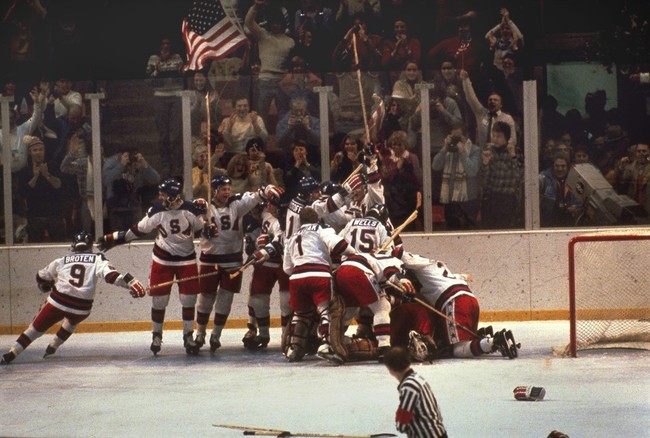
President Donald Trump honored the 1980 U.S. Olympic hockey team with the Congressional Gold Medal, recognizing a defining American triumph known as the Miracle on Ice. This article looks at why that moment still matters, what it symbolized during a tense era, how the players and coach shaped hockey history, and why the recognition resonates politically today.
Trump’s choice to celebrate the 1980 Olympic team during the Congressional Gold Medal signing is a simple, clear act of recognition for a group of amateurs who pulled off one of the greatest upsets in sports. These were college players and weekend warriors who beat a Soviet powerhouse, and honoring them highlights grit, preparation, and national pride. Many Americans remember where they were that night, and for conservatives it’s an emblem of resilience worth celebrating.
On Feb. 22, 1980, Herb Brooks’ assembled squad skated into the Olympic Center against a Soviet team that had dominated international hockey for years. The Americans were underdogs, having been routed 10-3 by the Soviets in an exhibition just weeks before, but they stuck to a game plan and believed in Brooks’ relentless coaching. Their comeback and eventual victory captured the country’s imagination.
These players were not professionals in the traditional sense; they came from small towns and college programs, brought together by a coach who demanded conditioning and discipline. The Soviets, with a long string of Olympic golds, were expected to control the ice, yet the U.S. kept pace, chased momentum, and seized the moment. When Mark Johnson tied the game and Mike Eruzione put in the winner, it felt like more than sport — it was a cultural jolt.
The win wasn’t the end of the story: two days later, the Americans beat Finland to claim gold, and broadcaster Al Michaels immortalized the moment with the line “Do you believe in miracles? Yes!” That call echoed beyond the rink, offering a shot of optimism during a time marked by stagflation, hostages in Iran, and a nation still processing Vietnam. The image of amateurs toppling giants fit into a larger narrative about American resolve against external pressure.
Many players went on to professional careers; nineteen eventually played in the NHL, and careers intersected with former Soviet stars in later decades. Eruzione left competitive play and moved into broadcasting and coaching, while Brooks’ legacy as the architect of that team remained central even after his untimely death. The team’s story evolved from a single game into a lasting chapter of sports history that continues to influence coaching and team-building philosophies.
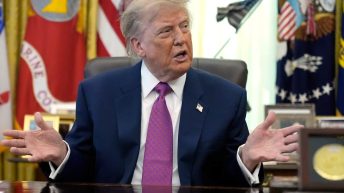
Trump’s spokesperson framed the honor as “fueling a resurgence of national pride,” tying the gesture to a broader argument about restoring confidence in American institutions and symbols. For conservatives who see echoes of national decline under current leadership, such ceremonies affirm that celebrating achievement matters and that shared triumphs can help rebuild civic cohesion. Recognizing the Miracle on Ice fits a narrative of reclaiming American optimism.
The left often prefers to examine systemic flaws, which has its place, but moments like Lake Placid present an unvarnished example of what preparation plus opportunity can produce. Brooks trained his players hard, converting raw talent into relentless effort and situational discipline. That approach is a straightforward template: hard work, shared purpose, and belief in a collective mission produce surprising results.
Awarding the Congressional Gold Medal to the 1980 team fits the style of a leader who values dramatic gestures that frame a story of comeback and determination. The historical parallel is obvious to many: underdogs can hold their own against powerful opponents when they prepare, unite, and refuse to yield. Honoring that legacy re-centers a patriotic narrative that emphasizes personal responsibility and national pride.
At a time when unity can feel fragile, returning attention to a unifying sports victory bridges generational divides and invites renewed confidence in public symbols. The Miracle team’s legacy stands as a reminder that ordinary Americans, when organized and motivated, can produce extraordinary outcomes. That memory remains part of the country’s cultural toolkit and is worth acknowledging in civic life.


Add comment