
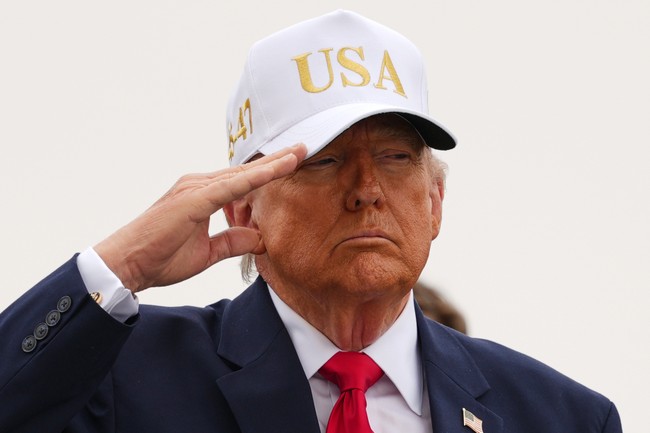
President Trump ordered a tough, immediate response after Iran’s missile and drone strikes killed United States service members, directing CENTCOM to strike Iran to punish the Islamic Revolutionary Guard Corps and blunt future threats to American forces and commercial shipping in the region.
The attack killed two U.S. service members and left one missing, according to CENTCOM, after Iranian forces launched a missile and drone barrage targeted . This was not a stray incident; it was a deliberate assault on Americans serving abroad, and it demanded a clear response from the commander in chief. The administration moved swiftly and publicly, signaling that attacks on U.S. personnel will meet decisive retaliation.
The U.S. Central Command, which oversees American military operations in the Middle East, has now revealed that two United States service members were killed and one remains missing following a missile and drone attack by Iran. The attack was targeted .
Secretary of War Pete Hegseth reacted promptly and with brevity, delivering a message that captured the country’s resolve in an update. His words were short but powerful, framed around support for the troops and an unwavering stance against those who attack them. That tone reflected a White House unwilling to tolerate strikes that cost American lives.
Godspeed, heroes.
Their sacrifice only stiffens our resolve.
Iran followed up by declaring it would no longer adhere to the Memorandum of Understanding terms agreed during talks with the United States, a clear escalation that removed diplomatic constraints and left military options more exposed. That statement hardened the choice for U.S. leaders and made the need to degrade Iran’s operational capacity urgent. When an adversary openly rejects agreements meant to limit tensions, the U.S. must respond in a way that restores deterrence.
CENTCOM then released an update explaining the hits ordered at the direction of the commander in chief, describing the strikes as intended to “further degrade Iran’s ability to threaten commercial shipping in the Strait of Hormuz” and to swiftly punish the IRGC units responsible. The language spelled out two goals: reduce Iran’s capacity to menace global trade routes and exact a price for attacking American forces. Those twin objectives fit a clear strategy of imposing consequences while protecting vital international commerce.
Today at 6 p.m. ET, U.S. forces began launching new airstrikes against Iran at the Commander in Chief’s direction. The strikes are designed to further degrade Iran’s ability to threaten commercial shipping in the Strait of Hormuz and swiftly punish Islamic Revolutionary Guard Corps forces who launched attacks against American service members in Jordan last night.
Multiple outlets reported that President Trump told commanders to “rain hell” on Iran, and that the administration planned the strikes to be “more expansive” in scope and effect. That blunt directive reflects a leadership style that accepts the hard responsibility of using military power to deter future aggression. In practical terms, it meant larger, coordinated strikes designed to hit Iran’s capacity to wage asymmetric attacks across the region.
At the same time, military planners emphasized targeting IRGC capabilities specifically tied to attacks on U.S. forces and shipping, aiming to avoid unnecessary escalation while still delivering a meaningful blow. The approach prioritizes degrading the enemy’s operational reach without triggering a wider war, a balance commanders and civilian leaders worked to strike in real time. Precision, tempo, and signaling all mattered in the hours after the attack.
https://x.com/CENTCOM/status/2078605013878710482?ref_src=twsrc%5Etfw
Across the country, people watched as American forces moved to defend U.S. personnel and interests, and families of the fallen received the nation’s solemn support. The president’s order was framed as necessary and measured by those who believe in strong deterrence: respond hard enough that future attacks carry intolerable costs. That calculation underpins a conservative view of national security that prizes clear consequences for aggression.
As this situation develops, the focus remains on supporting service members on the ground and sustaining pressure on Iran to prevent further threats. Pray for the families affected and for the troops implementing complex missions under dangerous conditions. And remember the central point: when American lives are taken, leadership must act to protect others and restore deterrence at home and abroad.
Editor’s Note: Thanks to President Trump and his administration’s bold leadership, we are respected on the world stage, and our enemies are being put on notice.


Add comment