
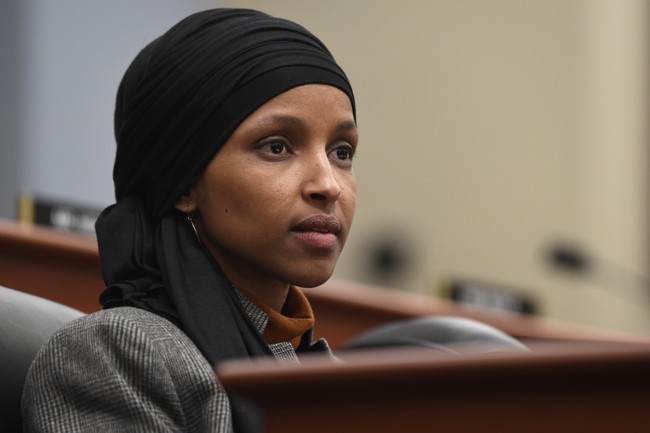
President Trump used sharp language about Minnesota’s political leadership and parts of that state’s Somali community while discussing immigration, welfare fraud, and public safety, calling out Rep. Ilhan Omar and Governor Tim Walz by name and arguing for tougher responses to what he described as systemic problems.
Speaking in an interview, Trump criticized what he called non-contributing immigrants and spotlighted Minnesota’s recent welfare fraud revelations as evidence of a bigger failure by local leaders to protect taxpayers. He contrasted immigrants who contribute with those he sees as exploiting the system and insisted on stronger accountability from elected officials.
On the subject of Rep. Ilhan Omar, the President did not hold back. “Yeah, I want to see people that contribute. I don’t want to see Somalia. I don’t want to see a woman that, you know, marries her brother to get in and then becomes a congressman and does nothing but complain,” the President fired back. He followed that with a blunt admonition: “Let her go back, fix up her own country.”
Trump framed his comments in the context of a broader political fight over immigration policy and public funds. He said Minnesota’s troubles did not begin with the latest headlines and blamed what he called an “incompetent” governor and Democratic mismanagement for allowing fraud to expand, declaring his long-standing concern about the situation there.
“I started complaining about Somalia long before the scandal,” said Trump. “The horrible things they’re doing to Minnesota, it’s incredible. They have an incompetent governor there, too. The democrats are running some bad ships.” That phrase captured his view that leadership failures, not isolated incidents, are to blame for systemic theft and disorder.
State officials now face growing calls for investigations after reports of multi-billion-dollar fraud across several public assistance programs. Trump and others argue the scale of the alleged abuse—reports cite figures in the billions—shows a need for far more aggressive enforcement and oversight to protect taxpayers’ money.
Photos showing prominent Minnesota Democrats posing with a Somali man with prior fraud convictions intensified scrutiny and public anger. Those images became part of the case critics make that political figures were out of touch with the consequences of lax enforcement and permissive policy decisions that left systems open to exploitation.
Rep. Omar, who arrived in the United States as a child after fleeing Somalia, defended members of her community and emphasized that they are also taxpayers harmed by fraud. “You know, this also has an impact on Somalis because we are also taxpayers in Minnesota,” she said on national television. “We could have also benefited from the program and the money that was stolen.”
Trump responded to the allegations by rescinding Temporary Protected Status for Somalis in Minnesota and promising tougher immigration controls for what he described as third-world countries that send criminals and fraudsters to America. He used strong language about the impact on public safety and finances: “Somali gangs are terrorizing the people of that great State, and BILLIONS of Dollars are missing. Send them back to where they came from,” he demanded. “It’s OVER!”
On the campaign trail and in media interviews, the President has repeatedly tied immigration policy to crime and fraud, arguing that permissive approaches create incentives for criminal networks to exploit government programs. His supporters say decisive action is necessary to restore order and fiscal responsibility, while critics call his rhetoric divisive.
As state and federal authorities examine the welfare programs and alleged fraud schemes, the political fallout will likely continue. For Republicans and those pressing for strict enforcement, the Minnesota cases are a call to tighten borders, increase accountability, and hold public officials responsible for protecting taxpayer dollars.


Add comment