

The article examines a leaked peace proposal tied to the Russia-Ukraine war, the U.S. reaction that distanced itself from the plan, and the diplomatic scramble across Europe as allies and officials sort who authored the document and whether its terms could ever be acceptable to Kyiv.
The conflict between Russia and Ukraine has settled into a brutal, attritional phase where long-range fires and drones make rear areas just as dangerous as front lines, and geography favors the invader in a grinding war of position. That reality frames why any proposal that asks Ukraine to cede significant territory or cripple its defenses is politically and practically fraught. American involvement in mediating or passing along plans has become a flash point, with lawmakers and diplomats scrambling to explain what the United States actually supports.
A widely circulated plan reportedly called for Ukraine to give up large swaths of contested territory, including all of the Donbass, scale back its military forces, and renounce claims to Crimea. Those details make clear why Kyiv would never accept such terms, and why many European governments reacted with alarm. The idea of permanent territorial concessions to Moscow is anathema to a number of NATO states, which view any weakening of Ukrainian defense capabilities as risking further Russian aggression.
The plan worked out bilaterally between the USA and Russia calls for Ukraine to surrender quite a bit of territory, including all of the contested Donbass region, as well as requiring Ukraine to sharply pare back its military, as well as ceding any claims to Crimea, among other regions.
It was always a near-certainty that Ukraine wasn’t going to buy that. Now it appears as though much of the European community won’t buy it, either.
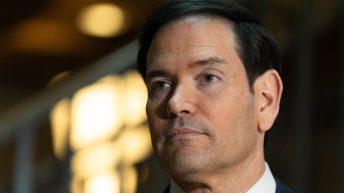
After the plan leaked, members of a congressional delegation emphasized that secretary-level officials told them the proposal did not reflect an American policy stance. Lawmakers say Secretary of State Marco Rubio notified them the document was a proposal received from other parties, not an endorsement from Washington. That clarification was meant to distance the administration from a set of terms many allies consider unacceptable.
U.S. lawmakers attempted Saturday to reverse days of confusion around a leaked peace plan for Ukraine, saying Secretary of State Marco Rubio assured them the document does not represent the Trump administration’s position.
Rubio called the bipartisan delegation to the Halifax International Security Forum on Saturday afternoon, they said, while en route to Geneva for talks with Ukrainian officials. He described the plan as a Russian proposal, they said, and not a U.S. initiative.
“He made it very clear to us that we are the recipients of a proposal that was delivered to one of our representatives,” said Sen. Mike Rounds (R-S.D.). “It is not our recommendation. It is not our peace plan. It is a proposal that was received, and as an intermediary, we have made arrangements to share it — and we did not release it. It was leaked.”’
Meanwhile, Secretary Rubio signaled on his social feed about the situation and the U.S. posture, and his post is being closely watched by allies and critics alike. In the article, Rubio’s X account activity appeared in context as an important piece of public clarification, and that original embed remains part of the record here. In addition to his public statements, delegations were dispatched to Geneva to consult directly with Ukrainian advisers before any further engagement.
The terms described in the leaked document — surrender of Donbass, abandonment of Crimea claims, and strict limits on Ukraine’s military — would leave Kyiv vulnerable and politically unable to accept the package. Many NATO capitals consider those conditions a nonstarter because they would reduce Ukraine’s deterrent capacity and effectively reward territorial conquest. Poland and other neighbors, shaped by hard experience with Moscow, are among the firmest opponents of any settlement that leaves Russia stronger at Ukraine’s expense.
European governments are moving to coordinate a response and prepare counterproposals that keep Ukraine’s sovereignty and security needs front and center. Several member states are said to be preparing their own offers or amendments to any draft deal, and national security advisers from major European powers may join talks to push back against terms viewed as overly favorable to Russia. That diplomatic hustle underscores how divided the transatlantic coalition can be when an apparent accommodation with Moscow is floated.
Ukrainian officials will almost certainly reject any plan that forces a permanent surrender of territory or dramatically reduces their armed forces, and Kyiv’s negotiating posture reflects both domestic politics and the stark military reality on the ground. The prospect of returning Crimea to Russian control is politically impossible for many Ukrainians and would be seen across the region as legitimizing forceful annexation. For Ukraine, survival as a sovereign nation depends on maintaining credible defenses and international support.
Expectations in capitals across Europe and Washington now hinge on whether a workable diplomatic path can be found that preserves Ukrainian security while avoiding an open expansion of the conflict. Any durable solution will need buy-in from Kyiv and key NATO partners, not just from Moscow or intermediaries. For now, talks continue and the diplomatic theater around this leaked document shows how quickly alliances can mobilize to contest proposals that threaten the balance of security in Europe.
Let’s not kid ourselves. Putin isn’t going to withdraw from the Dnieper-Donetsk region in Eastern Ukraine. It has 395 million barrels of proven oil reserves. It’s what Europe and U.S. neo-cons want; it’s why they still support the failed regime of the midget in Kiev. Putin can’t go back to face others in the Russian government without the Dnieper-Donetsk region.
Trump won’t tell Putin he has to leave Crimea or the Donbas. Possession is 9/10ths of the law. Russia is not “beaten” that they have to accept U.S. “dictates.”
Ukraine is in rubble, not Russia. This war took place in Russia’s backyard; the genesis of it started in double dealing and broken promises driven by a CIA “color revolution.”
The U.S. can’t take the moral high ground today; not after the 2014 Color Revolution that overthrew the duly elected president of Ukraine and installed the CIA present dictator.
Russia was ready to end the war and withdraw its troops in exchange for Ukrainian neutrality just a few months after the invasion began. It was refused partly because NATO sent ex-British PM Boris Johnson as an errand boy to pressure Kyiv into continuing the fight, according to David Arahamiya, the leader of Ukraine’s ruling party.
The lawmaker was not only leading the parliamentary faction of Zelensky’s Servant of the People party but was also appointed as the head of the Ukrainian delegation during the initial, tentative peace talks in March and April, 2022, hosted by Turkey.
Russia’s ultimate goal was to press Ukraine into neutrality, Arahamiya explained, adding that all other requests (like the elusive ‘de-nazification’) were essentially empty cosmetics, and neutrality would have been enough for Russia to agree to withdraw beyond the February 24th frontlines.
According to Putin, Russia and Ukraine had signed a preliminary agreement to end the war. All Arahamiya had to do was to take it to Kiev for parliamentary debate and passage if it was acceptable. Instead, that wild haired Boris Johnson showed up and goaded Ukraine into backing away from the table. Those actions have been verified by independent sources.
NATO’s action from the git-go stemmed from a boneheaded attitude that the West could boss around (what could be) the largest nuclear armed nation in the world. It’s been on the wrong side of the equation and showed no strategic vision or plan.