
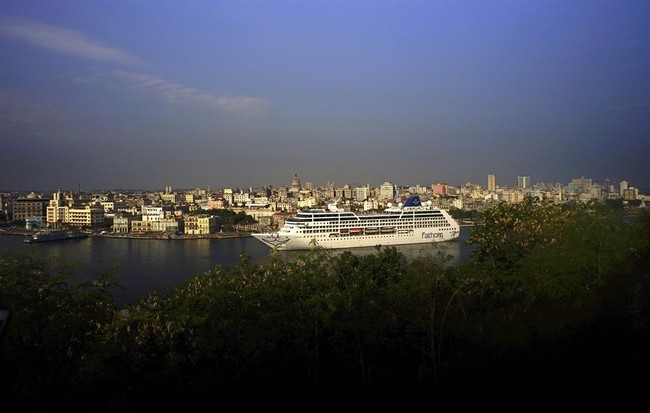
The Supreme Court has just reopened a path for Havana Docks Corp. to pursue nine-figure judgments against cruise lines that used docks seized after the Cuban Revolution, and this decision could force international firms to pay for decades of profits earned on confiscated property while highlighting the long memory of law and accountability for communist expropriation.
In 1960, Cuba’s revolutionary government took control of privately operated docks in Havana, effectively seizing them without compensation to the original owners. Decades later, those same docks became hubs for major international cruise lines, which moved nearly a million passengers through Havana between 2016 and 2019. The core dispute is straightforward: did the cruise companies “traffic” in property that remained tainted by its confiscated status, making them liable to the pre-revolution owners?
The Supreme Court answered that question in a way that revives legal exposure for the cruise operators, finding that use of property taken by a government can give rise to liability even if the original owner’s formal concession later expired. Justice Clarence Thomas wrote for the majority, stressing that confiscated property is “tainted,” and that anyone who uses it can be liable to those who had an interest in it. That ruling overturns an appellate court conclusion that had thrown out nine-figure awards previously granted to Havana Docks.
The Supreme Court on Thursday made it easier for American companies to get financial compensation if they owned property in Cuba that was confiscated by the Communist regime.
In an 8-1 decision, the court revived a series of nine-figure judgments that an American company, Havana Docks Corp., obtained against four international cruise ship operators. Havana Docks says the cruise companies have illegally profited off docks and piers that Fidel Castro seized after the Cuban Revolution.
This case lands amid heightened U.S. pressure on the Cuban dictatorship, as the current administration has tightened sanctions, restricted energy shipments, and made clear that its tolerance for Havana’s hostile behavior is limited. Those policy choices reflect a willingness to push back against regimes that steal private property and shield those who profit from such takings. For many conservative observers, the court’s ruling is consistent with a robust approach to property rights and accountability.
The factual record is blunt: Havana Docks traces its operations at the Port of Havana back to 1928 and had a long-term agreement that, on paper, extended until 2004. Cuba’s 1960 confiscation stripped the company of its control, yet the physical infrastructure kept operating under state direction and later under permits that allowed foreign cruise firms to dock and sell voyages. The legal wrinkle has been whether later commercial use equates to trafficking in property that was originally taken from the American claimant.
Those earlier judgments amounted to roughly $110 million against Royal Caribbean Cruises, Norwegian Cruise Line Holdings, Carnival Corp., and MSC Cruises combined, but appellate courts once tossed them out. The Supreme Court, however, set that path back in motion by clarifying that liability can attach to users of confiscated property itself, not only to those who bought an ownership interest. That distinction matters for companies that relied on Cuba’s permission to operate, rather than on a clean chain of title.
Justice Elena Kagan dissented, arguing the cruise lines did not traffic in Havana Docks’ time-limited concession, which she described as akin to a renter’s lease set to expire in 2004. The split underscores a deeper debate about how far U.S. law should reach to remedy past wrongs when the intervening decades have changed circumstances on the ground. Still, the majority’s stance favors the original owners and signals that courts can be a venue for correcting historical expropriations.
The case at the Supreme Court involved facilities at the Port of Havana that Havana Docks began using in 1928. Havana Docks had a long-term property agreement that entitled the company to operate the docks until 2004. But in 1960, Cuba’s new Communist government took control of the docks without compensating the company.
“At that point, the docks were tainted as confiscated property,” Justice Clarence Thomas wrote in the majority opinion.
Decades later, cruise ship operators got permission from the Cuban government to do business there and started using the docks for international cruises. Between 2016 and 2019, four cruise companies—Royal Caribbean Cruises, Norwegian Cruise Line Holdings, Carnival Corp. and MSC Cruises—transported nearly a million cruise passengers through Cuba.
Congress created the legal framework that makes these suits possible with the Cuban Liberty and Democratic Solidarity Act of 1996, commonly called Helms‑Burton, a statute born from bipartisan outrage over Cuba’s actions and specific incidents that harmed Americans. For years successive presidents suspended parts of that law for diplomatic reasons until the policy shifted and the suspensions lapsed, allowing private suits to proceed. The Supreme Court’s decision now gives those suits renewed life and moves the fight back to lower courts for further proceedings.
There is a clear political dimension here: conservatives who favor strong property rights see the ruling as vindication that theft by regimes like Castro’s can have legal consequences beyond the reach of time and politics. It also sends a message to foreign firms that doing business with confiscating regimes carries risk. The diplomatic and commercial fallout will play out in courtrooms and boardrooms, and the ultimate financial stakes could be substantial for the companies involved.
Writing for the majority, Justice Clarence Thomas said the company had only to show the cruise lines used confiscated property — the docks themselves — not that they trafficked in Havana Docks’ expired ownership interest. Confiscated property is “tainted,” Thomas wrote, “such that anyone who uses the property can be liable to those who had an interest” in it…
In dissent, Justice Elena Kagan said the docks always belonged to Cuba, not Havana Docks, which she likened to “a renter with a lease” set to expire in 2004. The cruise lines, she wrote, “did not traffic in Havana Docks’ time-limited — and long-ago expired — concession.”
This ruling will keep the spotlight on Havana’s history of expropriation and on how the U.S. enforces property rights across borders, all while reinforcing a conservative view that stolen property deserves restoration or compensation, even if justice arrives decades later.



Add comment