
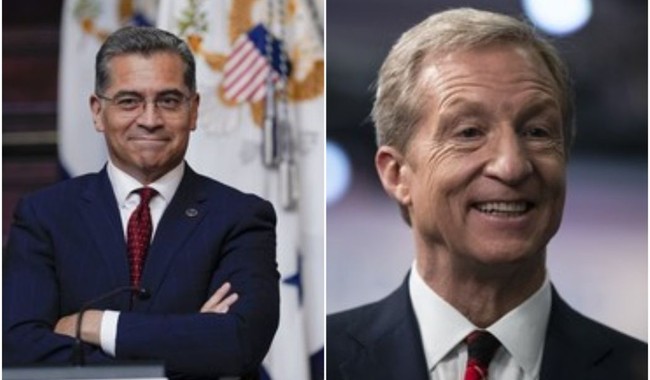
The California governor’s primary is days away and a tightening race, fresh polling numbers, and new allegations about paid and fake social media activity have turned the contest into a messy headline machine. This piece examines who’s gaining ground, the accusations about coordinated fake accounts and influencer payments, and how both Xavier Becerra and Tom Steyer are using digital tactics to reshape perceived voter momentum. The focus stays on the numbers, the claims from a disinformation analysis, and the political implications for a state already stretched thin. Expect a clear Republican-minded take on how these maneuvers reflect on political operatives and the broader state of California politics.
The latest Emerson College/Insider poll puts Xavier Becerra out front at 19 percent with Tom Steyer and Steve Hilton tied at 17 percent. Sheriff Chad Bianco sits at 11 percent and both Katie Porter and Matt Mahan are trailing. Importantly, 12 percent of voters are still undecided with just about ten days until the June 2 primary, so the field is far from settled. These numbers show a volatile electorate and a scramble for the Top 2 spots in California’s jungle primary system.
Becerra’s surge happened after Eric Swalwell exited the race and Becerra jumped from fifth into the lead. Steyer has been pouring money into his effort and pushing hard on social platforms to damage Becerra and claw into the Top 2. Both men are leveraging endorsements, ad dollars, and digital teams to shape narratives. That kind of heavy-handed politicking is exactly why many California voters feel disconnected from real, practical problem-solving.
Now both campaigns face fresh accusations about manipulating online impressions. A Cyabra analysis reportedly found more than 3,000 fake accounts across Instagram, X and Facebook amplifying pro-Becerra messaging while attacking Steyer. The report claims these accounts generated over a million views and roughly 42,000 engagements, creating a manufactured perception of grassroots support. If true, this is a textbook case of Astroturfing designed to fool ordinary voters into believing there’s widespread enthusiasm where there may be none.
Democratic California gubernatorial candidates Xavier Becerra and Tom Steyer are both under accusations they improperly paid social media influencers to boost their bids — but another front in the social media wars between the two around fake accounts is also underway, a report claims.
More than 3,000 fake accounts across Instagram, X and Facebook are boosting former Health and Human Services secretary Becerra while attacking billionaire Steyer, according to an analysis by Cyabra, an AI-powered disinformation security company. It’s used by clients like NATO and the US Department of State, its website said.
Political operatives have long weaponized perception, and this is a modern example. Using AI-driven tools and coordinated accounts to amplify messages lets campaigns manufacture momentum without earning it at the ballot box. That undermines honest civic discourse and further distances candidates from real accountability. Californians deserve leaders who earn support through policy and results, not manufactured social clout.
The online war between Becerra and Steyer didn’t stop at fake accounts; it spilled into influencer disputes and legal complaints. Steyer’s camp has accused opponents of paid posts and shady disclosures, while Steyer himself faces claims from an influencer who says she was paid and bound by an NDA after meeting him. These disputes point to a campaign environment where money, secrecy, and digital strategy mix in ways that confuse voters more than they inform them. NDAs and shadow payments are not how a transparent campaign should operate.
Here is how the Cyabra report framed the situation and the scale of the alleged operation.
The analysis, which was shared with The Post, alleges a “coordinated cross-platform effort to amplify negative narratives and increase online visibility” — though it notably doesn’t draw any conclusions about who may be controlling the accounts and why.
The alleged fake accounts’ activity drove more than a million views and around 42,000 engagements, per the report.
The accounts focused on pro-Becerra messaging that tried to create a perception of grassroots support, the report alleged. Many focused on criticizing Steyer, such as his payment to influencer Carlos Eduardo Espina.
For Republican voters watching from the sidelines, this is yet another sign that California’s political machinery operates with little regard for clean process. Whether the fake accounts or influencer complaints are orchestrated by consultants, campaign staff, or outside actors, the result is the same: the truth becomes harder to find. When campaigns prefer to manufacture volume rather than win hearts and minds, policy debates suffer.
Steyer’s influencer controversy took shape in a complaint alleging the committee failed to disclose payments and allegedly structured content to look organic. The complaint claims the committee used a non-disclosure agreement that prevented public awareness of the payment and that content was later deleted. Those are serious transparency concerns and mirror tactics we’ve seen across blue-state politics where money and message control dominate. Voters should be skeptical whenever campaigns blur the lines between paid promotion and spontaneous support.
A political influencer has filed a complaint against Tom Steyer’s campaign for governor, saying the committee failed to notify her of disclosure requirements, as required by law, when she was paid to meet with Steyer in March and later produced social media content from the meeting.
What’s more, she said the Steyer campaign falsely accused her of posting paid content in support of Steyer’s chief Democratic rival, Xavier Becerra, and failing to disclose it in a complaint filed by the billionaire’s campaign this week.
Maggie Reed, who regularly posts satirical takes on politics to roughly half a million followers on Instagram and TiKTok under the username mermaidmamamaggie, said she was actually paid by Steyer’s campaign and signed an agreement that barred her from disclosing the payment.
She posted, and later deleted, a video from her meeting with Steyer in March.
“In plain terms: the Committee paid for political content, structured it to look like an ordinary creator’s organic opinion, and used a non-disclosure agreement to keep the public from learning the truth,” says the complaint, filed Thursday with California’s Fair Political Practices Commission.
California needs leaders who will fix roads, secure borders, and bring fiscal sanity, not operatives who master social manipulation. Whatever the outcome of this primary, voters should demand transparency and accountability from anyone seeking to run the state. The politics of gimmicks and manufactured chatter should not replace real debate about solutions and stewardship.



Add comment