
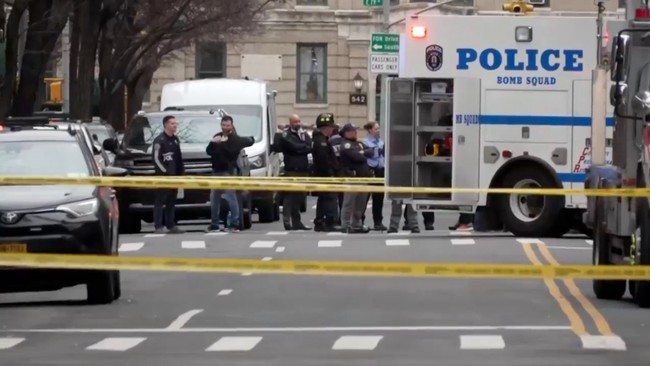
The piece reviews newly surfaced details about the attempted bombing near Gracie Mansion in New York City, highlights apparent contradictions between the suspects’ lawyer and evidence, and reports on recovered notebooks and device searches that suggest planning beyond a single, spontaneous act.
Authorities arrested two teenagers after an incident outside Gracie Mansion where an IED was allegedly “ignited and deployed,” according to the initial reports. The suspects are accused of an “ISIS-inspired attack of terrorism,” and the case has drawn scrutiny because of mixed messaging from local officials and conflicting public claims. Initial reactions from the mayor and other local actors added to the confusion as investigators worked to sort fact from spin. The unfolding details now point toward more deliberate planning than some defenses have suggested.
Two suspects on the pro-Mamdani side, Emir Balat and Ibrahim Kayumi, were taken into custody after allegedly trying to commit what DOJ Attorney General Pam Bondi called an “ISIS-inspired attack of terrorism” against those protesting Mamdani. The New York City mayor’s immediate responses were to condemn… white supremacy rather than Islamism, the latter of which is alleged to be the motivation behind the IED attacks.
New reporting Thursday casts doubt on the defense narrative that the two Pennsylvania teens did not know one another. An X post by Bill Melugin summarized the contradiction bluntly, noting evidence that the pair not only knew each other but had been plotting other attacks. The reporting contends a notebook and supporting materials point to at least a week of planning, which undercuts claims of a chance or purely individual act. If that timeline holds, the legal posture from the suspects’ representatives will face harder scrutiny.
I hope you’re sitting down, but it turns out that the Pennsylvania teens that didn’t know each other and stumbled their way into an ISIS style terrorist attack in New York City not only knew each other, but plotted other attacks as well.
The notebook and other evidence suggested Emir Balat and Ibrahim Kayumi had been planning some kind of an attack for at least a week
Local television reporting referenced a notebook recovered in a Bucks County storage unit as a key piece of evidence showing coordination. Investigators reportedly found notes that referenced “soft targets such as shopping centers” before the suspects allegedly settled on Gracie Mansion. The documents did not, according to the report, list specific stores or detailed schedules, but they did indicate a pattern of discussion and selection that stretched over several days. That timeline matters because it suggests deliberate intent rather than a spur-of-the-moment act.
Beyond written material, investigators executed searches of electronic devices tied to the suspects, looking for communications, research, or corroboration of the planning indicated in the notebook. Those device searches are standard procedure in cases where coordinated action is suspected and can reveal crucial timelines and contacts. Officials have characterized the examination of recovered materials as ongoing, and prosecutors will be piecing together how notes and digital traces align. The full evidentiary picture will determine charges and potential trajectories of the prosecution.
Eyewitness accounts and reporting also highlight the quick action of law enforcement officers who intervened during the protest and counterprotest outside the mayor’s residence. Responders described the incident as chaotic, saying there was “no time to think” when they confronted the suspects holding the explosive devices. According to the coverage, officers moved immediately and subdued the men before the devices detonated, preventing potential casualties. That rapid intervention remains central to why the incident did not result in the worst-case outcome.
Officials say the explosives did not detonate and the suspects were taken into custody at the scene, which now leaves investigators to work through physical evidence, document caches, and electronic data. The report notes that searches of storage areas and devices uncovered items consistent with planning but that many specifics remain under investigation. Prosecutors and federal agents will likely use the combo of physical and digital evidence to establish intent, timeline, and possible connections. Those developments will be key in upcoming court filings and public disclosures.
The media landscape around this case has been contentious, with competing frames about motive and political context shaping coverage. Some local reactions emphasized ideological explanations that differ from federal descriptions of the alleged plot, which has fueled debate and criticism. As federal authorities continue their work, the court process will provide a more formal forum for examining the evidence and claims from both sides. For now, investigators are continuing to analyze the newly recovered materials and build their case.


Add comment