
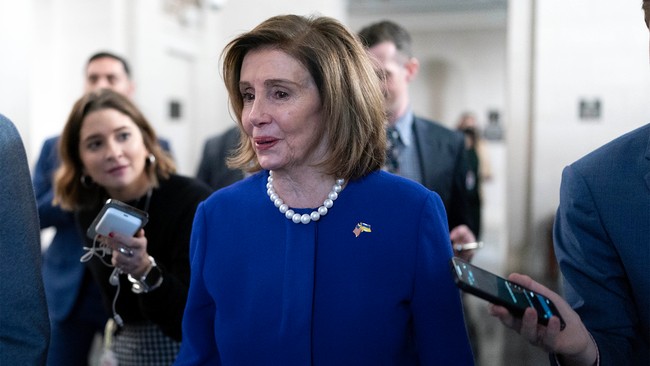
This article examines heated political rhetoric and recent violent incidents, highlighting a CNN interview where Rep. Nancy Pelosi called President Trump “a vile creature,” and placing that comment in a wider context of threats and attacks that have targeted conservatives and public figures in recent years.
Politics is high-stakes and public, and sometimes the language used escalates beyond ordinary disagreement. In 2024, there were two widely reported attempts on former President Donald Trump’s life while he campaigned, one of which would have played out on live television if not for outside intervention. Such events change how words land in the public square and how they are interpreted by people who may be unstable or radicalized.
Soon after those attempts, conservative figures were again targeted in violence. TPUSA co-founder Charlie Kirk was publicly reported as murdered in an attack described as politically motivated, and Representative Steve Scalise survived a shooting that was driven by political animus. These examples show real consequences when political talk turns poisonous and personal.
Given that backdrop, many expected leading Democrats to temper their rhetoric. Instead, a prime-time interview offered a jarring example of the opposite. In a Monday conversation on CNN, Rep. Nancy Pelosi described President Trump in stark, moral terms, showing no inclination to soften the language even when follow-up questions arrived from the anchor.
Pelosi: He’s just a vile creature. The worst thing on the face of the earth.
Reporter: You think he’s the worst thing on the face of the earth?
Pelosi: I do, yea. I do
Calling a political opponent “the worst thing on the face of the earth” is an intense moral judgment, and it landed against a recent pattern of violent incidents. The anchor, Elex Michaelson, did press her, but Pelosi doubled down rather than dialing it back or offering nuance. When public figures make absolutist moral claims about rivals, people listening may take them literally or use them to justify extreme actions.
Concerns about this kind of rhetoric are not new. High-profile cultural moments have included calls or images that crossed into violent fantasy, and those flashes of vitriol stick with the public. Madonna once spoke of “blowing up the White House,” and a photo of Kathy Griffin holding an object made to look like a severed President Trump’s head circulated widely, signaling a mainstream tolerance for violent imagery aimed at political opponents.
On cable news, the stakes can be moralized quickly. MSNBC’s Joe Scarborough pushed a dire claim about policy consequences, saying, “Question number one, when are we going to finally see the lawsuits move on USAID and actually an injunction that stops that, all of those actions right now that are literally, unless the reports are exaggerated, literally killing people across the globe right now, this morning, this instant.” That statement forced public correction from officials who oversee humanitarian assistance.
When commentators and officeholders routinely mistake rhetoric for evidence or hyperbole for fact, accountability is essential. Mistaken or sensational claims about life-and-death consequences deserve correction, and when those statements target opponents as monsters rather than political rivals, they contribute to an atmosphere where violence seems more conceivable.
Social media amplifies sharp takes, and public figures react quickly online. After Pelosi’s interview, commentator Piers Morgan posted a response that many saw as a clear rebuke of her phrasing. The online exchange underscored how quickly a single interview clip can spread and how reactions can harden into broader narratives about who is responsible for a worsening climate.
Beyond media moments, there are local examples of dangerous rhetoric spilling into threats. Text messages and statements from some political candidates have referenced violence literally, suggesting the problem is not confined to pundits and celebrities. Those incidents are presented here not to equate every critic with a violent actor, but to show a pattern where extreme language and occasional violent acts coexist.
People on all sides of the aisle should recognize the difference between robust political critique and dehumanizing language that frames opponents as existential evil. In a tense national moment, words matter more than usual, and leaders’ phrasing can either inflame or defuse. Responsible rhetoric is an essential part of keeping politics fierce but nonviolent.
Editor’s Note: The Schumer Shutdown is here. Rather than put the American people first, Chuck Schumer and the radical Democrats forced a government shutdown for healthcare for illegals. They own this.
Look who’s talking one of the most vile, slimy, lying and ugly as sin witches to ever be in our government; a real demonic possessed usurper that will be in hell when she kicks the bucket!