
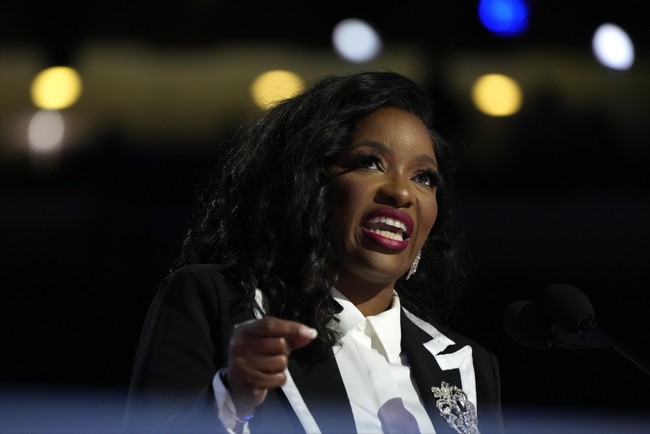
The NRSC reportedly seeded polling and narrative momentum to elevate Rep. Jasmine Crockett into the Texas Senate race, creating a chain of events that shaped Democratic decisions and Republican strategy ahead of the March 3, 2026 primaries.
Republicans quietly celebrated when word circulated that Democrat leaders and potential candidates were meeting to decide who might take on Sen. John Cornyn, who is seeking a fifth term. According to sources close to the matter, the National Republican Senatorial Committee assessed the field and concluded Crockett would be an easier general election opponent than other Democrats under consideration. That calculation apparently led the NRSC to leak and amplify polling showing Crockett out in front of a hypothetical Democratic primary, a move designed to reshape the race long before ballots are cast.
That strategy, if accurate, is classic political theater: identify the most appealing target, then push her to the front of the pack. The NRSC reportedly released surveys showing Crockett as the runaway favorite, then circulated those results widely to create momentum. Those polls allegedly reflected Crockett leading a hypothetical Democratic primary with a substantial plurality, which in turn factored into her calculus for entering the contest.
Crockett leads a hypothetical primary field with 35% of likely Democratic voters, followed by former Democratic Texas Rep. Colin Allred at 20%, former Presidential candidate Beto O’Rourke and Rep. Joaquin Castro tied at 13%. Just 18% of voters said they were undecided about their preferred nominee to challenge Republican Texas Sen. John Cornyn, who is seeking his fifth Senate term.
Sources familiar with the NRSC playbook say once the numbers looked favorable they “disseminate[d] this far and wide” to manufacture a narrative of surge, nudging donors, activists, and media to treat Crockett as the emerging front-runner. That media momentum reportedly helped convince Crockett herself; in her announcement she said, “The more I saw the poll results, I couldn’t ignore the trends that were clear.” For Republicans, engineering a race that elevates a candidate perceived as vulnerable is a savvy way to shape the opposition before the general election even begins.
On the Democratic side, several potential contenders—Colin Allred, Beto O’Rourke, Joaquin Castro—decided against running, leaving state Rep. James Talarico as the lone familiar alternative to Crockett in the primary. Talarico has been a strong fundraiser, taking in $6.2 million early in his campaign, but Crockett’s displays of momentum could redirect donor attention and make fundraising uneven. That internal scramble among Democrats may be exactly what Republicans were counting on when they tested and spread those polling results.
Texas Republicans are not sitting still. Cornyn faces a contested GOP primary that includes figures like Ken Paxton and Rep. Wesley Hunt, and early polling suggests Cornyn may confront a tougher intra-party fight than in past cycles. For conservatives, a bruising primary could either weaken Cornyn for the general election or sharpen him for a straight-up match with the eventual Democratic nominee, depending on how the contest unfolds and how resources are spent.
The NRSC’s approach is risky by design: boost a Democrat perceived as weak or controversial so Republican strategists can define the race early. That gamble leans on the belief that progressive candidates often struggle statewide in Texas, where more moderate or traditional messaging still resonates with many voters. If Crockett’s brand proves less electable in a statewide setting, Republicans could find themselves facing a nominee who is easier to attack on both policy and temperament.
This kind of meddling in the other side’s primary is an old trick, but it takes discipline and timing to get right. The reported orchestration relied on pulling together favorable data, pushing that data into the news cycle, and letting it influence decisions by donors, activists, and potential candidates. When a party can steer who emerges from the opposing primary, it can spend the next year setting the terms of the debate.
Democratic strategists will argue that voters ultimately decide, and that manufactured momentum can collapse under scrutiny. Still, election dynamics are often about perception, and perception can be engineered. The coming months, as the March 3, 2026 primaries approach, will show whether the NRSC’s campaign to tilt the Democratic field produced a lasting advantage or merely an early headline.

Add comment