
This article examines a recent confrontation between federal immigration agents and staff at a Minneapolis college after ICE detained a student who is in the country unlawfully and listed as a registered sex offender, reviews official statements and campus responses, and considers the political reaction and implications for campus safety and rule of law.
Jesus Saucedo-Portillo is described in official statements as an individual in the country illegally and a registered sex offender, with at least one conviction for driving while impaired. The report says he was attending Augsburg University in Minneapolis when Immigration and Customs Enforcement officers moved to detain him. The incident quickly escalated into a public dispute about university policy, federal authority, and what campus officials should do when law enforcement arrives.
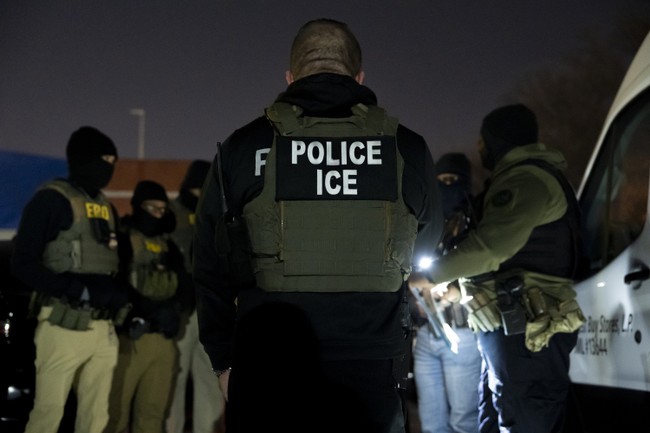
According to the Department of Homeland Security, ICE agents told a school administrator and campus security that “ICE had a warrant for the illegal alien’s arrest.” The DHS account says university personnel responded by asserting that the officers were violating university rules, then positioned campus staff and a vehicle in a way that interfered with the agents’ efforts. DHS says its officers warned that federal law supersedes university policy and that obstruction could amount to interfering with a federal arrest.
“Our officers told the school Administrator and campus security that ICE had a warrant for the illegal alien’s arrest. The school Administrator told ICE officers they were violating university policies,” the statement said. “Our officers informed them that federal law supersedes any University policy and that if campus security would not stop blocking the law enforcement vehicle from exiting, they would be obstructing justice.”
Despite that warning, DHS alleges the administrator refused to yield and ordered campus security to continue blocking the ICE vehicle, forcing agents to take action to clear the area. The department’s release concludes, “Our officers followed their training to use the minimum amount of force necessary to clear the area and successfully arrested this criminal illegal alien.” Those are the exact words quoted from DHS’ account, highlighting a clash between campus autonomy and federal enforcement authority.
In a separate public statement, Augsburg’s president pushed back on the federal account, asserting the arrest was “illegal” and that agents did not have a warrant. That conflicting claim set off a political debate about how colleges handle federal inquiries and what counts as lawful conduct by those agents. The president’s view frames the episode as a contested interaction, while federal officials present it as a routine arrest impeded by campus officials.
The core legal point is straightforward: federal immigration laws give ICE authority that colleges cannot override with internal policies. Universities can craft sanctuary-style rules, but they do not have the power to nullify federal statute or prevent federal officers from executing their duties. When a campus chooses to obstruct an arrest, it risks crossing from policy protest into unlawful interference with law enforcement.
Beyond the legal angle, there is a commonsense safety argument at stake. If a person on campus is both unlawfully present and a registered sex offender, many would say university leaders should prioritize protecting students and staff. Critics of the Augsburg response argue that institutional concern for student welfare should trump any ideological posture about immigration enforcement. That concern drove much of the public outrage from commentators who saw the administrator’s actions as reckless.
The episode also spiraled into partisan commentary. Some observers suggested the reaction from university officials would have been very different under a different presidential administration, arguing that opposition to specific political leaders can shape how campus leaders respond to federal action. That line of argument claims the dispute is less about law or safety and more about political theater and selective enforcement reactions.
There was a sharp rhetorical point made about how reactions vary: “If this same, exact action were taken during, say, the Obama administration, it’s a near-certainty that Paul Pribbenow wouldn’t have offered a peep in reply.” That sentence captures the view that political alignment, not consistent principle, drives some institutional choices. The argument is that partisan loyalty can influence whether campuses cooperate with or resist federal agents.
Campus administrators face a real dilemma: balance institutional values, student privacy and safety, and adherence to the law. But when a school physically blocks federal officers, it raises questions about judgment and accountability. A college can want to protect students while still recognizing that active obstruction of federal officers can create legal exposure and endanger others.
This incident left unanswered operational questions about how campuses should coordinate with federal authorities in sensitive cases and whether clearer protocols are needed to prevent similar confrontations. The public back-and-forth also underscored how charged immigration enforcement remains and how quickly a campus decision can become national news. At minimum, the episode illustrates the practical friction that arises when local institutional preferences collide with federal mandates and enforcement actions.


Add comment