
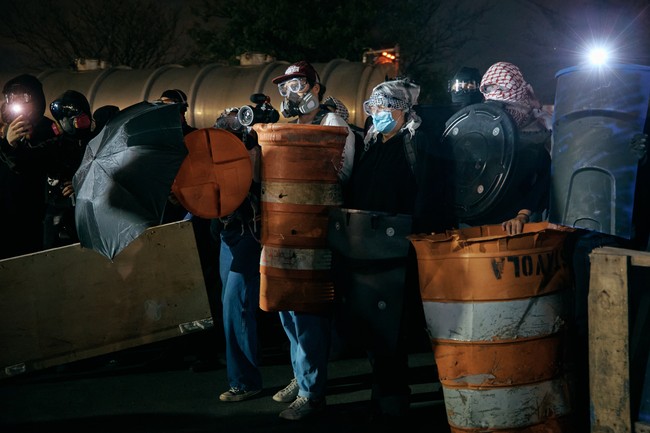
This article reports on the violent clashes outside the ICE facility in Newark, how out-of-state agitators and extremist groups played a role, and the governor’s admission that outsiders escalated the unrest while law enforcement moved to secure the area.
The demonstrations at the ICE center in Newark drew a larger and more volatile crowd over the weekend, and public safety officials responded with a significant presence. State police established barriers and kept protesters and counter-protesters separated to prevent immediate contact, but tensions stayed high as both sides shouted and demonstrated. Local residents and commuters found themselves navigating streets where law enforcement had to manage crowd control and traffic disruptions. The scene underscored how protests tied to national causes can quickly overwhelm local capacity.
The activists who came to Newark were unapologetically radical in some corners of the crowd, openly advocating for “Communist revolution” and railing against capitalism in chants and signs. You can see them. Those slogans make clear that some participants are less about a specific policy reform and more about a wholesale repudiation of American economic and political structures. For many observers, that radical rhetoric explains why law and order voices insisted on a firm police response to keep the protests from spiraling further out of control.
https://x.com/Julio_Rosas11/status/2060743831352443342
The presence of high-profile left-wing influencers also drew attention and helped nationalize the incident, bringing in people from outside the community. One notable figure appeared amid the crowd and later addressed questions over a subpoena, denying knowledge of it while remaining a lightning rod for controversy. When outside personalities insert themselves into local demonstrations, the dynamic shifts from neighborhood unrest to a theater for national agendas. That shift often feeds polarization and invites counter-mobilization by locals who oppose letting outsiders dominate their streets.
New Jersey Governor Mikie Sherrill made a blunt acknowledgment that the situation was being exacerbated by nonlocals and external groups, and she told some visitors bluntly, “You should not be here,” in reference to those “who wanted to create chaos.” Her comments confirmed what residents and officials had suspected: that out-of-state actors and so-called national extremist groups were involved in stoking the disorder. That admission weakens the argument that these clashes were purely spontaneous local grievances and points to a coordinated escalation that demanded broader law enforcement attention.
Shortly after those remarks, state officials summarized arrests and described the involvement of outsiders when they noted, “We know that people from outside the state have been interfering in the protests and escalating them. 5 of the 6 people arrested last night by state police were from outside New Jersey.” That disclosure reframes the narrative, showing that a significant share of those detained were not local residents facing immediate community consequences. It also raises questions about the responsibility of organizers and the accountability of networks that ferry activists into flashpoint locations.
As evening fell, the crowd that remained tried to push past police lines and overwhelm officers who were working to maintain order. Video and on-the-ground reports show clashes intensifying and confrontations that included projectiles and aggressive maneuvers toward mounted units. Protesters reportedly waved shields and threw objects at horses, a dangerous escalation that put both officers and animals at risk. These actions provided the legal and public-safety basis for a decisive law enforcement response to restore a secure environment for the neighborhood.
Riotous behavior continued into the night, with some elements of the crowd setting fires in the street and using the chaos to engage in destructive acts. Flames in the roadway and burning debris forced officers to clear areas for the safety of bystanders and to prevent further property damage. Federal agencies joined state and local partners to cordon off sensitive facilities and ensure critical infrastructure remained protected. Once the perimeter was reestablished, officials emphasized that anyone who took part in violent or criminal acts would be prosecuted to the fullest extent.
Despite the drama, law enforcement reported that they had regained control and secured the area with assistance from DHS and local police, and that operations would continue to hold those responsible accountable. The intervention restored movement through affected streets and allowed emergency services to operate without obstruction, but the episode left lingering concerns about whether cities are prepared when outside groups bring national confrontations into local neighborhoods. Community leaders expressed relief that the immediate threat diminished while warning that planning and coordination are needed to prevent repeats.
The Newark events are another example of how protests tied to broader national causes can morph into fights between organized activist networks and authorities tasked with protecting public safety. When demonstrations attract elements committed to escalating confrontation rather than constructive change, the result is predictable: chaos, arrests, and damaged trust. For residents who simply want safe streets and functioning services, the arrival of outsiders bent on disruption is an unwelcome, costly intrusion that local governments must resist.

Add comment