
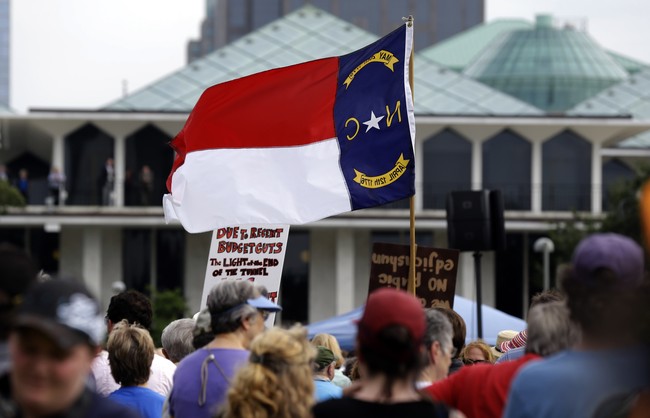
The rise in Republican voter registrations in North Carolina, now edging past Democratic registration for the first time in state records, signals a changing political map as the 2026 midterms approach; this article examines the numbers, what they mean for statewide contests, and how unaffiliated voters still shape outcomes.
With the midterm season underway, Republicans in battleground states know they must be on their “A” game as Democrats and sympathetic media push back against President Trump’s “America First” agenda. North Carolina’s recent registration totals offer a snapshot that Republicans and strategists can point to as momentum, even if the advantage is narrow. The timing matters because control of Congress and key statewide offices will hinge on turnout and persuasion over the next several months.
The registration shift in the Old North State is historic: for the first time on record Republican registration numbers have eclipsed Democratic numbers as of January 3, 2026. That lead is slim, but breaking the historical tie matters politically and psychologically for activists, candidates, and donors. Campaigns will treat every voter list as sacred ground now that the numerical balance has tilted, however slightly, toward the GOP.
“Official Voter Registration Numbers” (as of Jan. 3, 2026):
- Republicans: 2,315,067
- Democrats: 2,312,990
- Unaffiliated (no party): 2,976,558
- Green: 4,376
- Libertarian: 46,608
- Total registered voters: 7,655,591
That gap of a little over 2,000 registered voters is tiny in a pool of more than 7.6 million, but it marks a turning point in a state that for much of the last century leaned Democratic. The political realignment that took hold around 2010, when Republicans captured the state legislature, has continued to reshape voter behavior and party infrastructure across North Carolina. These registration swings reflect both organizational effort and changing voter attitudes.
Even as Republicans celebrate the milestone, unaffiliated voters remain the biggest group on the rolls, with nearly 3 million registrants. Those unaffiliated voters are the ones who typically decide close statewide races, and both parties will press hard to win them over through targeted messaging and local ground games. Campaign operatives understand that registration leads matter only if they convert into votes on Election Day.
Political analysts note that several forces are at play: younger voters often reject party labels, demographic shifts reshape precincts, and long-term strategic moves by both parties influence registration patterns. Institutions and interest groups have invested in registration drives, but retention and turnout are the final tests of any numerical advantage. The short-term headline is the GOP lead, but the long-term story will hinge on whether that advantage proves durable.
Practical implications reach into the 2026 statewide contests, including the open Senate seat and the NC Supreme Court fight, where margins are expected to be tight. A small registration edge can ease pressure on fundraising and messaging, but it does not guarantee victories in individual districts where turnout dynamics differ. Campaigns now face the task of translating registration numbers into a disciplined voter plan that covers persuasion, turnout, and absentee strategies.
Republicans will likely use this registration milestone to energize donors, volunteers, and candidates, stressing momentum as a narrative heading into the midterms. Democrats, meanwhile, will treat the moment as a warning sign and double down on outreach where they see vulnerabilities. Both parties know that the state’s nearly 3 million unaffiliated voters remain the key to swinging close contests, so expect a heavy fight for those voters’ attention and trust in the coming months.
Reporting on registration shifts offers raw data, but interpretation matters: tactical gains at the registration level must be matched by on-the-ground execution to matter in November. The numbers are a useful measure of party health, yet campaigns will be judged by their ability to mobilize and persuade once ballots are cast. The next phase of the election cycle will reveal whether this historic registration moment becomes a durable political advantage.


Add comment