
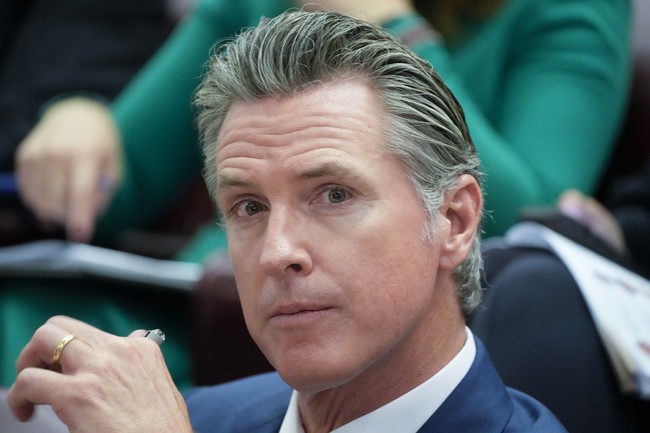
I’ll explain the program’s basics, flag the bidding carve-out, note the nonprofit tie and fairness issues, and outline why this matters politically and fiscally. The piece focuses on Governor Gavin Newsom’s new diaper distribution plan and the questions raised about oversight, contracting, and who benefits. Expect a direct, Republican-leaning take on policy, process, and priorities. I keep quoted material unchanged and leave the original embedded token intact.
California’s governor rolled out a universal diaper giveaway that looks good in a press release but prompts real questions about stewardship of taxpayer dollars. The program hands out 400 free diapers to any parent in the state with a child of diaper age, no income test required. That broad, unconditional approach makes it attractive politically but thin on targeting actual need or fiscal discipline.
The state cited a $12.5 million price tag for the initiative, and that number alone should trigger scrutiny about procurement and value. When a public program spends millions, standard practice is to run competitive bidding so taxpayers get the best deal. Here, the governor’s office carved out an exemption from bidding rules, which naturally raises eyebrows about transparency and fairness in how the work was awarded.
Instead of the state buying and distributing diapers directly, the plan channels the work through a nonprofit partner serving as an intermediary. Reasonable public policy typically prefers minimizing layers between government funds and the goods provided, especially when scale and logistics are straightforward. Choosing an outside organization to distribute an everyday item like diapers invites questions about why the middleman is needed and who benefits from that arrangement.
Making the policy universal instead of means-tested transforms a narrow social-support idea into a broad subsidy that reaches rich and poor alike. If the goal was helping families who struggle to afford essentials, income eligibility would focus resources where they matter most. Universal giveaways can be politically popular, but doing so on the taxpayer dime during tight budget times suggests priorities that leave many conservatives skeptical.
Beyond dollars and process, the timing and optics matter. The rollout arrived just ahead of Mother’s Day and has the feel of a symbolic swing at compassion, useful for headlines and campaign trails. For critics worried about political positioning, the program can look like a vehicle for burnishing a profile rather than solving systemic economic pressures for low-income families.
Scenarios where government selects a preferred nonprofit without standard bidding invite practical concerns about accountability. Who audits distribution, measures need, and reports results back to taxpayers? If oversight is light, the chance of wasted resources, duplication, or poor targeting increases. Conservatives emphasize oversight and measurable outcomes; public programs that skip those steps deserve a skeptical look.
Gavin Newsom’s controversial “free diapers” program won’t face the scrutiny typical for state contractors — with the governor quietly carving out an exemption from bidding rules, despite growing questions about favoritism and waste.
The $12.5 million ”Golden State Start” was rolled out ahead of Mother’s Day and offers 400 free diapers to all California parents regardless of income.
If Newsom’s priority was, inexplicably, to provide diapers at taxpayer expense to all Californians with diaper-age children (it’s unclear whether or not California will provide adult diapers for physically incontinent adults), then it would make more sense for the state to just buy the diapers and hand them out; why get a non-profit involved to be a middleman? Why spend that money on some organization to pass out? Unless, of course, you presume that there is graft involved; then, suddenly, all this makes a lot more sense.
Questions about means testing are not just political nitpicking; they affect fairness and budget discipline. A wealthy household qualifies under the program the same as a struggling family, and that raises the legitimate question of why public funds should underwrite purchases for households that do not need help. Fiscal conservatives argue that targeted aid delivers more bang for the buck and protects solvency for future priorities.
The nonprofit connection is the part that matters most when considering procurement rules. When governments waive competitive processes, the door opens to perceived favoritism or simply to missing out on better pricing or distribution models. Insisting on open bidding protects taxpayers and reinforces public trust in government decisions about spending.
Operationally, distributing diapers statewide is a logistics problem public agencies solve routinely, from vaccinations to food assistance. A state-run procurement and distribution plan could reduce administrative overhead and let auditors track inventories and outcomes directly. Using nonprofits can make sense in targeted situations, but universal, high-visibility giveaways deserve extra layers of accountability.
Politically, the program feeds a larger narrative about priorities in Sacramento: symbolic gestures that appeal to headlines versus durable policy that addresses poverty and cost of living. From a Republican viewpoint, that tradeoff highlights differences in approach—limited, targeted government support with checks and balances versus broad programs that require little verification. Voters interested in fiscal responsibility will want answers about procurement, oversight, and how success is measured.
At its core, the debate is simple: who gets taxpayer help and how do we ensure government spends wisely? When the executive branch sidesteps normal bidding rules and routes millions through a nonprofit intermediary, taxpayers are entitled to clear explanations and strong oversight. No program, however well-intentioned, should escape basic accountability.


Add comment