
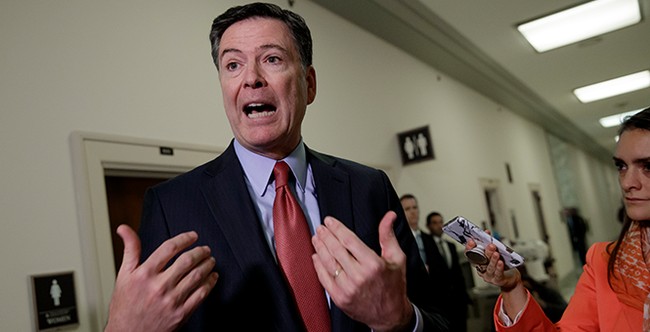
Former FBI Director James Comey defended his actions on national television while under a second federal indictment, insisting he did nothing wrong, criticizing the Justice Department’s leadership, and repeating his claim of innocence amid renewed debate over his past decisions.
James Comey appeared on a major network program to address the latest legal trouble and broader questions about his time leading the FBI. He is facing two felony counts tied to an Instagram post that prosecutors interpret as a threat, and he spent the interview shifting scrutiny back to the Department of Justice and its leaders. He argued that his role as a private citizen allows certain personal expressions, yet he maintained a posture of legal and moral rectitude throughout the conversation.
Prosecutors say the Instagram image featuring seashells arranged to read “86 47” was “a serious expression of an intent to do harm to the president of the United States,” a charge that Comey dismissed by pointing out he immediately deleted the post after it sparked outcry. He refused to get into legal specifics on air while criticizing an acting Justice official for discussing the case publicly. His response emphasized the constraints of court rules and he told the official to “bone up on the rules,” framing himself as the more restrained party in the exchange.
Comey defended his Instagram habits as those of “any awkward, nerdy dad,” a contrast he used to undercut the prosecution’s depiction of menace. Still, prosecutors view “86 47” as slang for eliminating someone and say the message targeted the 47th president. Comey repeated, without equivocation, “I’m not just not guilty, I am innocent, and so let’s go,” using the interview to press a posture of firm innocence while the case proceeds.
The former director also addressed his most controversial decision from 2016: reopening the Hillary Clinton email probe shortly before the election. He acknowledged that the choices were painful and imperfect, framing his actions as the “least-bad option” and something he would repeat if faced with the same circumstances. That stance keeps him at odds with critics on both sides—Democrats who blame him for harming Clinton’s campaign and Republicans who recall his role in launching the broader Russia investigation.
On the topic of political retaliation and the rule of law, Comey was emphatic and terse: “The president of the United States cannot use the Justice Department to target people because he wants to retaliate against them. We just can’t operate as a republic if that happens.” He criticized what he called a broken Justice Department at the top while urging career officials to remain in place until the political winds shift. That appeal to institutional stability came alongside a sharp critique of the department’s current leadership choices.
He avoided detailed commentary about the ongoing “shell case” he called a “shell case,” but he did speak about a prior indictment that a judge dismissed after finding the U.S. attorney involved had been improperly appointed. In doing so he highlighted what he sees as dangerous political interference in law enforcement appointments and stressed the importance of independent prosecutors. Comey framed these legal battles as symptoms of a larger institutional strain rather than isolated disputes.
Throughout the interview, he balanced admissions of error with steadfast defense of his major decisions, insisting that hard choices were necessary and that his motives were bound up with department values. He described the judiciary as the only branch of government still standing strong and expressed “complete faith” in the courts despite the personal indictments he faces. That confidence contrasts with his critique of the Justice Department’s senior officials, whom he accused of speaking and acting in ways that undermine public trust.
Comey’s tone mixed contrition, defiance, and exhortation: contrition when admitting mistakes, defiance when denying wrongdoing, and exhortation when urging public servants to stay put. He repeatedly declined to discuss active case details but used the platform to shape the narrative around his record and the state of the Justice Department. For a former law enforcement chief insisting on courtroom resolution, he nonetheless had plenty to say on television about the politics and morals of the moment.



Add comment