
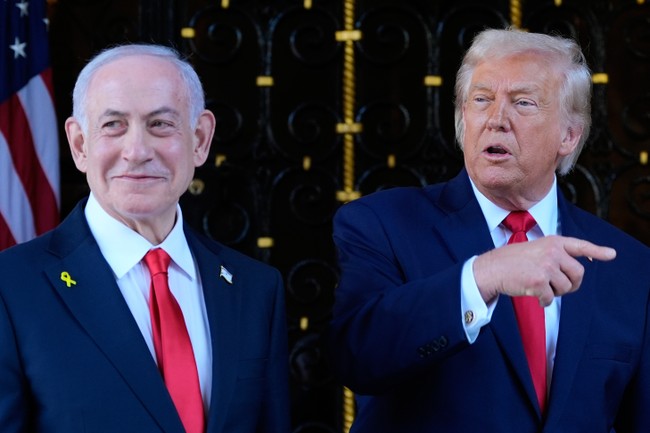
Israeli Prime Minister Benjamin Netanyahu flew to Washington to attend Sen. Lindsey Graham’s funeral and meet with President Donald Trump, later talking with Sean Hannity about a firm U.S.-Israel bond, Iran’s nuclear threat, and pushing back hard at New York City Mayor Zohran Mamdani’s calls to have him arrested ahead of a planned UN visit; the exchanges included clear quotes from Netanyahu about the alliance, Iran’s danger, and his refusal to be silenced.
Netanyahu’s visit to Washington had a clear purpose beyond condolences: it reinforced an alliance that, from a conservative view, must stay unshakable against Tehran’s ambitions. Both leaders described their Oval Office meeting as productive and aligned on preventing Iran from acquiring nuclear weapons, which is exactly the kind of clarity allies need right now. Conversation touched on more than Iran; officials flagged normalization with regional players as a strategic goal, showing diplomacy and deterrence are being used together. That mix of pressure and moves toward normalization is the policy direction conservatives support.
On Fox with Sean Hannity, Netanyahu was blunt about the tone of the meeting and the strength of the U.S.-Israel partnership. “It was great. One of the best meetings that we’ve had,” he said, affirming that the personal rapport translates into decisive policy. He emphasized a shared commitment to stop a “fanatic regime in Tehran” from threatening Americans and global peace, keeping the focus on national security and deterrence. Those words matter because they frame the alliance as one built on common purpose, not on fleeting politics.
https://x.com/WhiteHouse/status/2082288017033527618
“I always hate to disappoint our would-be critics who are trying to find, you know, cracks in our alliance. And what they find, like today, is a wall of granite, because the president is so clear. I mean, he’s so…we have a common commitment. We don’t want to see this fanatic regime in Tehran have nuclear weapons to threaten every American, and to threaten the peace of the world, and to threaten Israel.”
“We have a common goal, and it’s gonna be achieved, either through diplomatic means, or other means”
Netanyahu didn’t stop at generalities; he spelled out the stakes by pointing to Iran’s current aggression and domestic brutality as proof of what nuclear-armed Tehran would mean. “Now, imagine they had nuclear weapons,” he said, a short sentence that drives home a grave, simple point. That kind of plain-spoken warning resonates with voters and policymakers who prioritize safety and foresight over wishful thinking. It also sets clear parameters for acceptable outcomes: either diplomacy succeeds or stronger measures will be on the table.
Beyond security, the visit included talk of normalizing ties between Israel and Saudi Arabia, a pivotal development if it comes to pass. Such a shift would reshape regional dynamics in favor of stability and shared interests against common threats. Conservatives see these moves as long-term strategic wins—aligning regional powers reduces the chance of confrontation and raises the cost for bad actors to act unchecked. Diplomacy that strengthens allies is a conservative alternative to endless military entanglement.
Netanyahu then turned his attention to domestic political theater in New York after Mayor Zohran Mamdani publicly suggested arresting him, a line of attack that Netanyahu treated as cynical grandstanding. He made his plans clear: “First of all, I’m going to New York,” he declared, and he said he would not be deterred from attending the UN General Assembly. For conservatives, that refusal to back down against political posturing is important; it signals that leadership won’t be bullied by opportunistic local politicians.
“I’m definitely going there. I’m going to speak the truth in front of this hate-spewing elected official who’s pitting one group of New Yorkers against the others. He’s turning them against New York Jews. I mean, what are we, in the 1930s? So much hate. So many lies.”
Netanyahu framed Mamdani’s rhetoric as dangerous and divisive, comparing it implicitly to historical ugliness to highlight how extreme such attacks can be. That sharp language serves two purposes: it defends Israel’s leaders and calls out what he sees as weaponized identity politics. Conservatives will likely see this as a necessary defense against a trend of democratic backsliding where law and decency get warped for political spectacle.
The coming months will test whether rhetoric matches action on the Iran front and whether diplomatic openings with Sunni states deepen into lasting security arrangements. Netanyahu’s visit and his public comments aim to keep pressure on adversaries and reassure allies that robust U.S.-Israel coordination remains intact. Whether through talks in the Oval Office or sparring at the UN, the message was plain: deterrence, not appeasement, and steadfast friendship, not fleeting courtesy.


Add comment