
Checklist: note U.S. strikes and Iranian retaliation, report on claims that Mojtaba Khamenei left Iran, include sourced quotes about his absence and an intelligence breach, consider likely destinations and implications for Iranian leadership. This piece examines those elements directly and keeps the focus on the central claim: has Iran’s new supreme leader fled?
The past week of American strikes has shaken Iran in ways that are visible and not. Iranian forces managed some retaliatory attacks, including a tragic strike that killed U.S. service members, but overall the balance of damage and disruption appears to favor the U.S. campaign. Reports now suggest that the regime’s internal cohesion is frayed and that senior figures might be moving to protect themselves rather than stand and lead.
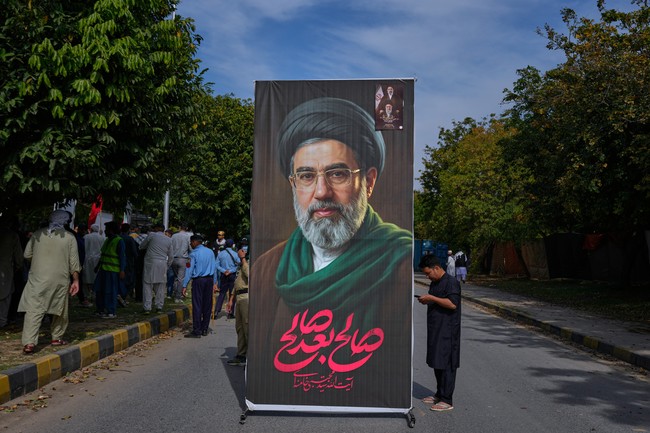
One striking claim emerging from regional coverage is that Mojtaba Khamenei, the man reportedly appointed supreme leader after the killing of his father, “is not in Iran.” That assertion comes via an unnamed Israeli security source cited by a Saudi outlet, and it is notable both for its content and for the fact that it reached the public through a non-Western channel. The absence of public appearances or live speeches from Mojtaba since his appointment has already raised eyebrows; these fresh reports add a new layer of concern about what is really happening inside Tehran.
An Israeli security source cited by the Saudi al-Hadath outlet on Sunday said Iranian leader Mojtaba Khamenei “is not in Iran.”
Khamenei, who was appointed supreme leader shortly after his father was killed in US-Israeli strikes on February 28, which sparked the war, has only communicated via written statements since, and has made no public appearances.
The source told al-Hadath that Khamenei’s messages are written by the new Islamic Revolutionary Guard Corps chief Ahmad Vahidi, and other members of the IRGC.
“Iran’s internal divisions are deep and threaten the existence of the Islamic Revolutionary Guard Corps,” the source was cited as saying.
If the claim is true, it tells us a lot about perceptions inside Iran. A newly appointed supreme leader who refuses public contact and may have left the country suggests either a severe security calculation or panic. Leaders do not abandon the capital without believing their personal survival or political control is at extreme risk, and that in turn signals cracks in command and confidence within the regime and especially the IRGC.
Another report from within Iran points to an unresolved intelligence breach that led to the assassination of the elder Khamenei, and it raises the possibility that Tehran has not yet sealed the hole that allowed the attack. If Iran’s own foreign minister believes the breach remains, it explains why senior figures would conceal themselves or relocate. It also hints at internal finger-pointing and distrust that could paralyze decision-making at a critical moment.
Separately, Iran’s Foreign Minister Abbas Araghchi said Sunday that an intelligence breach that allowed Israel to assassinate the senior Khamenei has likely not been patched.
In a Persian-language interview, Araghchi said that he told President Masoud Pezeshkian on the morning of February 28 that “the atmosphere is war.” He said that he then met with Khamenei aide Ali Asghar Mir Hijazi at 9 a.m., shortly after which Israel carried out the deadly attack on a Tehran compound where Khamenei was having a high-level meeting.
The practical result of these two strands — an allegedly absent supreme leader and a continuing intel leak — is a leadership vacuum dressed as strategy. If messages attributed to the supreme leader are actually drafted by IRGC figures, it means the visible face of authority is being managed by hardliners who may be using written proclamations while avoiding public exposure. That limits any capacity for real persuasion inside Iran and weakens the regime’s claim to unified command externally.
Speculation about where a fleeing supreme leader might go tends toward a few obvious countries with land borders or friendly ties. Afghanistan sits across the border and could be a temporary refuge, though the Taliban’s own calculus is mercenary and fluid. Russia is another obvious candidate, and historical precedent suggests Moscow might shelter regime figures as a geopolitical rebuke to the West. These possibilities underscore how isolated Tehran could become if its top figures start relying on outside hosts to stay safe.
None of this is confirmed beyond the cited statements, and facts on the ground remain fluid and scarce. Still, the pattern is clear: a regime under sustained external pressure, struggling with internal breaches, and possibly seeing its figurehead operate from outside the country’s borders. Each element alone is troubling for Iran; together they describe a leadership in disarray at a moment when cohesion matters most.
The larger strategic takeaway for U.S. policymakers and allies is straightforward: when adversary leadership fractures, the risks and opportunities change. Continued pressure that combines precision strikes with intelligence work can multiply political stress inside enemy ranks, but it also creates unpredictable dynamics that must be managed carefully. What happens next in Tehran will matter for the region and for the forces directly involved in this escalating confrontation.


Add comment